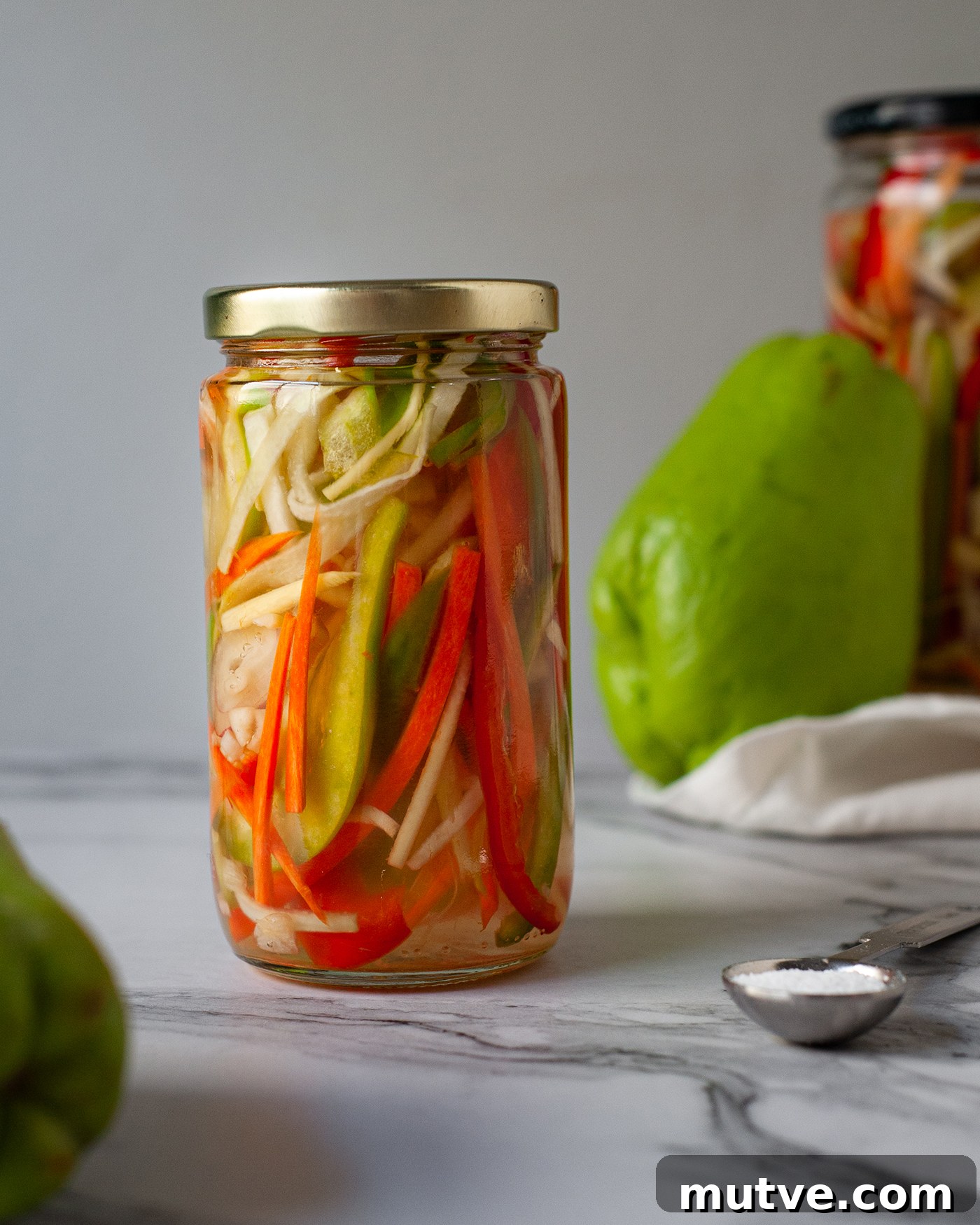
Pickles add a bright, tangy note to many dishes, and Filipino-style pickled vegetables are especially flavorful. Atcharang chayote is a classic Filipino condiment made from chayote squash and other crisp vegetables, preserved in a sweet-and-sour pickling solution. It pairs beautifully with fried or grilled meats, rice dishes, and anything that needs a little acidity to lift the flavors.
Atcharang chayote is pickled chayote squash mixed with vegetables such as carrots, shallots, ginger, and bell peppers, preserved in vinegar, sugar, and salt. Let it rest in the refrigerator for at least a week to develop its full flavor.
This article explains the difference between atchara and atcharang chayote, outlines common variations, covers the basic health benefits of pickled vegetables, and provides a straightforward recipe and storage tips so you can make your own batch at home.
This post may contain affiliate links.
Table of Contents
- Atchara vs. Atcharang Chayote
- Variations of Atchara
- Health Benefits of Atchara
-
Ingredients for this atchara recipe
- Vegetables
- Pickling solution
- Instructions
- What to Eat with Atcharang Chayote
- How to Store
- Final Thoughts
- More Recipes You’ll Love
- References & Further Reading
Atchara vs. Atcharang Chayote
The term atchara (also spelled atsara) refers broadly to the Filipino pickling method. Often the name is followed by the primary ingredient: atcharang chayote means pickled chayote squash. Other examples include atcharang labong (pickled bamboo shoots) or atcharang ubod (pickled palm hearts).
When someone simply asks for “atchara” without naming an ingredient, they are usually referring to the classic pickled green papaya version, which is the most commonly served atchara in Filipino households and restaurants.
Quick summary:
- atchara = Filipino pickling method (or commonly, pickled green papaya)
- atcharang chayote = pickled chayote squash
Variations of Atchara
Atchara is flexible: you can use a single vegetable or a mix. Common variations swap the main ingredient while keeping the same vinegar-sugar-salt base. Popular versions include atcharang labong (bamboo shoots), atcharang ubod (palm hearts), and atcharang ampalaya (bitter melon). Atcharang chayote typically includes julienned chayote with carrots and bell peppers for color and crunch.
Health Benefits of Atchara
The pickling solution of vinegar, salt, and sugar preserves the vegetables and can encourage beneficial fermentation depending on how it’s prepared. Pickled vegetables generally retain most of their vitamins and minerals, and some methods produce probiotics that support gut health. The acidity also helps inhibit spoilage, extending shelf life while adding a low-calorie way to boost flavor.
Ingredients for this atchara recipe
Vegetables
- 1 shallot, sliced
- 1 carrot, julienned or grated
- 1 chayote squash, julienned or grated
- 1 knob of ginger, julienned or grated
- 2 bell peppers (red and green), julienned or grated
Pickling solution
- 4 cups white cane vinegar
- 2 cups sugar
- 4 tsp salt (total; recipe uses 2 tsp for salting vegetables and 2 tsp in the solution)
Optional add-ins to customize the flavor and heat: Thai chilies, pineapple, bamboo shoots, raisins, palm hearts, cucumber, or red onions. Feel free to experiment with textures and spice levels.
Instructions
Making atcharang chayote is straightforward. The basic steps are: prepare the vegetables, remove excess moisture, make the pickling liquid, jar everything, and refrigerate until ready.
- Combine all the prepared vegetables in a large bowl. Sprinkle 2 tsp of salt over them, toss to combine, and let sit for 30 minutes to draw out excess water. After 30 minutes, strain or squeeze the vegetables using a cheesecloth or a fine strainer.
- In a saucepan over medium heat, combine the white cane vinegar, sugar, and the remaining 2 tsp salt. Stir until the sugar and salt dissolve. Bring just to a simmer, then remove from heat and let cool slightly.
- Pack the drained vegetables into clean, sterile mason jars. Pour the warm pickling solution over the vegetables, leaving a small headspace. Make sure the vegetables are fully submerged.
- Seal the jars tightly and refrigerate. Allow the atchara to pickle for at least 1 week before serving for best flavor.
- Serve as a vibrant side or condiment with fried or grilled meats, rice bowls, or sandwiches.
What to Eat with Atcharang Chayote
Atcharang chayote brightens rich and savory dishes. It’s traditionally served with Filipino breakfasts like longsilog (sweet pork sausage, garlic rice, and fried egg), but it also complements grilled pork, roasted chicken, steamed pork belly, burgers, hot dogs, and fried appetizers. Think of it as a tangy relish that cuts through fattier flavors and adds a pleasant crunch.
How to Store
Place the pickled chayote in sterile, airtight jars and keep them refrigerated. The pickled vegetables are ready after one week and, if handled with clean utensils and proper refrigeration, will stay good for up to a month. Label jars with the date and always use a clean spoon to serve to extend freshness.
Final Thoughts
Atcharang chayote is an easy-to-make, tangy condiment that livens up many meals. With a simple vinegar-sugar-salt solution and a few crisp vegetables, you can create a versatile pickle that brightens fried, grilled, or rich dishes. Once you try it, you may find yourself reaching for it at every meal.
Atcharang Chayote (Pickled Vegetables With Chayote)
Sweet, pickled chayote squash is a tangy Filipino condiment that pairs well with fried and grilled dishes.
Course: Side Dish
Cuisine: Filipino
Prep Time: 30 minutes
Cook Time: 5 minutes
Pickling Time: 7 days
Servings: 20
Equipment
- saucepan
- sterile mason jars
Ingredients
Vegetables
- 1 shallot, sliced
- 1 carrot, julienned or grated
- 1 chayote squash, julienned or grated
- 1 knob ginger, julienned or grated
- 2 bell peppers (red and green), julienned or grated
Pickling solution
- 4 cups white cane vinegar
- 2 cups sugar
- 4 tsp salt (2 tsp for salting vegetables, 2 tsp for the solution)
Instructions
- Combine prepared vegetables in a large bowl. Add 2 tsp salt and let sit 30 minutes, then drain and squeeze out excess liquid.
- Heat vinegar, sugar, and 2 tsp salt in a saucepan over medium heat until sugar dissolves. Remove from heat.
- Pack vegetables into jars and pour pickling solution over them to cover.
- Seal jars and refrigerate at least 1 week before serving.
- Use a clean spoon to serve. Keeps up to 1 month refrigerated.
Notes
- If properly stored, atchara lasts up to 1 month in the refrigerator.
- Label jars with the date and use a clean utensil each time you serve.
- Customize with additions like Thai chilies, pineapple, bamboo shoots, raisins, palm hearts, cucumber, or red onions.
More Recipes You’ll Love
Bright, zesty Thai flavors in a simple homemade sauce—great as a dip or marinade.
Make traditional Filipino sweet pork sausages at home with this approachable recipe.
A fiery, coconut-based Filipino dish known for bold, spicy flavors.
References & Further Reading
Suggested topics for additional reading: “Atchara (pickled vegetables) overview,” “Basics of fermentation and pickling,” and “Nutrition and pickling: how pickling affects vitamins and probiotics.”