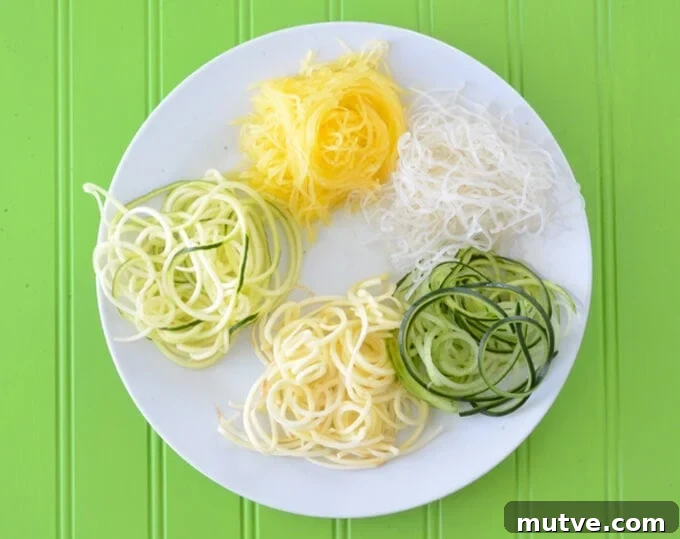
Most commercial pastas and many noodles contain gluten and a high carbohydrate load. Even store-bought gluten-free pastas are often starchy and can leave you feeling bloated or sluggish. For that reason I make my own paleo-friendly pasta by substituting vegetable-based noodles for wheat, rice, or tapioca-based varieties. One cup of traditional wheat pasta has about 43 grams of carbohydrates and a cup of rice pasta is roughly 44 grams. Vegetable noodles provide lower carb counts, more nutrients, and are often quicker and easier to prepare.
I’ve followed a strict grain-free way of eating since 2001 and have experimented with many types of vegetable noodles over the years. Below is a curated list of my favorite low-carb noodle alternatives. These options let you replace high-carb, low-nutrient pasta dishes with flavorful, nutrient-dense vegetable noodles that satisfy cravings while keeping carbs in check.
1. Zucchini Noodles or Zoodles
Zoodles are noodles made from zucchini. You can create them with a spiralizer for multiple noodle shapes, or with a compact julienne slicer that stores easily in a drawer. A spiralizer provides more size and shape options; a julienne peeler typically produces a spaghetti-style noodle. Zoodles can be enjoyed raw or briefly sautéed. They pair beautifully with marinara, meatballs, or in soups like chicken noodle soup. Preparation is straightforward—simply spiralize or julienne the zucchini and toss with your favorite sauce or a light dressing.
One cup of zoodles contains approximately 7 grams of carbohydrates.
2. Spaghetti Squash Noodles
Spaghetti squash becomes noodle-like when cooked and scraped with a fork. These strands hold sauces well and work especially nicely with meat-based marinara or in Asian-style preparations such as Pad Thai. Spaghetti squash contains more carbohydrates than zucchini but is still significantly lower in carbs than traditional pasta, and offers vitamins like vitamin A and other nutrients. Cooking methods vary—baking, roasting, or using a microwave each yield slightly different textures—so choose the approach that best suits your recipe and timing.
One cup of spaghetti squash noodles contains about 10 grams of carbohydrates.
3. Kelp Noodles
Kelp noodles are made from seaweed and are an excellent option for Asian-inspired dishes. They are very low in calories, offer a source of iodine, and provide a satisfying texture—crisp straight from the package or softer after brief soaking or cooking. Kelp noodles are convenient because they’re sold ready-to-use; if you prefer them less crunchy, a short soak in warm water or a quick stir-fry will soften them. They work well with sesame sauces, light dressings, or in cold noodle salads.
One cup of kelp noodles contains approximately 8 grams of carbohydrates.
4. Cucumber Noodles
Cucumber noodles are among the lowest-carb options and excel in fresh, cooling Asian-style dishes. Use a spiralizer or julienne slicer to make thin cucumber strands and dress them with sesame sauce, soy-free tamari, or a light vinaigrette. For more bite and a peppery note, daikon can be used as an alternative; daikon noodles are crunchy and slightly spicy because daikon is a type of radish. Both cucumber and daikon offer crisp textures that contrast nicely with richer sauces and proteins.
One cup of cucumber noodles contains about 4 grams of carbohydrates. One cup of daikon noodles contains about 4 grams as well.
5. Celery Root Noodles
Celery root (celeriac) makes a hearty, flavorful noodle when sliced or spiralized. It sautés nicely in butter or olive oil and can be finished with a sprinkle of cheese for those who include dairy, or simply seasoned with salt and pepper. Celery root also holds up well in stir-fries. If you want something with a sweeter, earthier flavor, parsnip noodles are another option—though parsnips are higher in carbohydrates than celery root, they remain lower than traditional pasta and are a whole food choice with natural sweetness.
One cup of celery root noodles contains about 9 grams of carbohydrates. One cup of parsnip noodles contains about 24 grams.
All of these vegetable noodle alternatives are great for reducing carbohydrate intake while increasing nutrient density. Many are compliant with Whole30 and other grain-free protocols, and they work year-round—summer salads with cucumber or zucchini noodles and cozy winter bowls with roasted spaghetti squash or celery root. They’re easy to prepare, versatile in recipes, and delicious whether you prefer simple olive oil and herbs or bold sauces.
Which vegetable noodle will you try first?