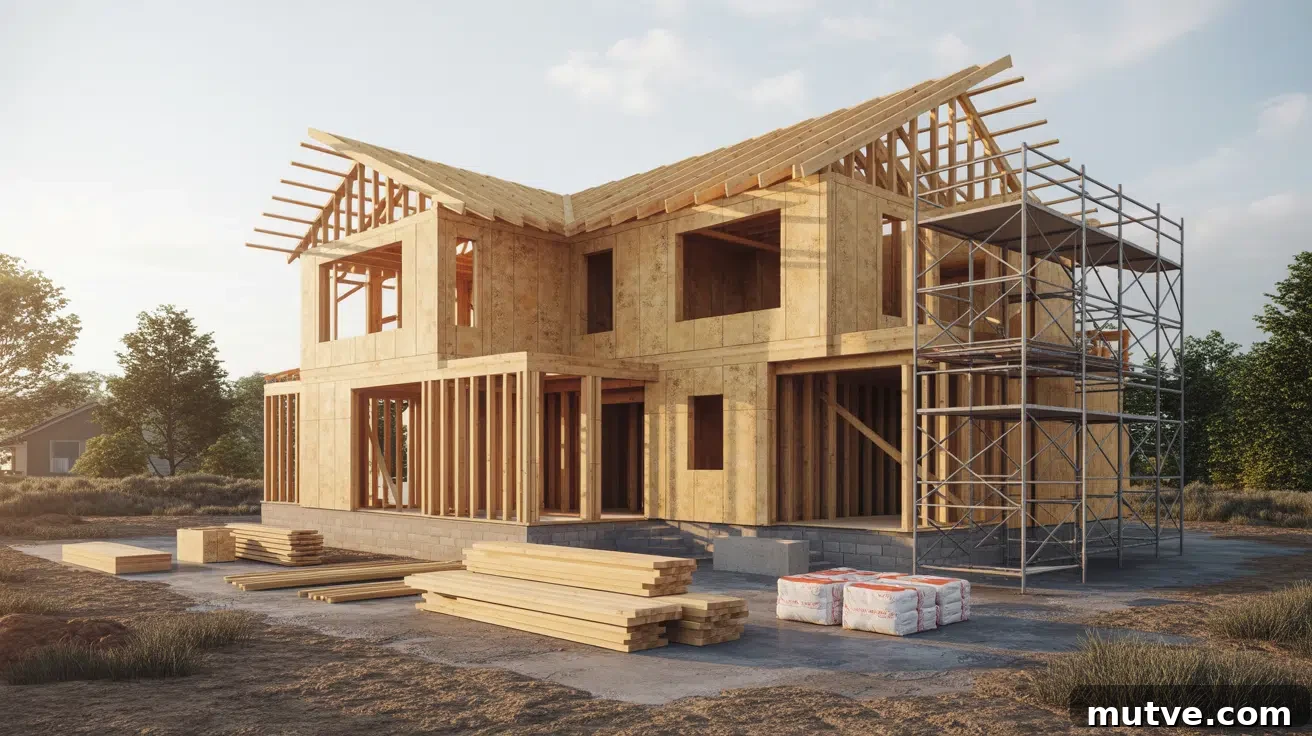
Building a house takes more time and coordination than many people expect. If you’re wondering how long it takes to build a house, it helps to separate the construction period from the total project timeline. Actual on-site construction typically lasts 4–6 months, but planning, permits, financing, and design work commonly add another 6–12 months. In total, most projects run 10–18 months from the initial idea to move-in.
Confusing construction time with the overall project schedule is a leading cause of stress, budget overruns, and missed deadlines. Knowing each stage and its typical duration gives you a realistic timeline and helps avoid surprises.
From a Sketch to the Day You Move In
Not all of your time will be spent at the build site. The process breaks down into distinct phases: pre-construction work, the physical build, and final approvals. Some stages move quickly, while others — permits, inspections, or poor weather — can slow things to a crawl.
Construction time refers to the period when crews are actively building: framing, installing systems, and finishing interiors. Total project time includes everything that must happen before and during construction: design, approvals, financing, and any delays that pop up along the way.
Stages of Building a House and How Long Each Takes
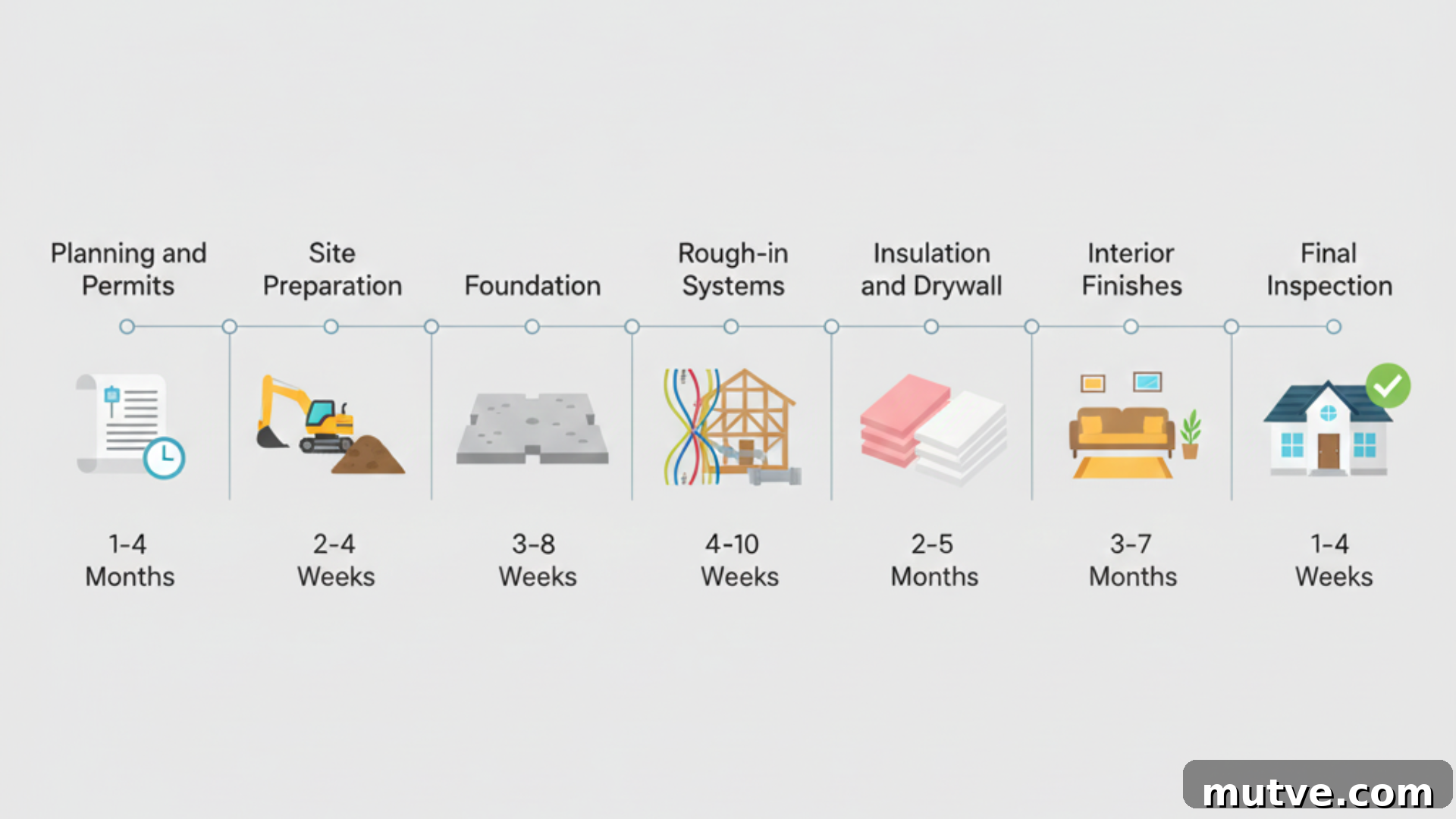
Below are the common stages of a home build and the typical time each stage requires. Individual projects vary, but these ranges offer a realistic expectation.
1. Pre-Construction (1–3 Months)
This phase includes buying land, securing financing, completing architectural plans, and submitting permit applications. Expect to review and revise drawings, coordinate with designers, and wait for local approvals. Permit reviews in jurisdictions with strict codes often extend this step by several weeks.
2. Site Preparation (1–2 Weeks)
Site work clears and grades the lot, establishes proper drainage, and brings in utility connections for water, sewer, and power. Heavy equipment levels the site and creates access. Wet weather can delay grading and entrance installation.
3. Foundation (1–2 Weeks)
Excavation, footings, and foundation walls are completed in this stage. After concrete is poured, it needs about 7–10 days to cure before framing can begin. Cold conditions slow curing and can add time.
4. Framing (4–8 Weeks)
During framing, walls, roof trusses, windows, and exterior doors are erected. This is where the house visibly takes shape. Delays in material deliveries or extreme weather can lengthen this phase.
5. Rough-Ins (2–4 Weeks)
Plumbing, electrical wiring, HVAC ductwork, and other concealed systems are installed. Inspectors must sign off before walls are closed, so careful scheduling and coordination between trades and inspectors are critical.
6. Insulation and Drywall (2–3 Weeks)
Insulation is installed to meet energy requirements, followed by drywall. Drywall work includes hanging, taping, mudding, and sanding, usually in multiple coats with drying time between each step.
7. Interior Finishes (4–8 Weeks)
This stage covers flooring, cabinetry, countertops, painting, trim, fixtures, and finishes. Material choices and custom items have the biggest impact on scheduling—stock selections move faster, while custom pieces add weeks.
Custom cabinets or specialty finishes will add time; standard options speed the schedule.
8. Final Inspections and Walkthrough (1–2 Weeks)
Final code inspections confirm the home meets local standards. You and your builder will complete a walkthrough to identify touch-ups and outstanding items. Once the certificate of occupancy is issued, you can move in.
Summing these stages, on-site construction is commonly 4–6 months. When planning for land, design, permits, and financing, expect a total project timeline of about 10–12 months on many builds, with custom or complex projects running longer.
Home Build Time by Home Type and Size
| Home Type | Typical Home Size | Typical Build Time |
|---|---|---|
| Production Home | 1,500–3,000 sq ft | 4–6 months |
| Semi-Custom Home | 2,000–3,500 sq ft | 6–9 months |
| Fully Custom Home | 2,500–5,000+ sq ft | 9–18 months |
| Modular Home | 1,200–2,500 sq ft | 3–6 months |
| Tiny Home | 100–400 sq ft | 2–4 months |
| Luxury Custom Home | 4,000–10,000+ sq ft | 12–24 months |
Real Homeowner Timelines and Experiences
Estimated timelines are guides; actual experiences differ. Production builds often stay near schedule, with most delays caused by permits, weather, or labor shortages. Semi-custom and custom projects frequently extend due to upgrades, special orders, and design revisions. Modular homes assemble faster on site, but factory scheduling and site preparation still affect timing. Tiny homes move quickly, though local zoning and utilities can delay completion. Luxury builds take the longest because of complexity and bespoke finishes.
Permits, inspections, weather, material lead times, and design changes usually influence timelines more than the physical act of construction.
Common Causes of Construction Delays
Most builds encounter at least two or three of the issues below. Planning for them reduces the impact on your schedule.
Permit Approvals
Permit reviews can take weeks or months. Rejections require revisions and resubmission, which lengthens the timeline.
Weather
Rain, snow, and extreme temperatures halt critical tasks like concrete pours and roofing. Winter work often adds several weeks to a schedule.
Material Shortages
Custom windows, appliances, and specialty finishes commonly have long lead times. Late deliveries stall progress and leave crews idle.
Labor Availability
Skilled trades may be booked months in advance. If a contractor can’t secure needed subcontractors, tasks wait for openings.
Design Changes
Every revision may require new plans, approvals, and rework—often adding at least one to two weeks per change.
Failed Inspections
Correcting failed inspections consumes time and can delay subsequent inspections and finishes.
How to Keep Your Build on Schedule
You can’t control everything, but you can take steps to minimize delays:
- Finalize design early: Last-minute changes are costly and time-consuming.
- Hire an experienced builder: Verify references and ensure they have reliable subcontractors.
- Order long-lead items immediately: Start appliance, window, and specialty material orders as soon as plans are set.
- Submit permits promptly: File as soon as documents are ready and follow up regularly.
- Communicate weekly: Regular check-ins with your contractor catch issues early.
- Build buffer time: Add 2–3 months to your schedule for unavoidable delays.
- Be available for inspections: Missed appointments create avoidable slowdowns.
Proactive planning prevents small problems from becoming major setbacks.
Building a House vs. Buying One (Time Considerations)
| Factor | Building a House | Buying an Existing Home |
|---|---|---|
| Total Timeline | 10–18 months | 30–60 days |
| Planning & Design | 1–3 months | None required |
| Construction Time | 4–6 months | Move-in ready at closing |
| Customization | Full control of layout and finishes | Limited to cosmetic changes |
| Housing Costs During Process | Pay rent or alternative housing plus construction financing | Move in immediately after closing |
| Immediate Repairs | None—everything is new | Often needed for aging systems |
What building requires that buying does not
- Permit approvals: Allow 2–8 weeks for local review and approval.
- Months of decisions: You must choose finishes, layouts, and systems.
- Alternate housing: You may pay for temporary housing while construction completes.
Building takes longer but yields a home tailored to your needs. Buying is faster but limits customization.
Conclusion
Understanding how long it takes to build a house prevents unrealistic expectations. Expect 4–6 months of on-site construction and roughly 10–18 months for the entire process when you count planning, permits, financing, and inspections. Finalize decisions early, plan for common delays, and add buffer time to keep your project on track. If you need to move quickly, buying an existing home is usually faster. If you want a home built to your exact specifications, the added time is often worthwhile.