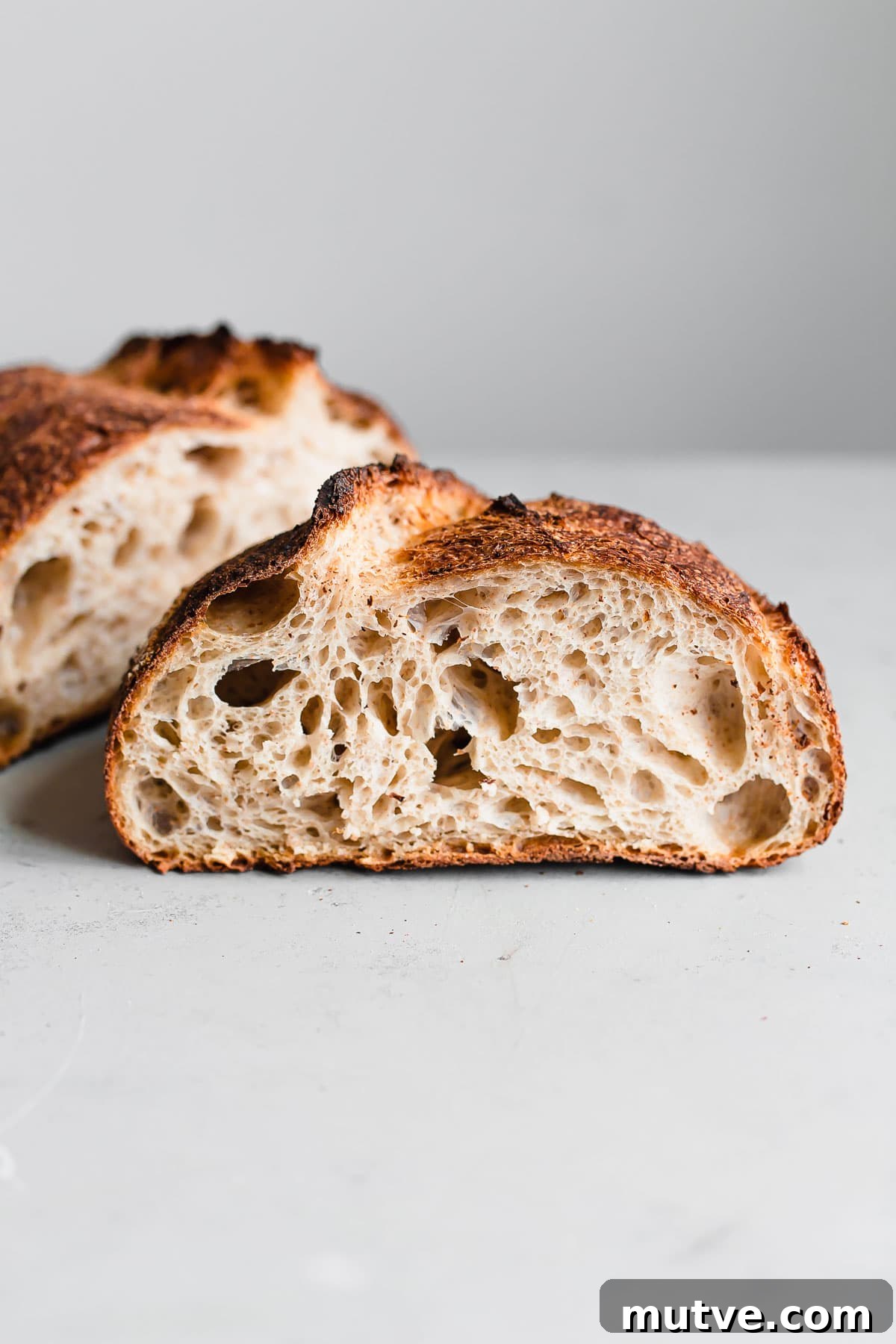
My favorite everyday artisan sourdough bread recipe. For visuals and step-by-step guidance, watch my YouTube video and see other sourdough resources referenced in this post.
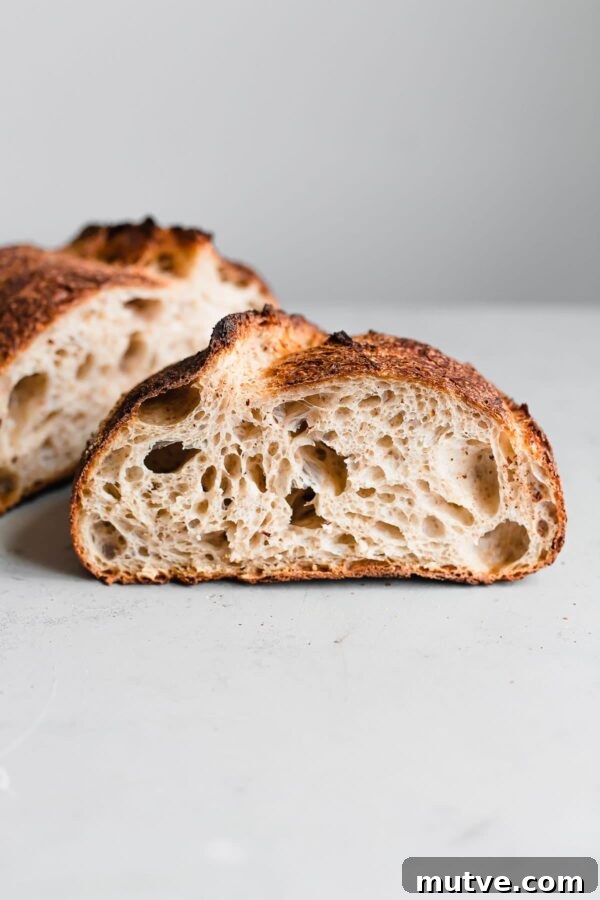
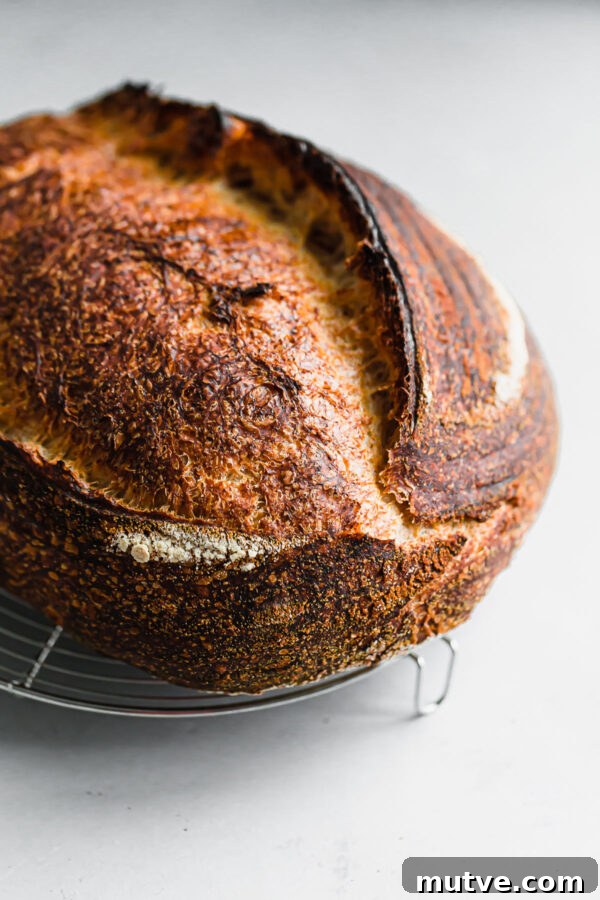
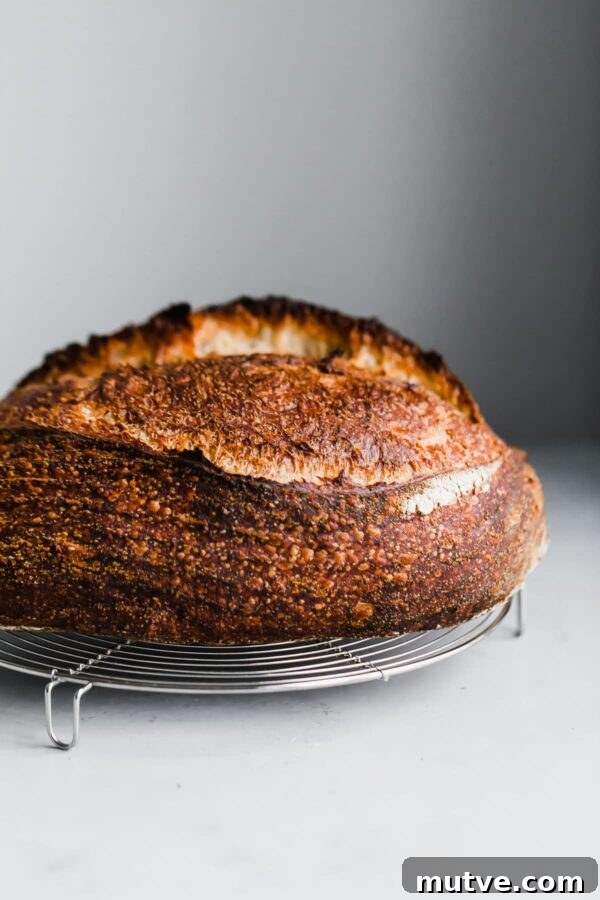
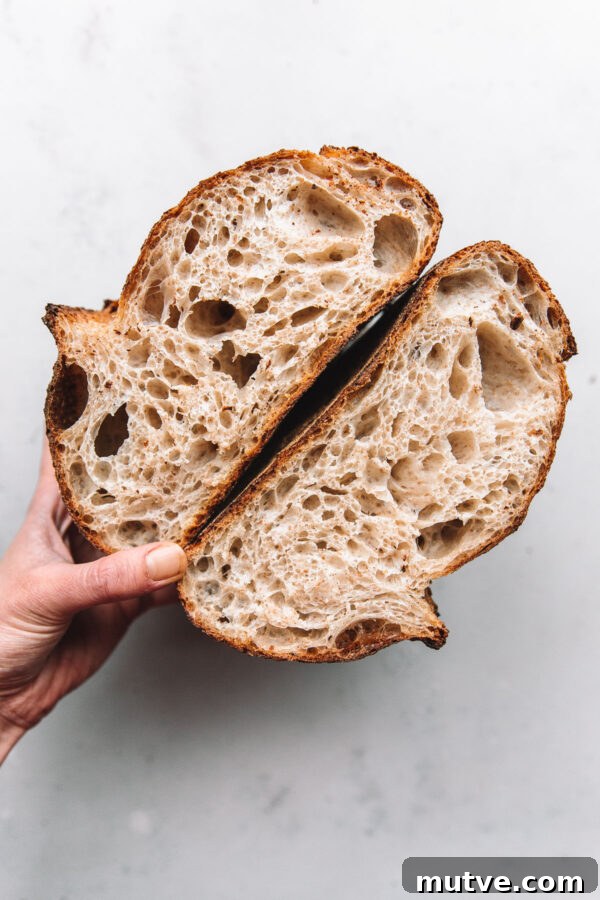
Baking sourdough has become a serious passion for me. I started a starter nearly two years ago and now bake sourdough bread and pizza at least weekly. It requires patience, but the results are rewarding: an airy, chewy crumb and deep, caramelized crust.
After almost two years of testing methods and recipes, here is my favorite everyday Artisan Sourdough Bread Recipe. This version combines 80% high-protein bread flour with 20% whole wheat for a high-hydration dough that develops an open crumb and excellent flavor.
Please be sure to watch the step-by-step YouTube video before you begin if you prefer visual instruction.
Recipe note: The timeline and timings below are a guide. Fermentation rates depend on ambient temperature, starter activity, and flour types, so adapt the schedule to your conditions.
Sourdough Starter: The Basics
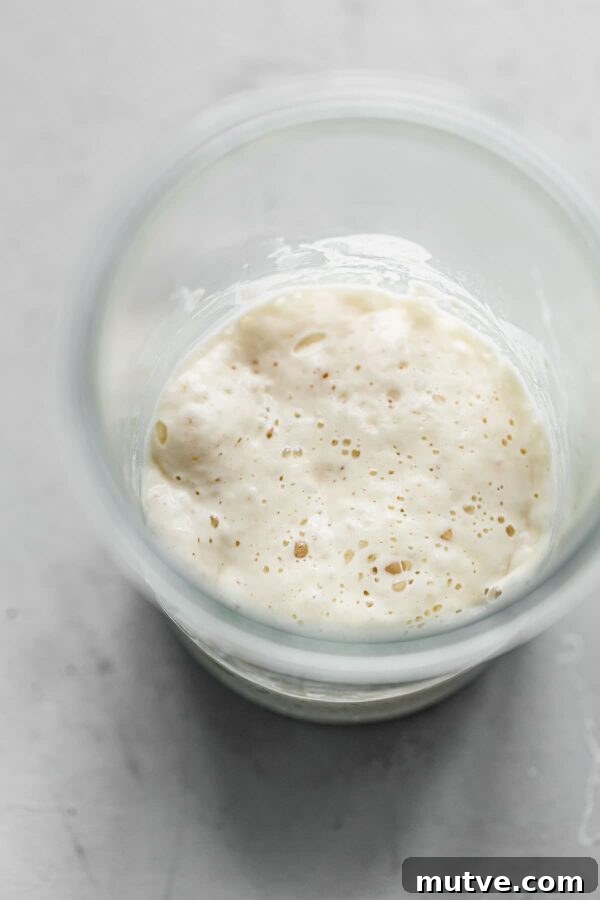
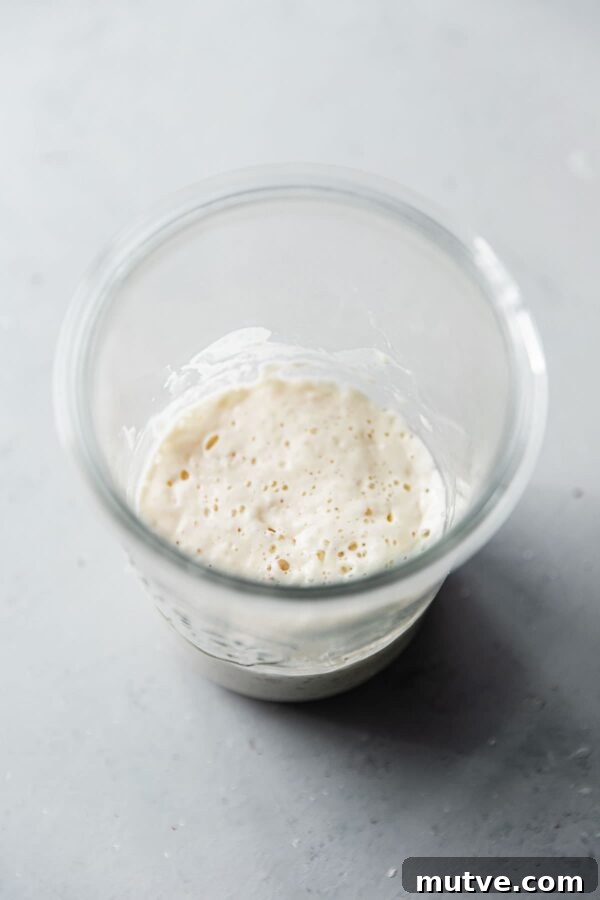
An active, mature sourdough starter is required to make this bread. If you need a starter, follow a trusted guide or ask a baker for a portion. Starters are living cultures and require regular feedings unless refrigerated. A strong starter is essential for good fermentation and an open crumb.
If your starter is not reliably rising and falling on a predictable schedule, spend a week or two building its strength before baking. For troubleshooting and feeding details, consult a starter troubleshooting guide.
Common Mistakes To Avoid
- Using a weak or young starter: under-active starters often cause poor fermentation and dense crumb.
- Under-proofing: leads to gummy, tight texture. Watch the dough, not the clock.
- Overworking or underworking high-hydration dough: learn gentle handling, and use stretch-and-folds to build strength.
How to Make Artisan Sourdough Bread
Important note: Many recipes use an off-shoot levain. I prefer to use a portion of my ripe, just-peaked starter to simplify the schedule. If you choose to use a levain, adjust the starter amounts accordingly.
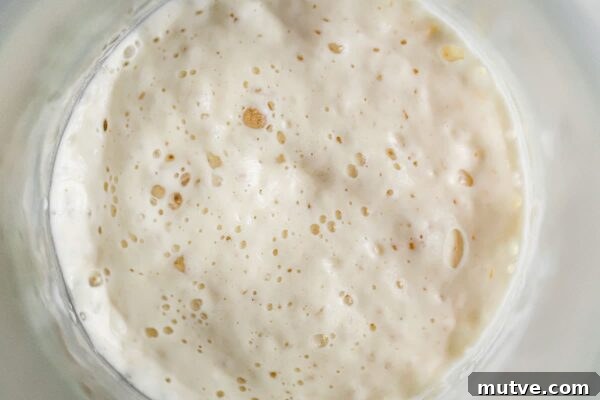
To prepare the starter the night before, I scale up a feeding to this: 12 g ripe starter + 60 g flour + 60 g water (a 1:5:5 ratio) so I have a reliably active starter the next morning. Adapt this to your starter’s needs.
*Watch the full step-by-step process on YouTube before you begin: How to Make Artisan Sourdough Bread.
Step 1: Autolyse
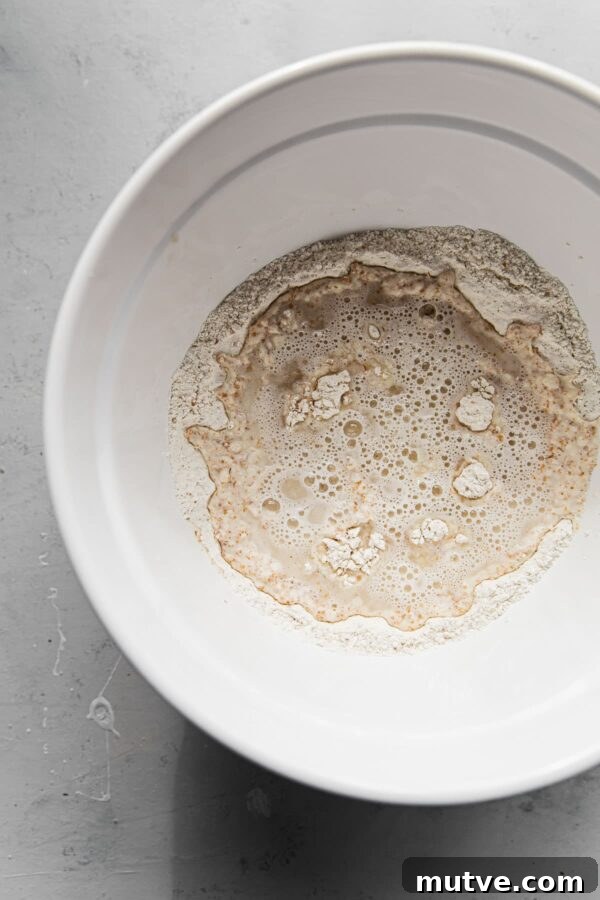
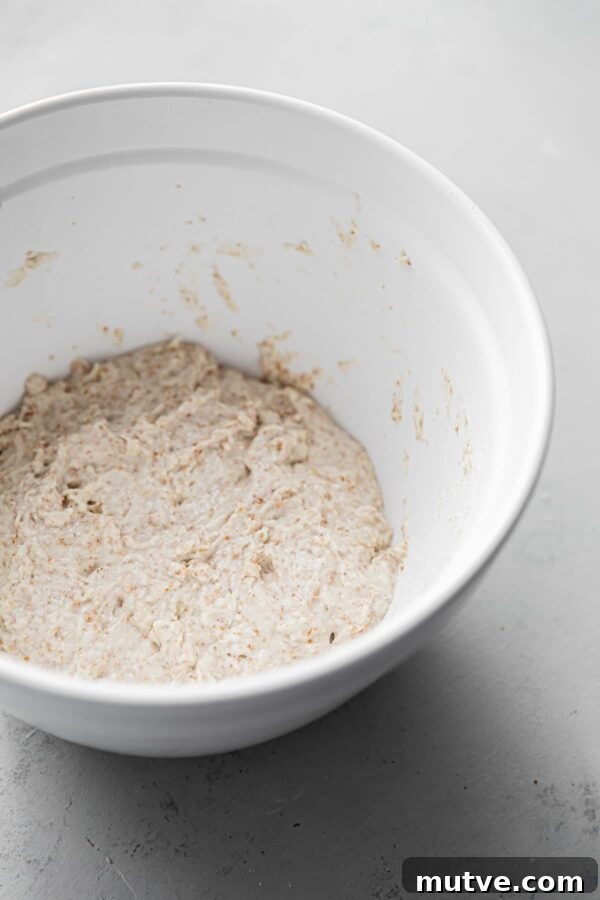
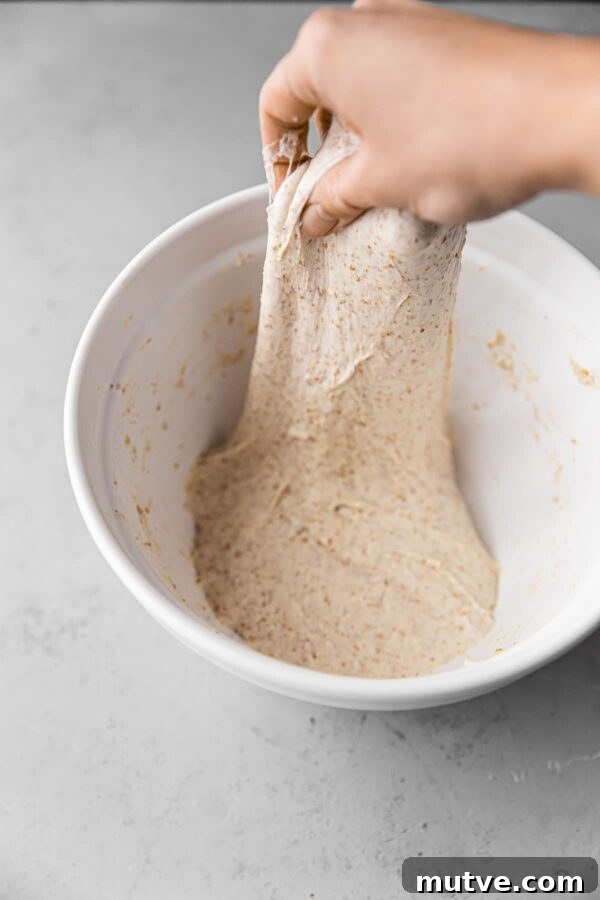
Whisk together the flours in a large bowl. Add 90°F / 32°C filtered water and mix until no dry bits remain; the dough will be sticky. Cover and rest at about 80°F / 26°C for 1–2 hours. Autolyse hydrates the flour and improves gluten development.
Step 2: Add Ripe Starter and Rest 30 Minutes
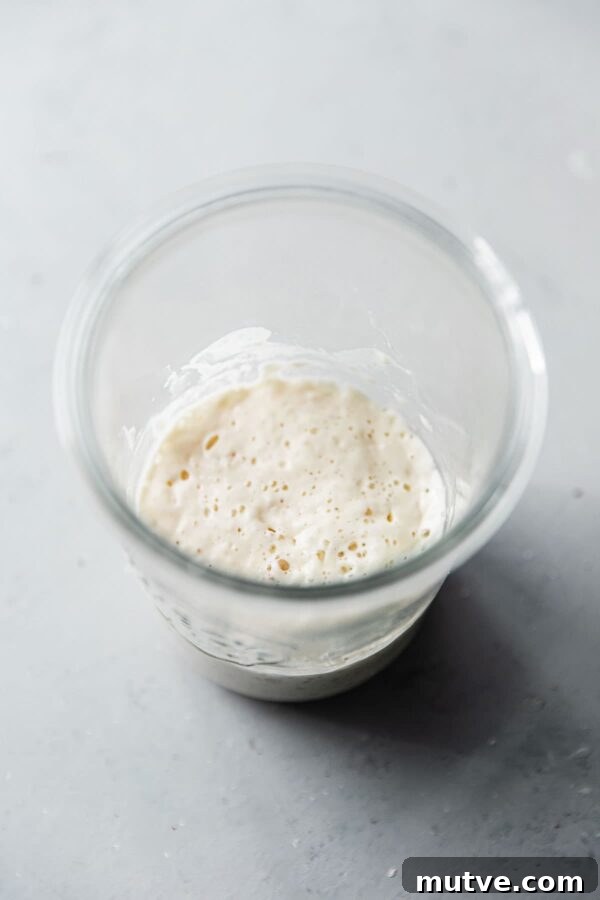
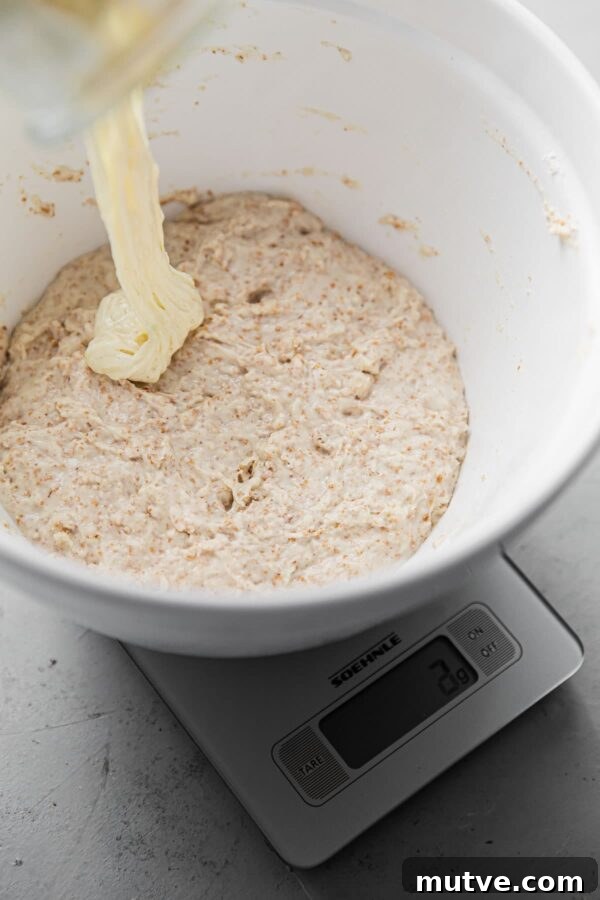
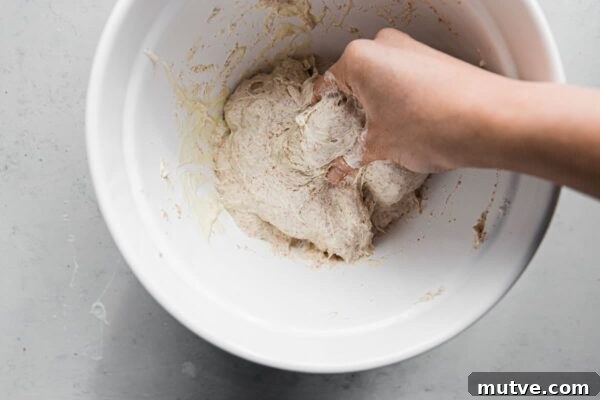
Perform a float test to confirm your starter is ready: a spoonful should float in water. Add 90 grams of ripe, just-peaked starter to the autolysed dough and work it in using the pincer method (pinch and fold) until evenly incorporated. Cover and rest at 80°F / 26°C for 30 minutes.
Step 3: Add Salt and Rest 15 Minutes
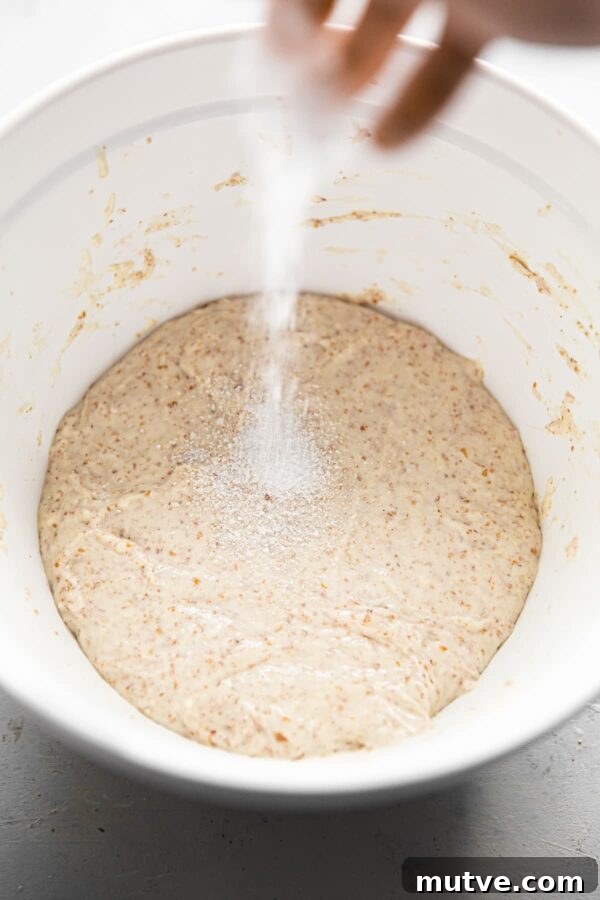
Sprinkle 9 grams of kosher or fine sea salt over the dough and thoroughly work it in by pinching until no granules remain. Cover and rest for 15 minutes. If you need more dough strength with this hydration, consider the slap-and-fold or Rubaud mixing methods demonstrated in the video.
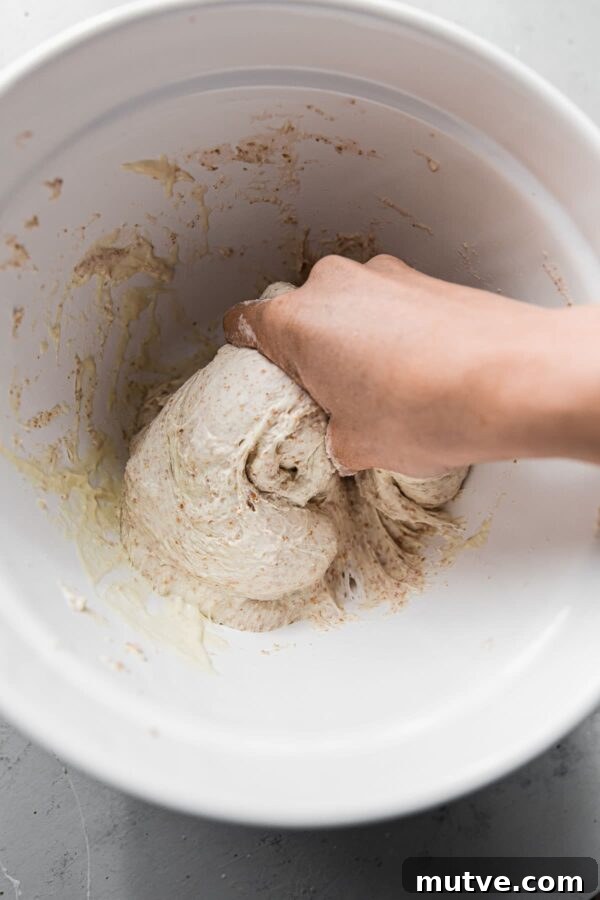
Step 4: Bulk Fermentation — Stretch and Folds
Perform six sets of stretch-and-folds during the first two hours of bulk fermentation: three sets at 15-minute intervals, then three sets at 30-minute intervals. Stretch-and-fold builds dough strength and structure. Between sets, keep the dough covered and resting at about 80°F / 26°C.
To perform a set: lightly wet your hands, lift and stretch the top of the dough, fold it over, rotate the bowl and repeat on all four sides. One full rotation equals a single set. After the sets, allow the dough to rest; it will gradually strengthen even if it does not rise dramatically during this period.
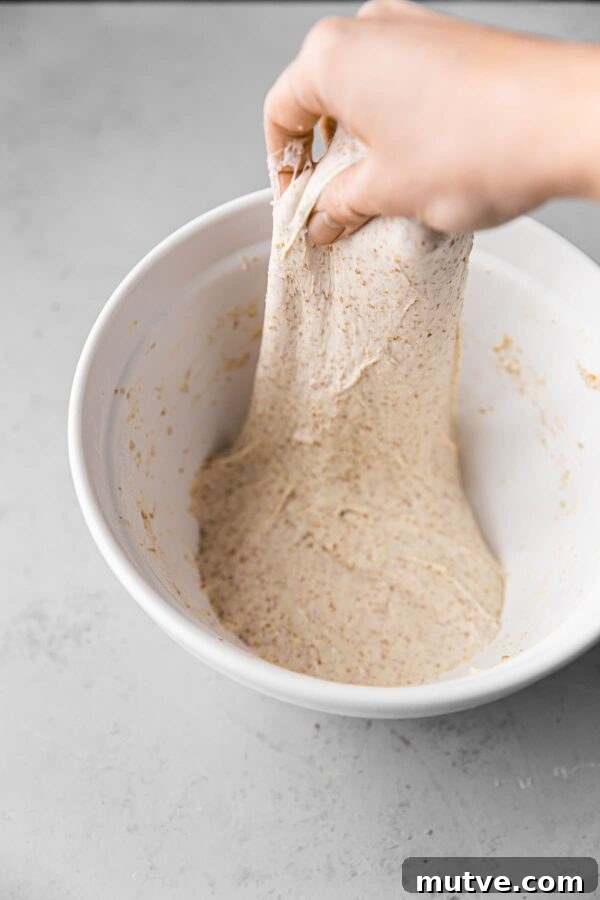
Step 5: Finish Bulk Fermentation
After the stretch-and-folds, rest the dough covered at 80°F / 26°C for another 1.5–2 hours, or until it is just under doubled and well aerated with visible bubbles. The timing depends on your kitchen temperature and starter strength — follow the dough’s behavior rather than the clock.
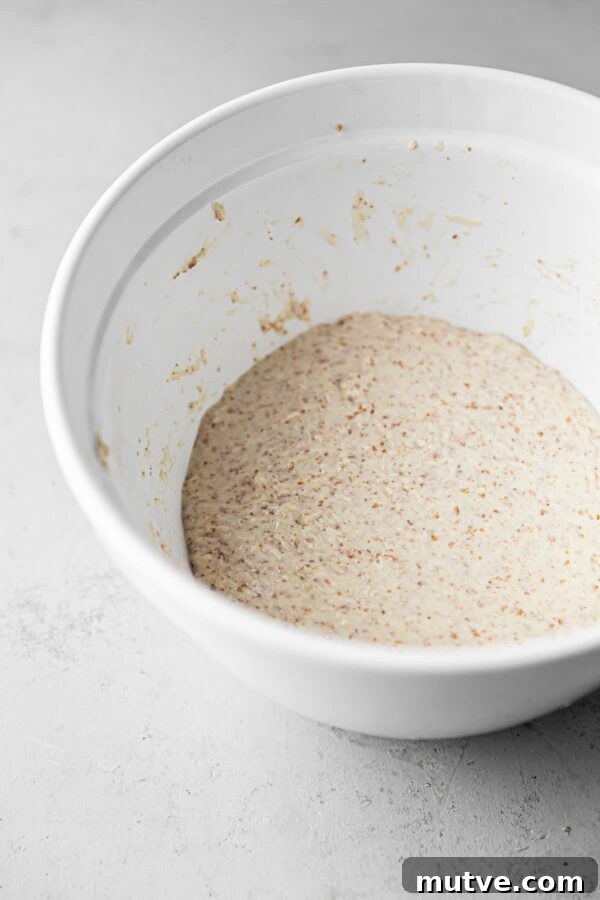
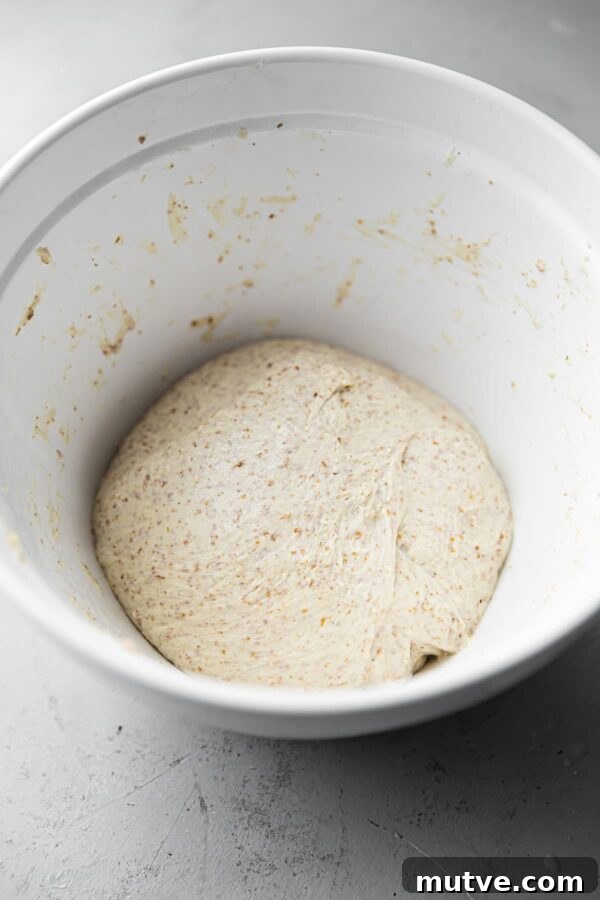
Step 6: Pre-shape
Gently transfer the dough to a lightly floured surface without degassing. Pre-shape into a round by using a bench scraper and dragging the dough toward you to build surface tension. Rest uncovered for 15–20 minutes to relax before final shaping.
Step 7: Final Shape
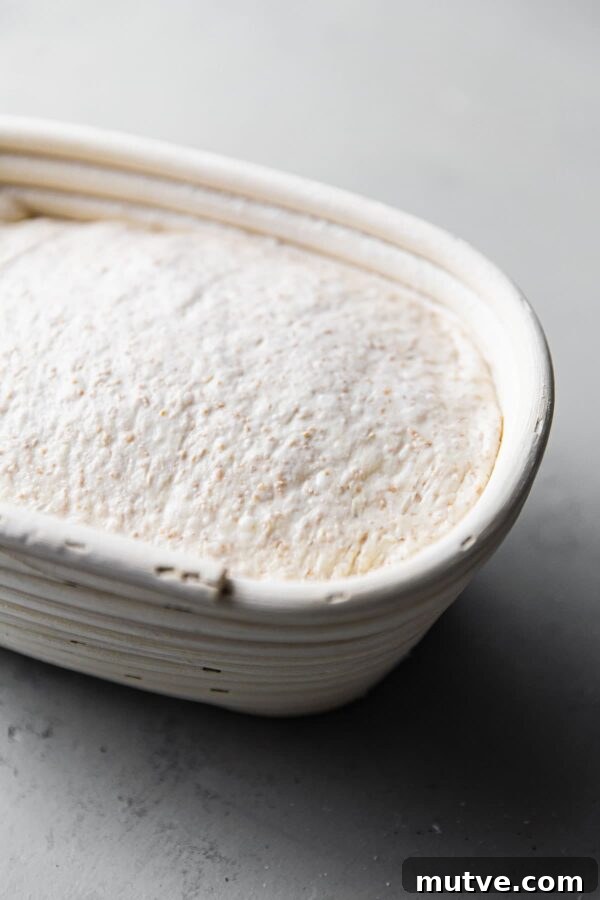
Lightly dust a banneton with rice flour. Shape the dough into a batard (oval) or boule depending on your vessel. Place seam-side up in the banneton, cover with a linen and a plastic bag, and allow it to rest at room temperature for 10 minutes before chilling.
Step 8: Final Proof (Cold Retard)
Place the covered banneton in the refrigerator and cold-ferment at about 38°F / 3°C for 15–16 hours. This slow, cold proof intensifies flavor and improves crust development.
Step 9: Preheat Oven and Baking Vessel
Preheat a Dutch oven, Challenger pan, or combo cooker at 500°F / 260°C for at least one hour before baking.
Step 10: Bake
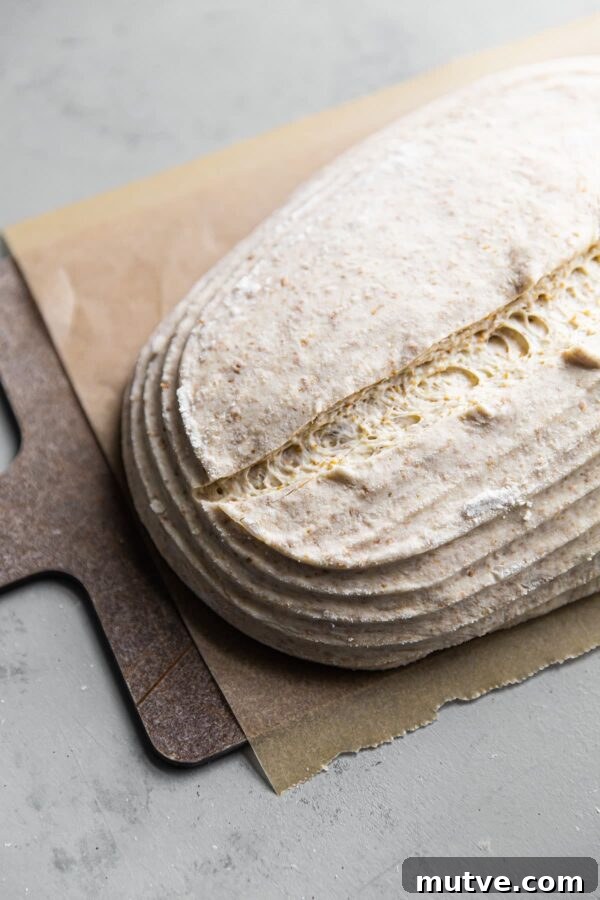
Remove the banneton from the fridge and perform the poke test: a properly proofed dough will slowly spring back and retain a light indentation. Transfer the dough to the preheated vessel, score with a lame about 1/2-inch deep, cover, and bake at 500°F / 260°C for 25 minutes with the lid on.
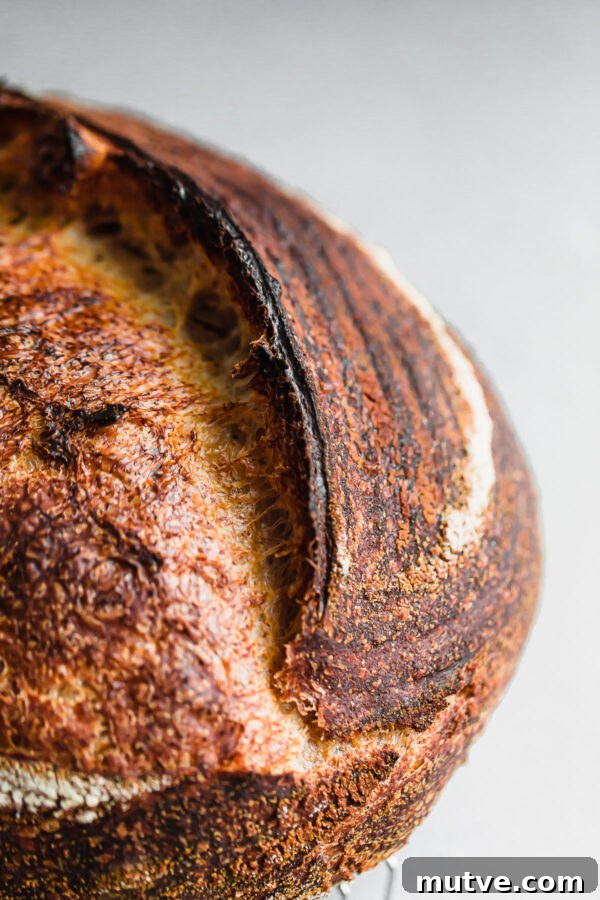
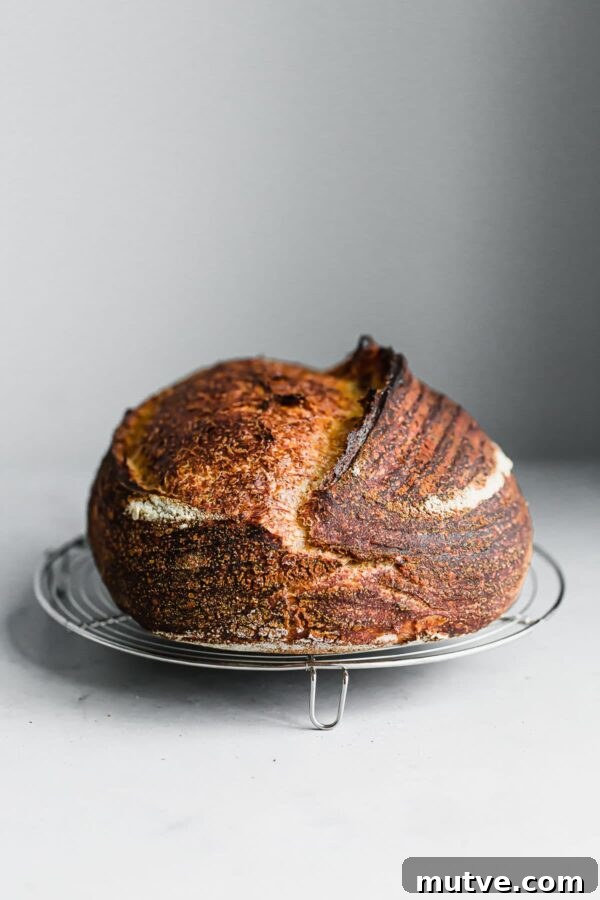
Remove the lid, reduce the oven to 475°F / 240°C (or 450°F / 232°C if your oven runs hot), and bake uncovered another 15–25 minutes until the crust is deeply caramelized. Cool completely on a rack before slicing — several hours yields the best texture.
Artisan Sourdough Bread Ingredients
- 350 grams bread flour (preferably organic)
- 90 grams whole wheat flour (preferably organic, stone-ground)
- 350 grams filtered water at 90°F / 32°C
- 90 grams ripe sourdough starter (100% hydration)
- 9 grams kosher or fine sea salt
- White rice flour for dusting banneton
Baker’s Percentages
- Bread Flour: 79.5%
- Whole Wheat: 20.5%
- Water: ~79.5% (approximate; true hydration includes water in the starter)
- Starter: 20%
- Salt: 2%
Recommended Equipment
- Dutch oven, Challenger bread pan, or combo cooker (with lid)
- Mature sourdough starter
- Baking scale and instant thermometer
- Bench knife and serrated bread knife
- Banneton (round or oval) and white rice flour for dusting
- Bread lame or sharp blade for scoring
Example Baking Timeline
Use this sample schedule as a starting point and adjust based on your kitchen temperature and starter activity.
Day One
- 8:30 AM — Autolyse: mix flours and water, rest 1–2 hours at ~80°F / 26°C.
- 9:30 AM — Add ripe starter, mix, rest 30 minutes.
- 10:00 AM — Add salt, mix, rest 15 minutes.
- 10:15–11:15 AM — Stretch and folds (three sets at 15-minute intervals, then three sets at 30-minute intervals).
- 12:15–2:15/3:15 PM — Finish bulk fermentation until just under doubled.
- 2:15/3:15 PM — Pre-shape, rest 15–20 minutes.
- 2:35/3:35 PM — Final shape, into rice-floured banneton, rest 10 minutes, then refrigerate.
- 3:45 PM – next morning — Cold retard 15–16 hours at 38°F / 3°C.
Day Two
- 6:45 AM — Preheat vessel to 500°F / 260°C for at least one hour.
- 7:45 AM — Remove dough from fridge, transfer to preheated pan, score, and bake covered 25 minutes at 500°F / 260°C.
- 8:10 AM — Remove lid, reduce oven to 475°F / 240°C (or 450°F if needed) and bake another 15–25 minutes until deeply colored. Cool completely before slicing.
Storage
Store leftover sourdough in a paper bag or wrapped at room temperature for short-term use, or slice and freeze for longer storage. Refresh slices by toasting or warming in the oven.
Troubleshooting and Tips
- If your starter is sluggish, give it additional feedings and time to strengthen before baking.
- If the dough feels too slack to handle, reduce hydration slightly (310–330 g water) and decrease stretch-and-folds to 4 sets.
- Always follow the dough’s signs — bubbles, slight rise, and surface tension — rather than fixed times.
Printable Recipe Summary
Yield: 1 loaf (~890 g). Total active bake time is short, but the process takes about 1–2 days including cold proofing. Ingredients and steps are listed above — follow the timeline and tips for best results. Enjoy your artisan sourdough!