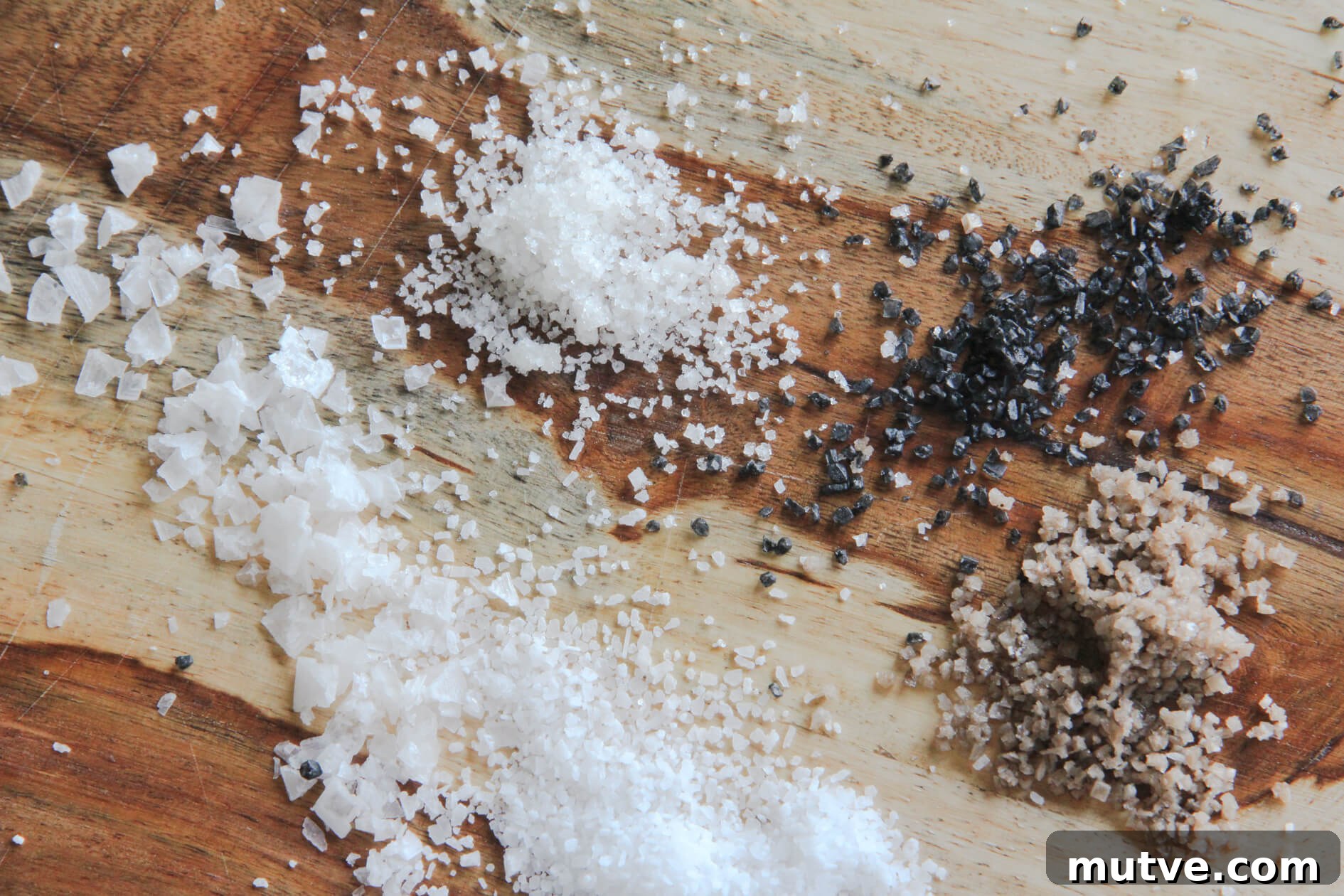
Kosher salt appears as an ingredient in most barbecue and general cooking recipes. But what exactly is it, and why is it important to know the difference?
Salt is simply sodium chloride, but not all salts behave the same in the kitchen. Different crystal shapes and sizes change how salt measures by volume and how it distributes on food, which affects perceived saltiness. That’s why recipes that say “salt to taste” can still lead to very different results depending on which salt you use. Understanding the differences—especially between table salt and kosher salt—helps you season more accurately and avoid over- or under-salting dishes.
Crystal size determines how much sodium chloride fits into a measuring teaspoon or tablespoon. Finer-grained salts pack more densely into a measuring spoon, so a teaspoon of a fine table salt contains more salt than a teaspoon of a flakier or coarser kosher salt. In practice, this means you can’t always substitute one for the other on a straight volume-for-volume basis without adjusting amounts.
What is the difference between table and kosher salt?
Table salt is finely ground and often contains anti-caking agents; it packs tightly into measuring spoons, so a volume measurement contains a relatively large amount of sodium chloride. Kosher salt is coarser and flakier, so the same volume generally contains less salt. A common kitchen rule of thumb is that table salt is about twice as concentrated by volume as many coarse kosher salts—so if a recipe calls for 2 teaspoons of kosher salt, using 2 teaspoons of table salt will likely make the dish noticeably saltier than intended.
The most practical adjustment is to add salt gradually and taste as you go. If you must substitute table salt for kosher salt and don’t have a scale, start with about half the volume called for, then adjust to taste. For a more exact approach, weigh your salts and follow recipes by weight rather than volume—this removes the variability caused by crystal size and brand differences.
So what exactly is kosher salt?
Kosher salt gets its name from its traditional use in the koshering process, not because the salt itself is certified kosher by a rabbi. The larger, irregular crystals were effective for drawing blood from meat during koshering. Over time, the term “kosher salt” came to describe salts with that coarse flake or crystal structure. Because manufacturers form their flakes differently, the density and size vary between brands—Morton and Diamond Crystal are two well-known examples with noticeably different textures—so conversions between table and kosher salt depend on which kosher salt you have.
Kosher salt’s texture makes it easy to pinch and sprinkle, and many cooks prefer it for seasoning during cooking because it distributes more evenly and is less likely to rapidly overpower a dish when used by feel. If kosher salt is not available locally, it’s easiest to order it online rather than expect it from specialty outlets; check the package for guidance on grain size or recommended conversions.
Why is kosher salt preferable for cooking?
- Easy to distribute: Larger grains and flakes are tactile and simple to pinch, giving more control when seasoning by hand.
- Reduced risk of over-salting: Because a given volume often contains less sodium chloride than fine table salt, it’s more forgiving when seasoning during cooking.
- Good for forming a crust: Coarser salt is useful for developing a flavorful exterior, or “bark,” on grilled or smoked meats, where a physical texture helps carry spices and seasonings.
Other types of salts used for cooking
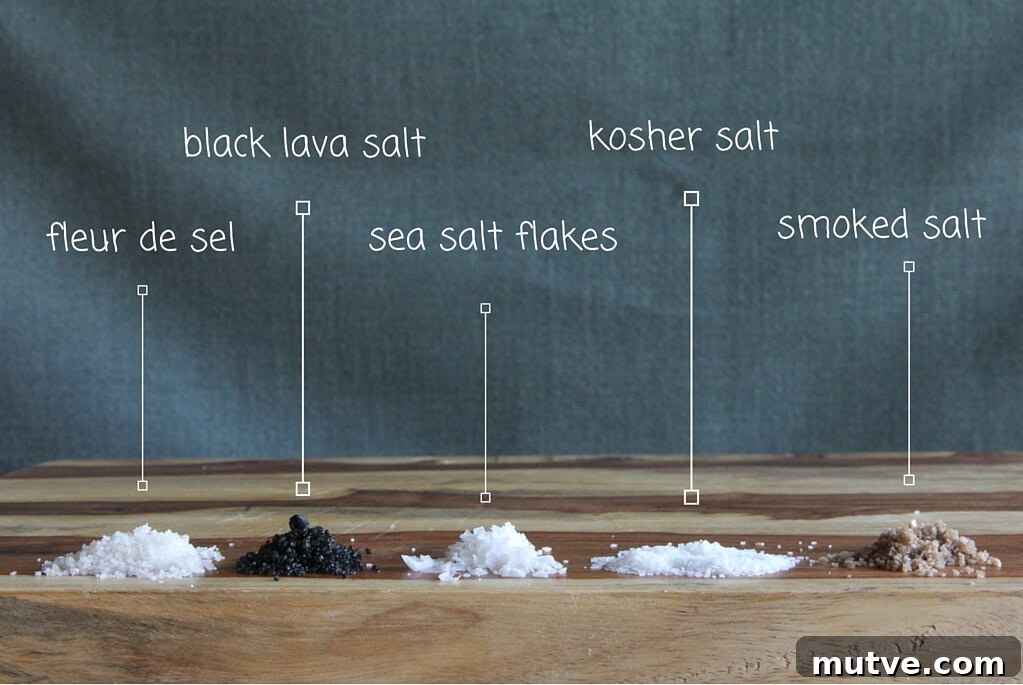
There are several additional culinary salts worth having on hand depending on the application. Flaky sea salts and Maldon-style salts are excellent finishing salts—large, flat flakes provide a delicate crunch and a burst of flavor on steaks, salads, and desserts. Fleur de sel is prized for finishing sweets and caramels because its irregular, clumpy grains give intermittent salty highlights. Pickling salt and fine-grain salts dissolve quickly, which makes them ideal for brines and pickling solutions. Smoked salts can add a smoky note without cooking over flame. Each salt brings a different texture and intensity, so using the right one improves the result.
Because salt size and density vary, “salt to taste” remains valuable advice: it accounts for individual preference and the specific salt in use. Taste as you season, add gradually, and remember the golden rule—you can always add more salt, but you can’t remove it. When precision matters, measure by weight or check the salt packaging for conversion guidance to ensure consistent results in recipes.