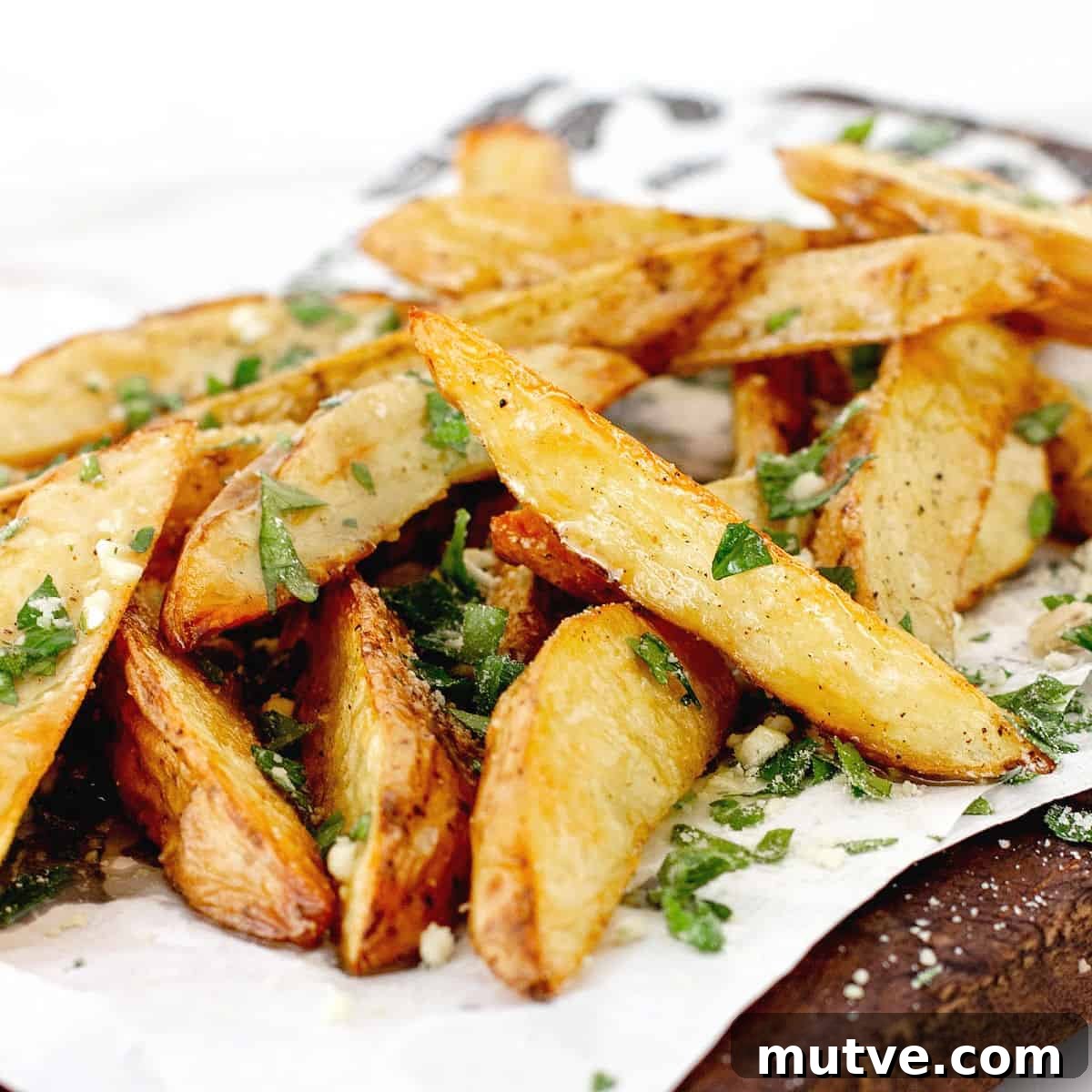
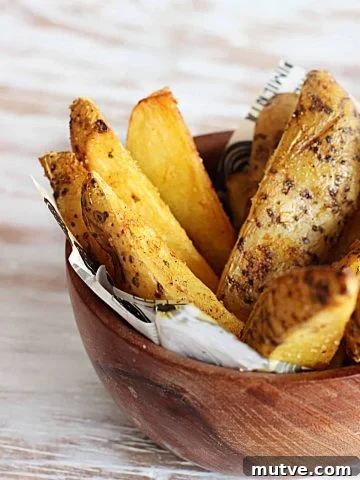
These parmesan garlic baked potato wedges are crispy on the outside and tender and creamy inside. They’re simple to make, full of bright garlic and salty parmesan flavor, and perfect for game day, a barbecue, or a casual snack with a cold beer or a glass of wine.
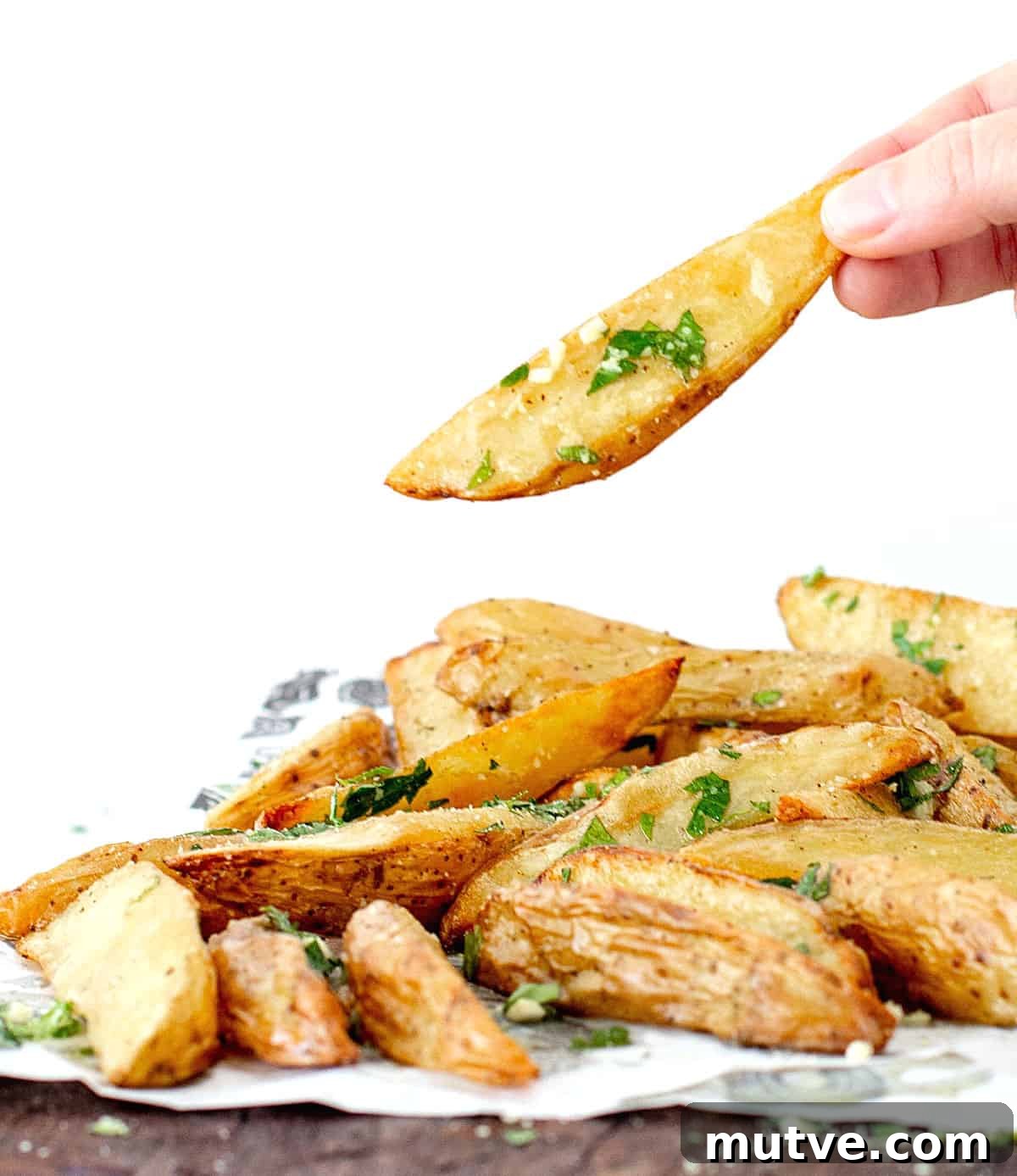
Potatoes and simple finger foods are in season, and these wedges hit the mark: salty, garlicky, and generously coated with grated parmesan and fresh parsley. They come together quickly and can be made ahead to a point—most of the work is cutting the potatoes and letting the oven do the rest.
Making them is straightforward: cut the potatoes into wedges, toss with oil and a little butter, bake until golden and tender, then dress with the parsley, garlic and parmesan mixture and a squeeze of lemon. The bright finishing touches are what lift these from ordinary to memorable.
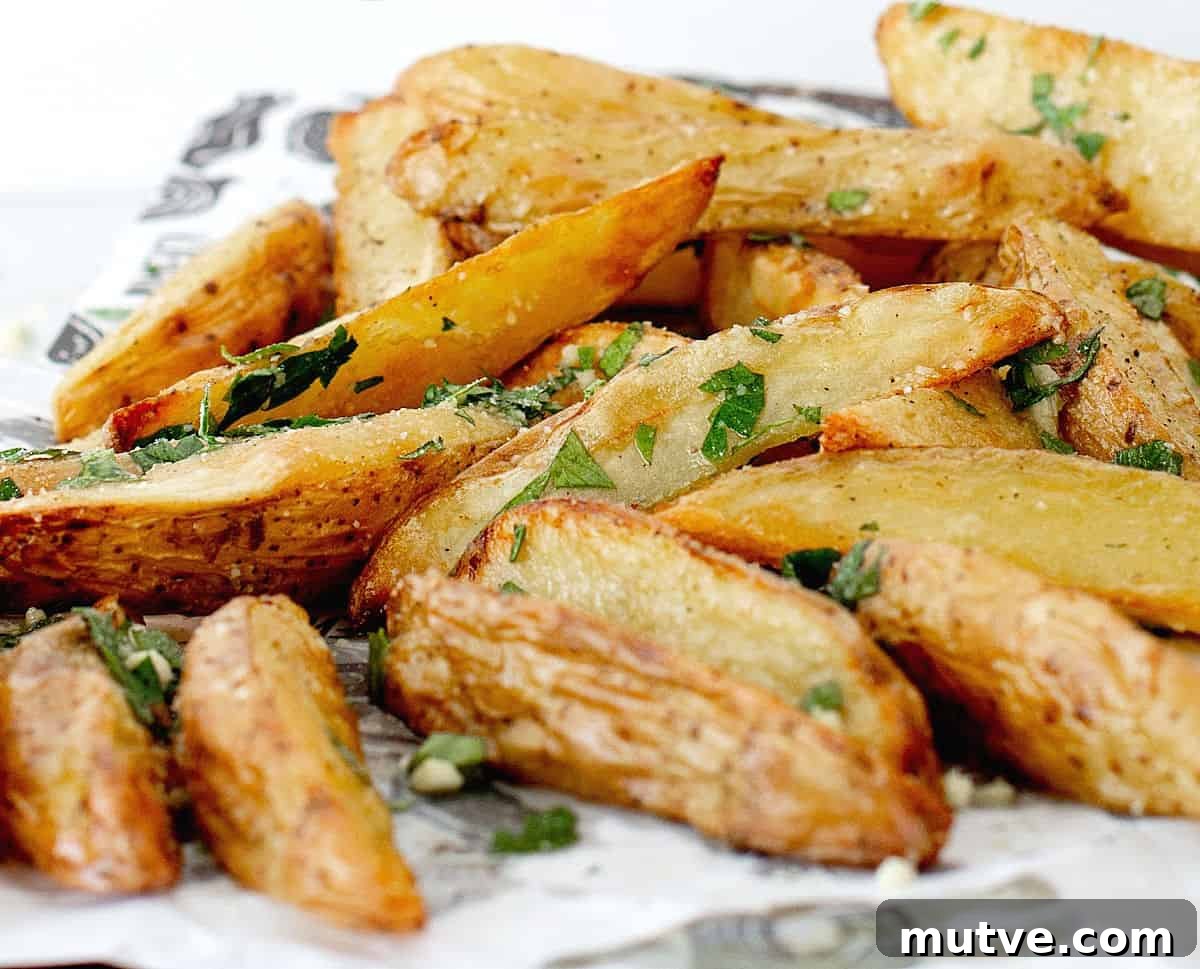
How to prepare the potatoes
- Choose similar-sized potatoes: pick potatoes that are roughly the same size so the wedges bake evenly.
- Wash and scrub: leave the skin on for texture and flavor, so scrub them well. If you prefer, you can peel them.
- Best variety: russet potatoes are a great choice for creaminess and structure, but any baking potato or variety you would normally use for fries will work.
How to cut wedges
Cutting wedges is simple and only takes a few moments. You can cut each potato into 6 or 8 wedges depending on how thick you want them.
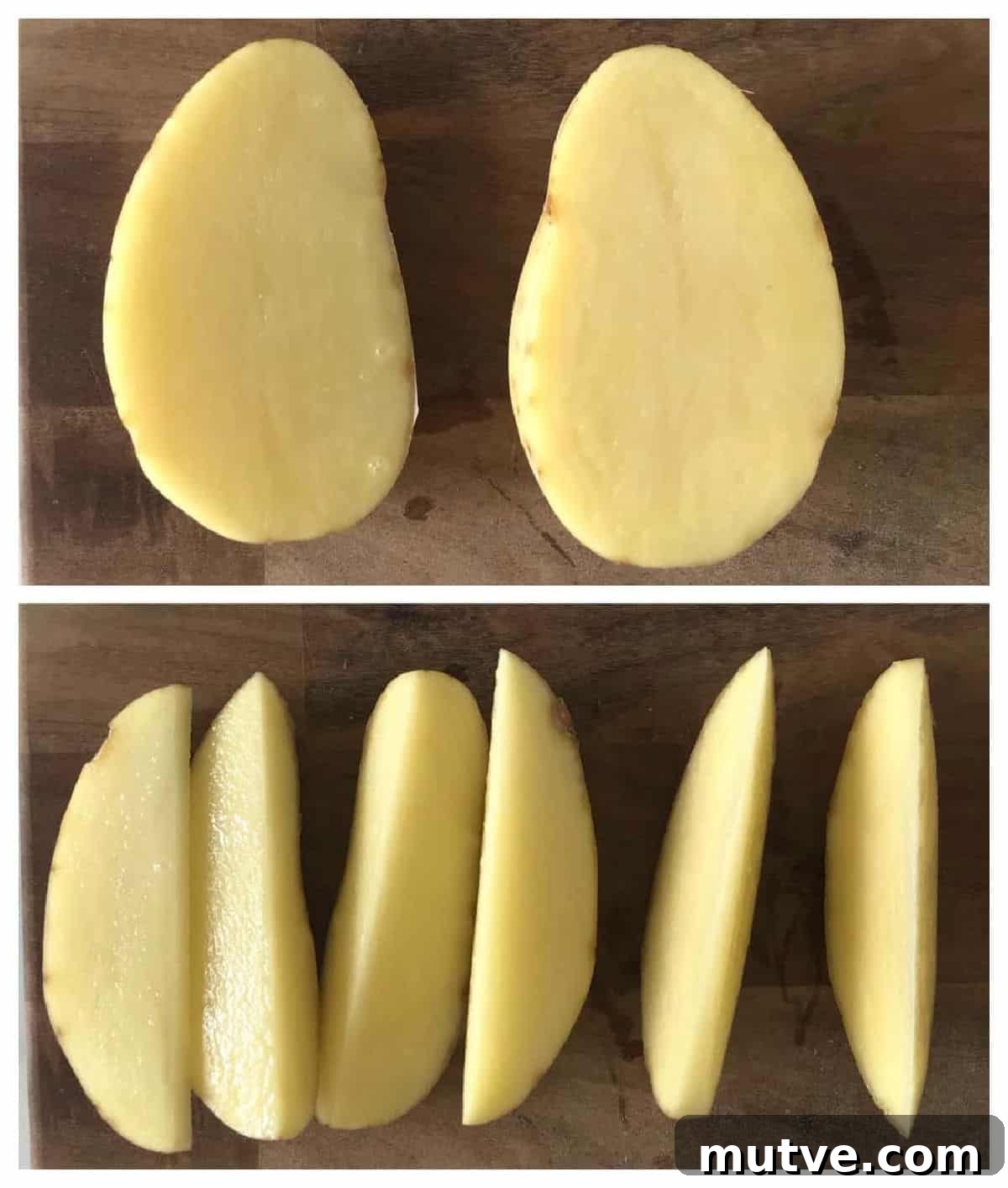
Start by halving the potato lengthwise. To make 6 wedges, cut each half into three pieces, making the first cut at a slight angle so the wedge sits flat. To make 8 wedges, cut each half into two and then cut those pieces in half again.
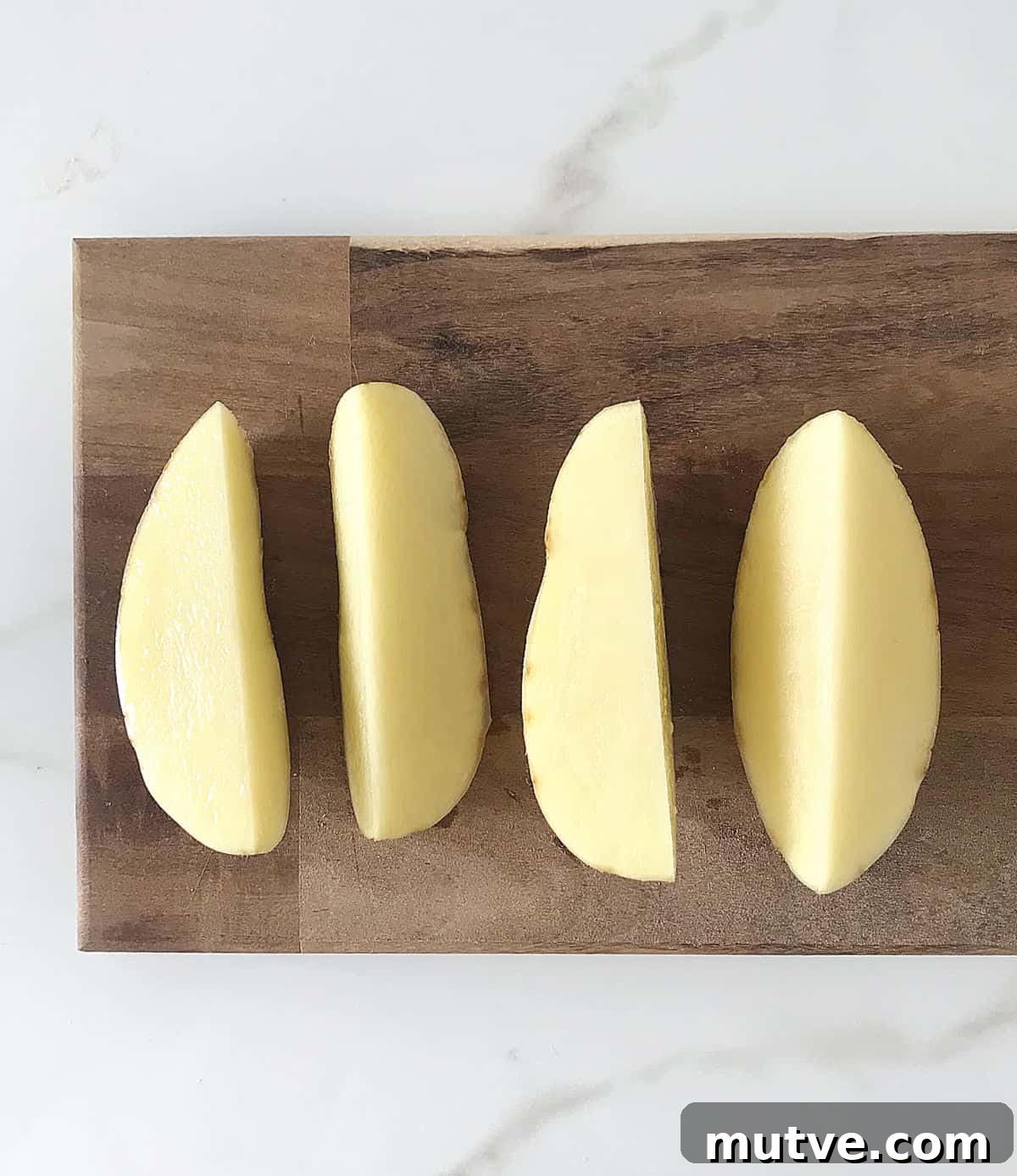
Difference in size
The main difference between cutting 6 or 8 wedges is thickness. Six wedges per potato make thicker pieces with a creamier interior; eight wedges yield thinner wedges that may crisp up a bit more. Choose the cut that matches your texture preference. For medium-sized potatoes, six wedges usually give a nice balance between a crispy exterior and a soft center.
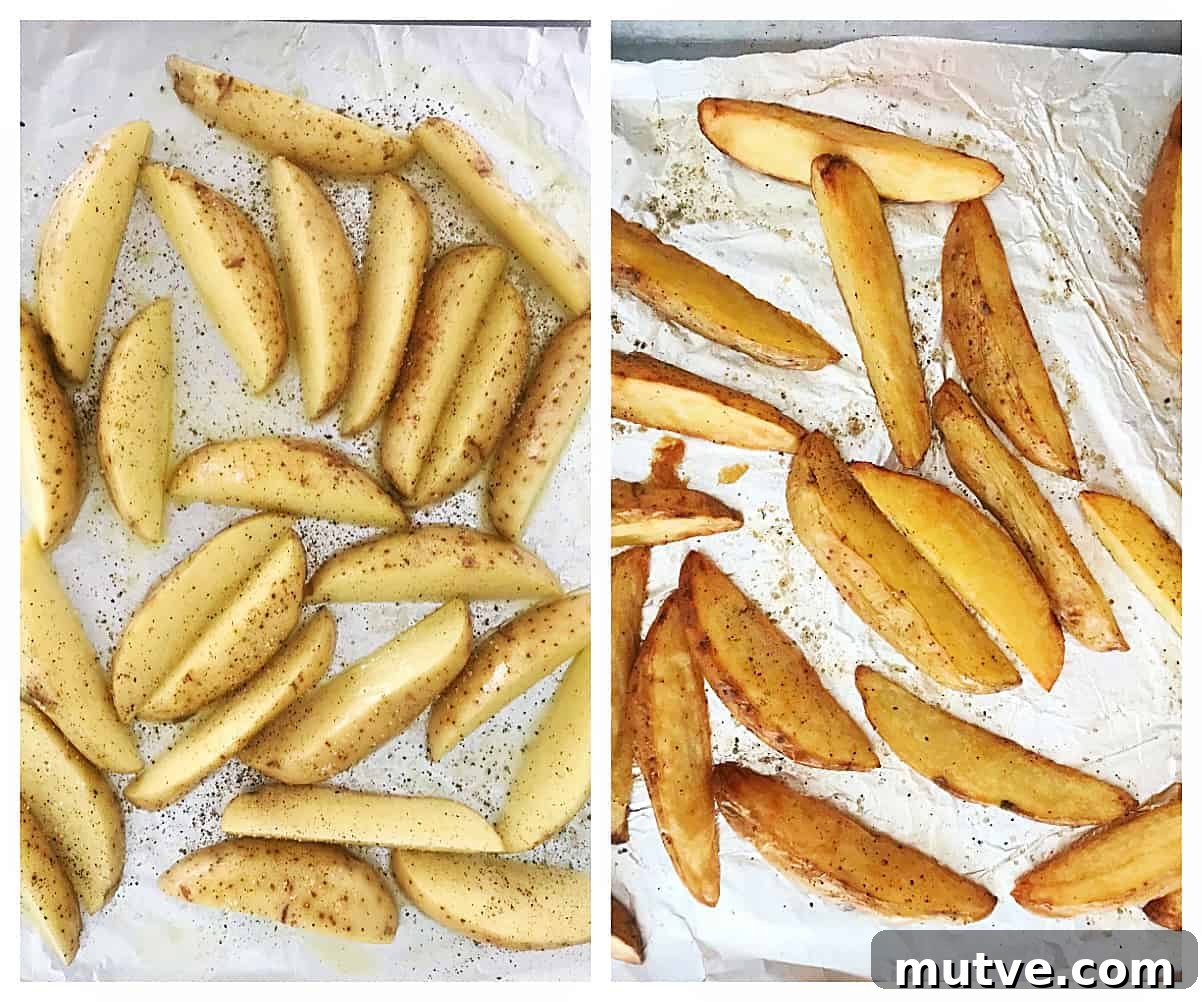
The magic seasoning
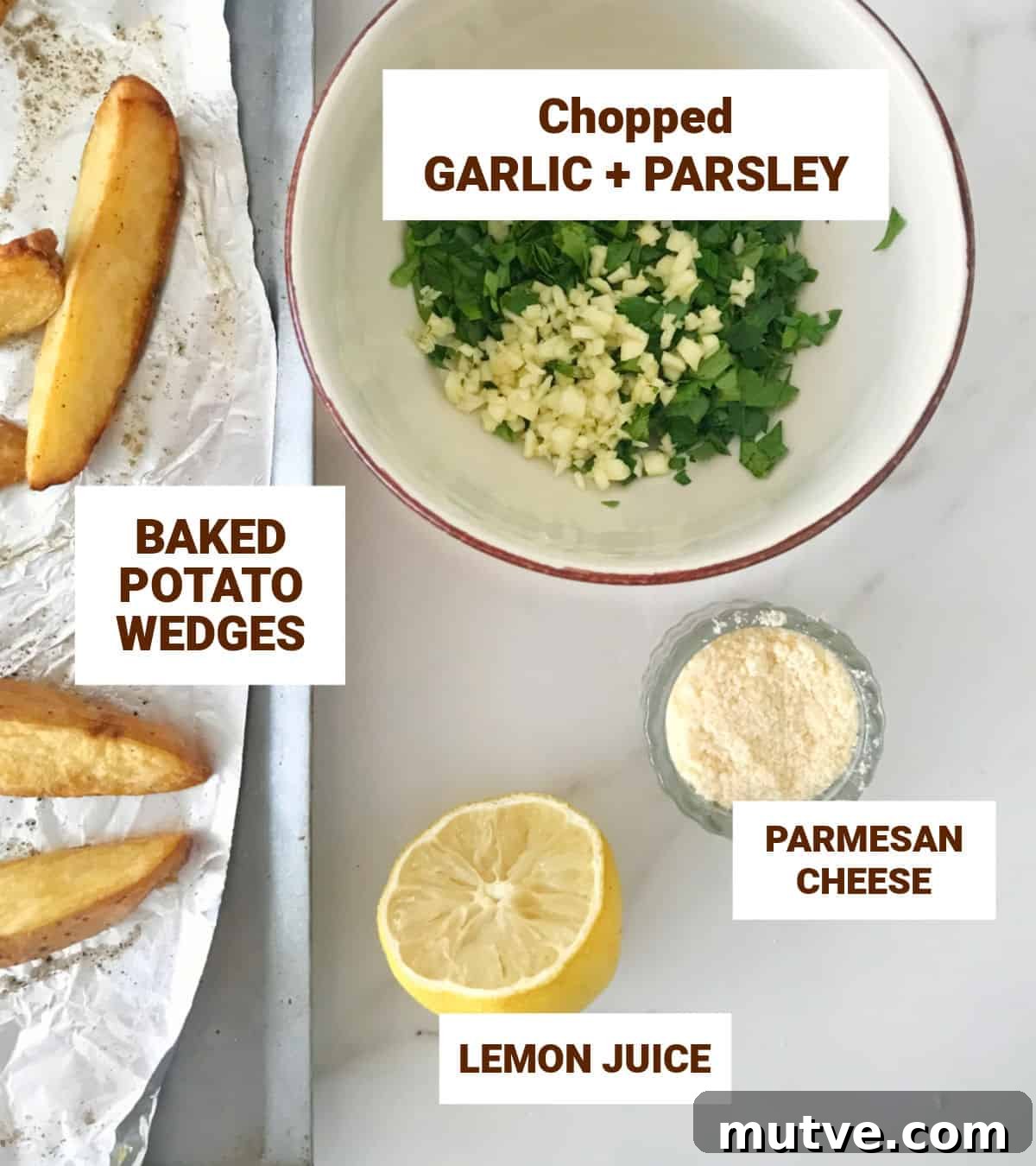
The flavor comes from a simple combination of ingredients that work together: garlic, parmesan, parsley and a touch of lemon. Each element plays a role:
- Garlic: finely chopped raw garlic adds a bright, assertive bite.
- Parmesan: choose a flavorful, salty parmesan — it deepens the savory profile.
- Parsley and lemon: parsley adds freshness; lemon juice brings acidity to balance the richness.
Chop the parsley and garlic, grate the parmesan, mix them together, and toss with the hot wedges just before serving. The heat helps the parmesan cling and releases the garlic aroma, while the lemon brightens every bite.
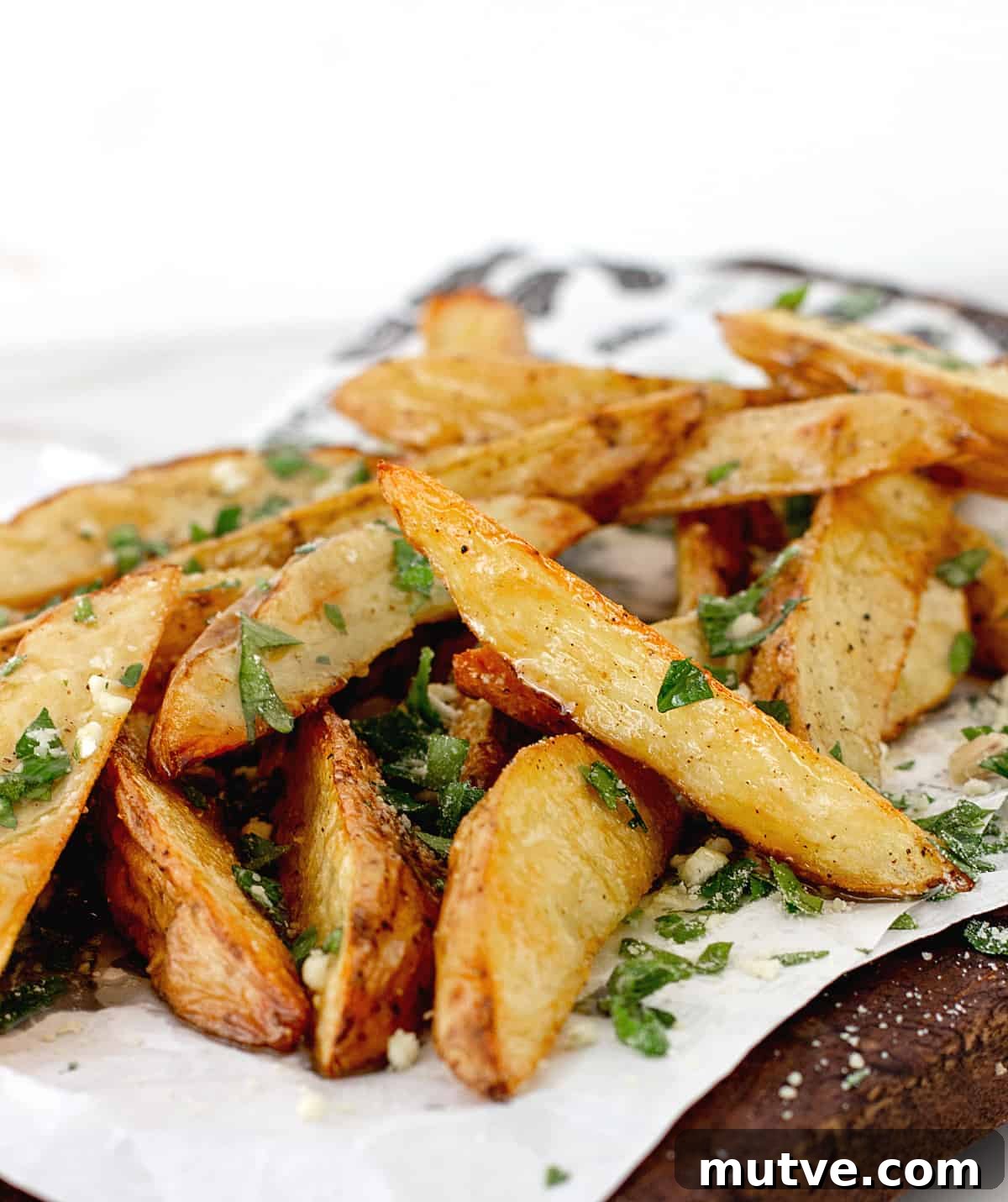
Serving
Straight from the oven is best. Serve the wedges immediately so they keep their crisp exterior. Transfer them to a flat board or plate, sprinkle the parsley-garlic-parmesan mix over them, and finish with a quick squeeze of lemon.
- Season them lightly while hot and serve on a board or platter for easy sharing.
- If you like tangy condiments, a splash of your favorite vinegar-based sauce or a chunky chimichurri-style herb sauce makes a great dip.
- Offer simple dips like ketchup, sour cream, or a garlicky mayo alongside for guests who prefer them plain.
Enjoy these as an appetizer or as a side to grilled or baked meats. They pair well with casual gatherings and work especially well with beer or a relaxed glass of wine.
Why are my potato wedges soggy?
Sogginess usually comes from excess surface moisture. Make sure the potatoes are well dried after washing, toss them with oil so they don’t steam, and give them enough time in the oven for the outsides to crisp. Salt just before serving to avoid drawing out water during resting.
Why aren’t my wedges crisping enough?
Dry the cut potatoes thoroughly and avoid overcrowding the pan. A single layer with a little space around each wedge allows hot air to circulate and encourages browning. A touch of oil and a higher oven finish time can help achieve a crisp exterior without overcooking the interior.
What pairs well with potato wedges?
These wedges are versatile. Serve them with grilled or roasted meats for a complete meal, or offer them as an appetizer with dipping sauces and cold drinks. Classic options include ketchup, creamy dips, or herb-forward sauces that add acidity and contrast to the rich, cheesy wedges.
Related recipes you might like:
-
Spicy Baked Potato Wedges
-
Little Smokies
-
Savory Scones
-
Caramelized Onion Dip



If you tried this recipe and enjoyed it, please leave a comment and a rating. If something didn’t turn out as expected, tell me and I’ll help troubleshoot.

Parmesan Potato Wedges
Ingredients
For the potatoes:
- 2–3 tablespoons olive oil
- 2–3 tablespoons butter, melted
- 2 pounds (about 900 g) medium potatoes, scrubbed and dried, skin on
For the seasoning:
- 2 tablespoons chopped parsley
- 1 garlic clove, peeled and finely chopped
- 1/3 cup grated parmesan cheese
- 1 tablespoon fresh lemon juice (about ½ lemon)
Instructions
- Preheat the oven to 350ºF (180ºC).
- Line an oven tray with aluminum foil for easy cleanup, or use a baking pan.
- Cut the washed and dried potatoes in half lengthwise, then cut into thirds or fourths depending on desired wedge size (see notes above about 6 vs. 8 wedges).
- Place the wedges in a bowl. Add melted butter and olive oil and toss to coat evenly.
- Season lightly with salt and pepper — remember parmesan adds saltiness.
- Arrange the wedges in a single layer on the tray and bake for 30–40 minutes, until tender inside and golden outside.
- While the wedges bake, combine the chopped parsley, garlic and grated parmesan in a small bowl.
- When the wedges are done, transfer them to a serving board or plate and sprinkle the parsley-garlic-parmesan mixture over them.
- Drizzle with fresh lemon juice and serve immediately.
Notes
Potatoes: Use potatoes of similar size so the wedges cook uniformly. Russets work well because they hold their shape and become creamy inside.
Seasoning: The amounts are a guideline—adjust garlic, parsley and parmesan to taste. Salt sparingly before baking and adjust after finishing if needed.