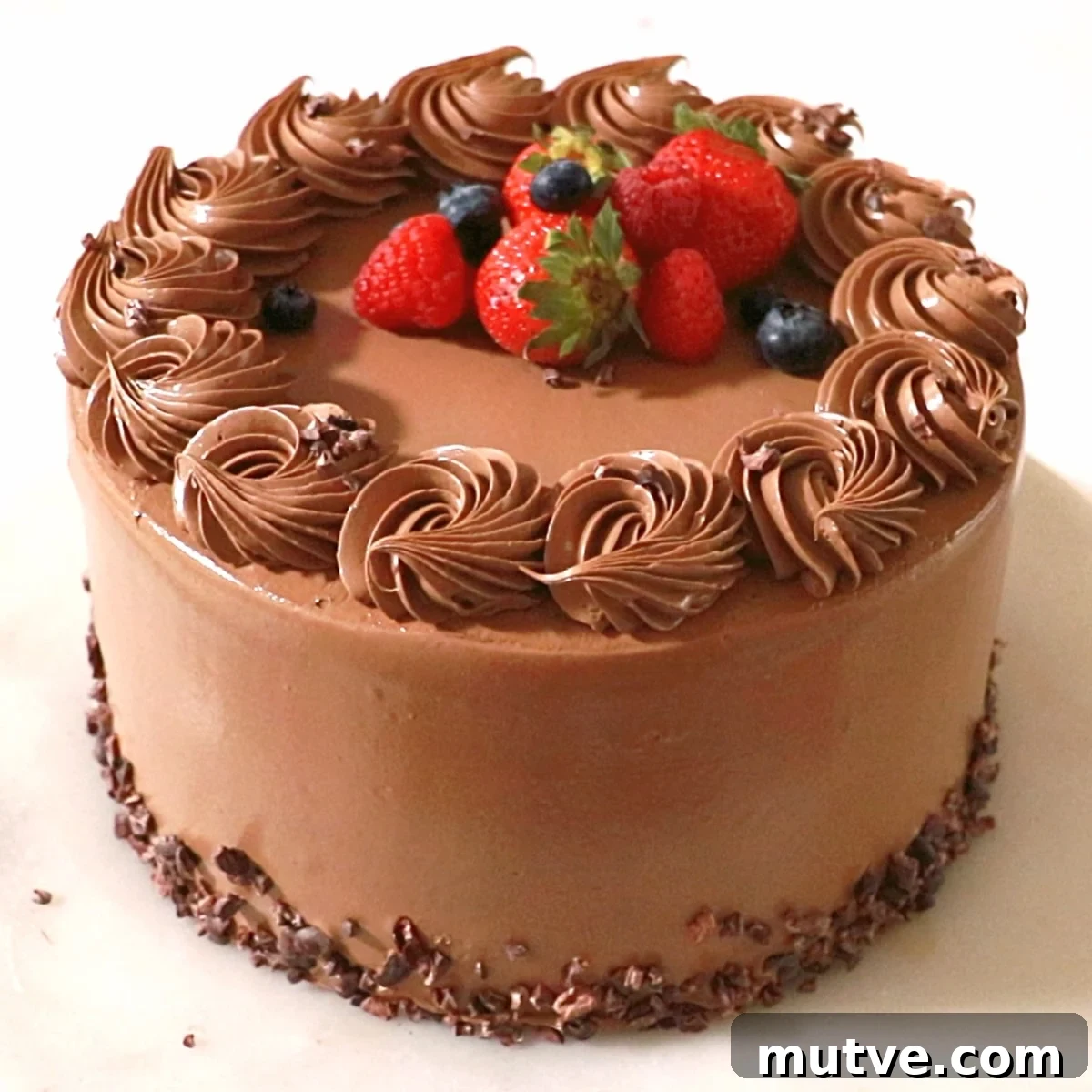
In this post, I explain how to frost a cake step-by-step with clear tips, photos, and a short video reference so you can follow along easily, even if this is your first time. Use these techniques for any layer cake to create a beautifully frosted result for your special occasion.
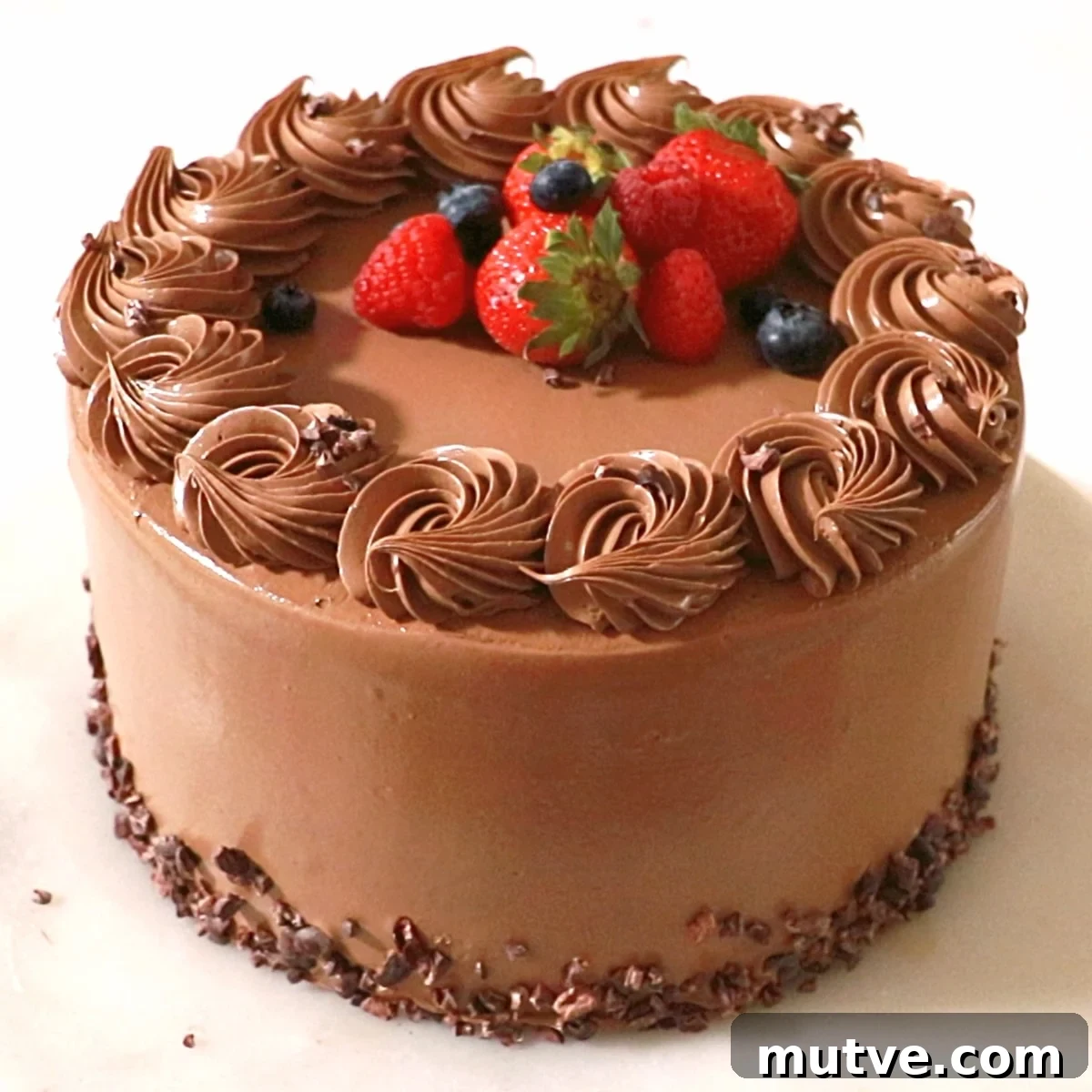
Frosting a cake so it looks polished can feel intimidating, especially for beginners. I remember my first attempts — I had so much fun, but the finished cake looked messy. With time and practice I learned methods that make the process more predictable and the result neater. This guide condenses those practical tips into an easy-to-follow workflow you can reuse for any buttercream, whipped cream, or similar frosting.
Whether you want to level up home baking, decorate for a small event, or improve professional skills, these steps will help you get cleaner edges, smooth sides, and consistent piped decorations. Expect to improve each time you practice — frosting is a skill that responds to repetition.
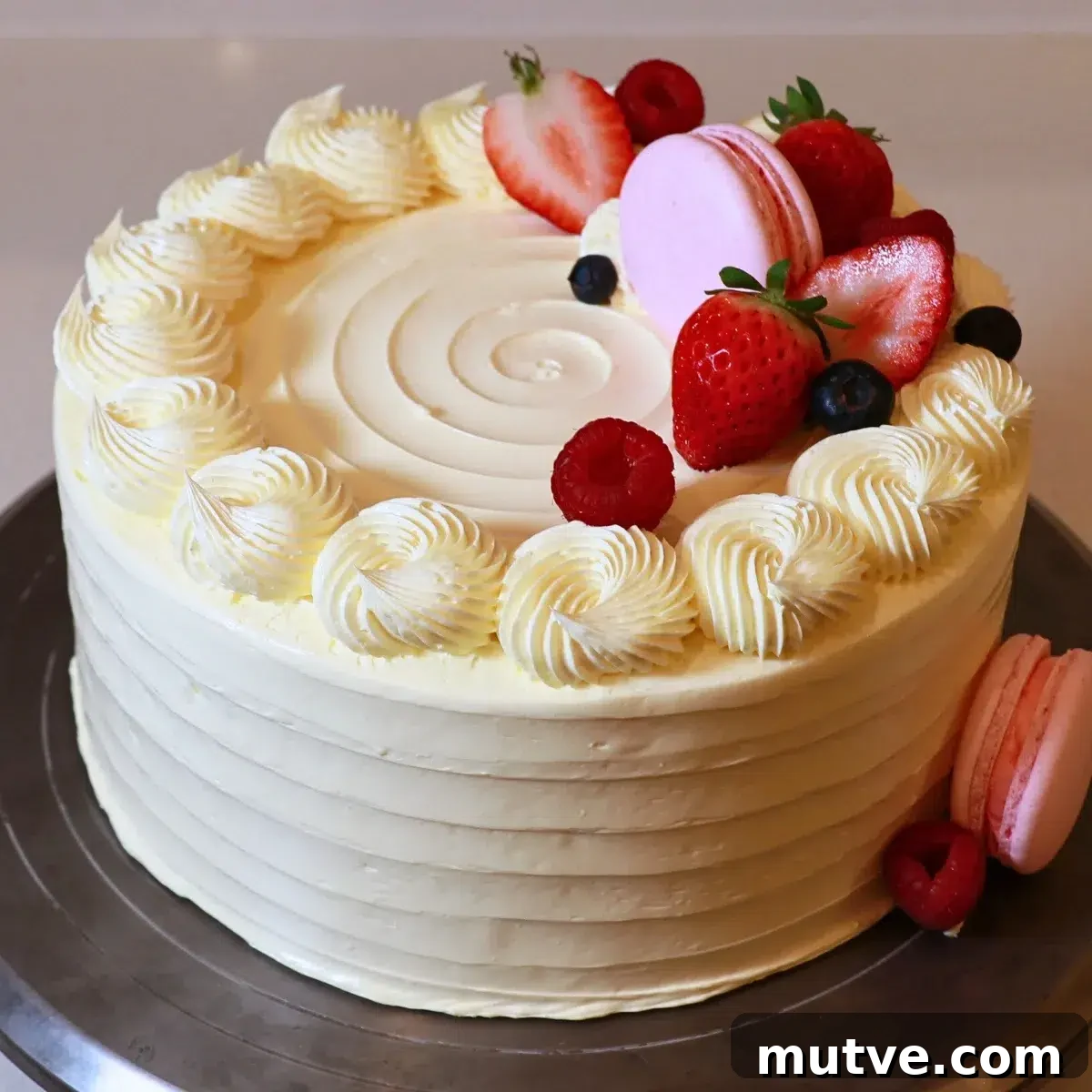
Many bakers develop slightly different habits — some prefer a bench scraper, others a spatula — but the basic sequence is the same: prepare layers, apply a thin crumb coat, chill, apply a final coat, smooth, and then decorate. Below I share a reliable method that works well for 6–8 inch cakes and scales to larger sizes.
Ready to get started? Let’s go. 💪🏻
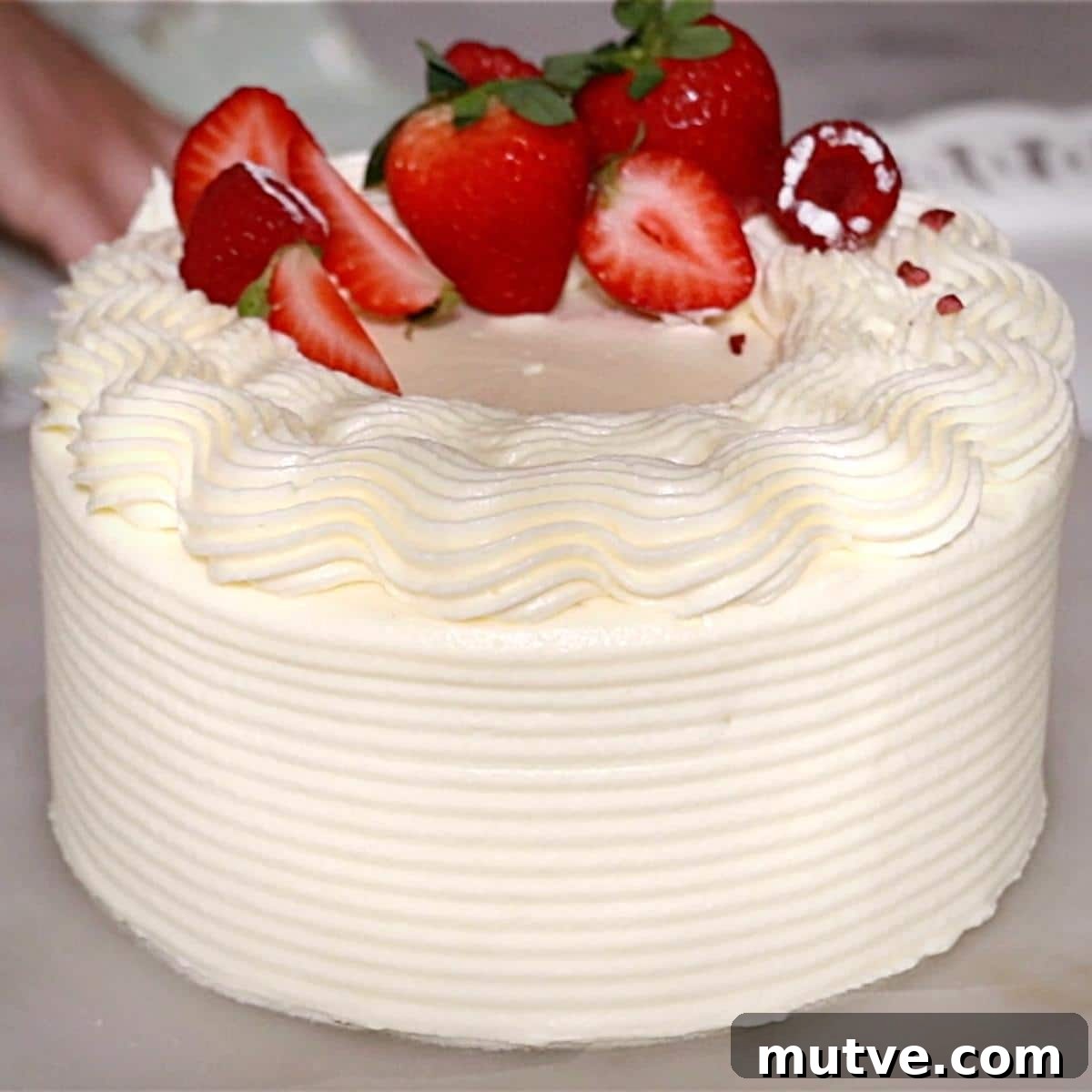
VIDEO: Watch How To Frost a Cake!
Play a step-by-step video tutorial to see the full process in motion and get a clearer sense of hand positions, scraping angles, and pacing for each stage. Watching the technique makes it easier to replicate the movements as you work.
Tools You’ll Need To Frost A Cake
- Cake turntable: Choose a sturdy turntable that rotates smoothly to make smoothing much easier.
- Icing spatula: A small offset spatula works best for 6–8 inch cakes; use a larger offset spatula for bigger cakes.
- Bench scraper: Useful to smooth the sides for the final coat. An icing spatula can substitute if preferred.
- Rubber spatula: Handy for scooping and transferring frosting.
- Piping bag and tip: Optional, for piping borders or decorative swirls on top.
- Cake board: Optional, helpful when gifting or transporting the cake in a box.
Step-By-Step Instructions To Frost A Cake
Preparations
- Chill the cake layers: Refrigerating the layers before assembly firms them up and makes stacking and crumb-coating easier. Chilled layers also reduce sliding during assembly and help the crumb coat set faster.
- Bring buttercream to room temperature: If your buttercream has been refrigerated, let it soften at room temperature for 3–6 hours depending on ambient temperature so it spreads smoothly. For whipped cream frostings, keep the bowl cool during work to maintain stable texture.
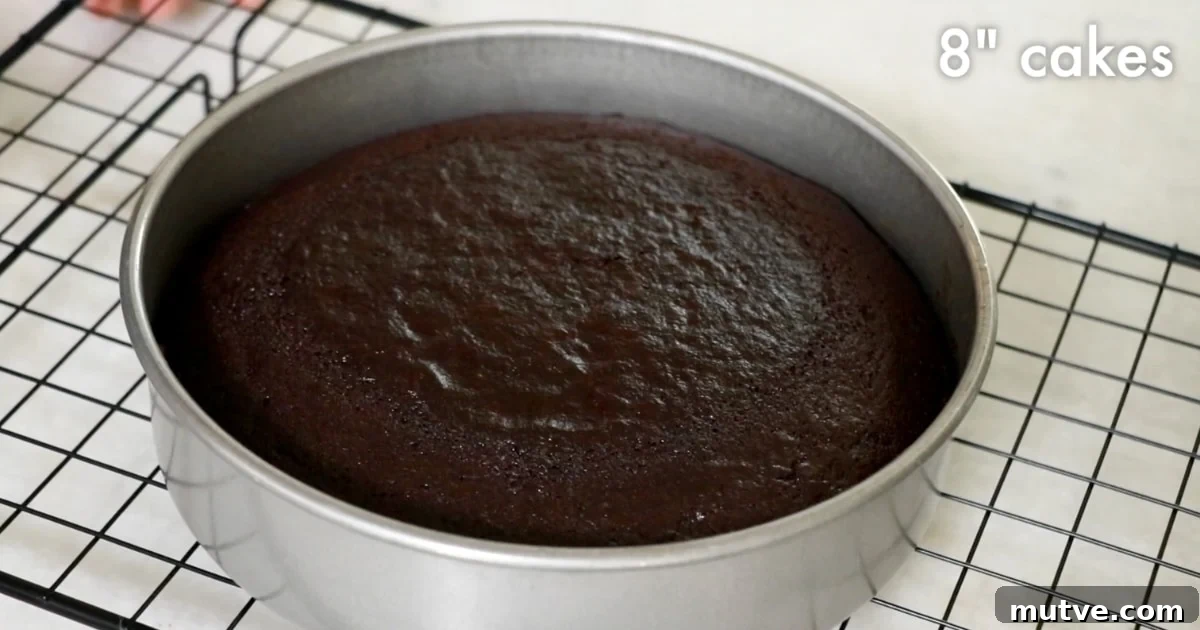
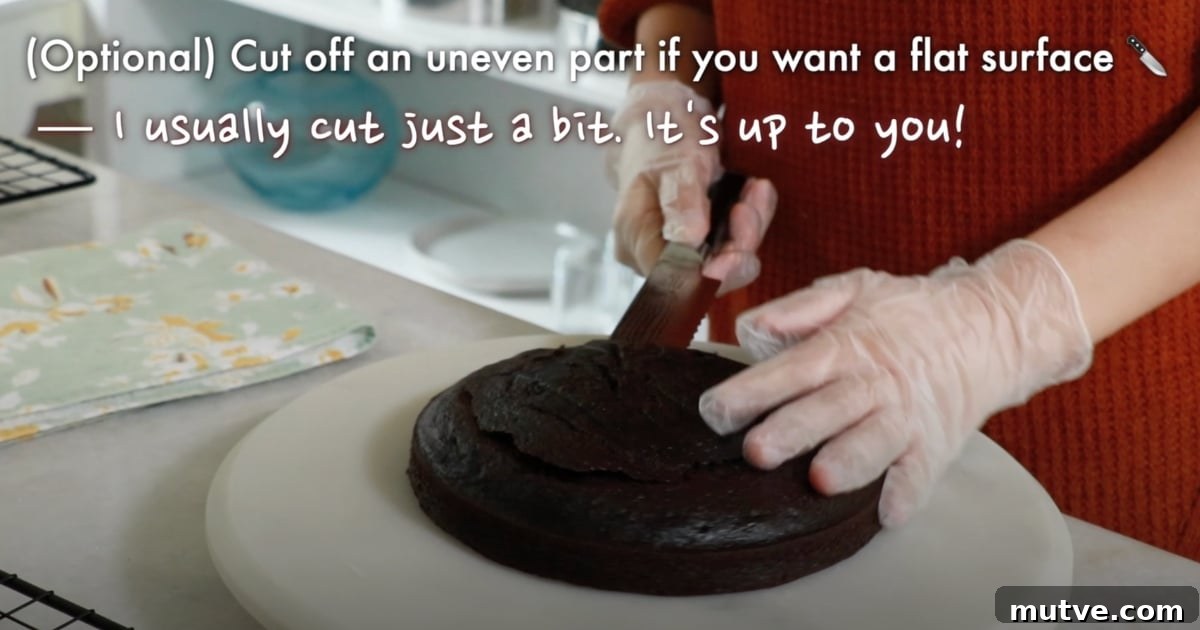
Level the cake (optional)
If the layers have domes or uneven tops, trim them with a serrated knife to create flat layers. Level layers stack straighter and make clean edges much easier to achieve.
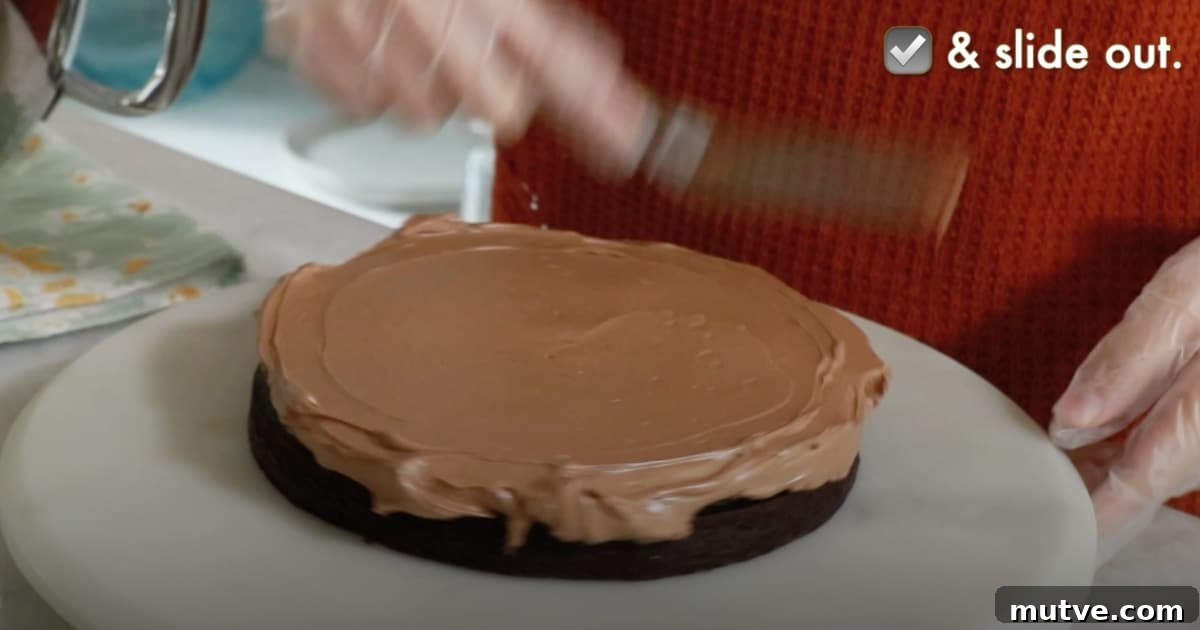
Spread buttercream on the first layer
Steps to follow:
- Place the first layer centered on the turntable.
- Drop a generous scoop of frosting in the middle using a rubber spatula.
- Roughly flatten the top with an icing spatula.
- Hold the spatula at about 25–45 degrees (position the handle around 4 o’clock if right-handed; reverse if left-handed).
- Rotate the turntable while keeping the spatula steady to smooth the frosting across the surface.
- Slide the spatula away when the top is even.
Positioning the spatula at an angle helps the frosting move smoothly while you rotate the cake.
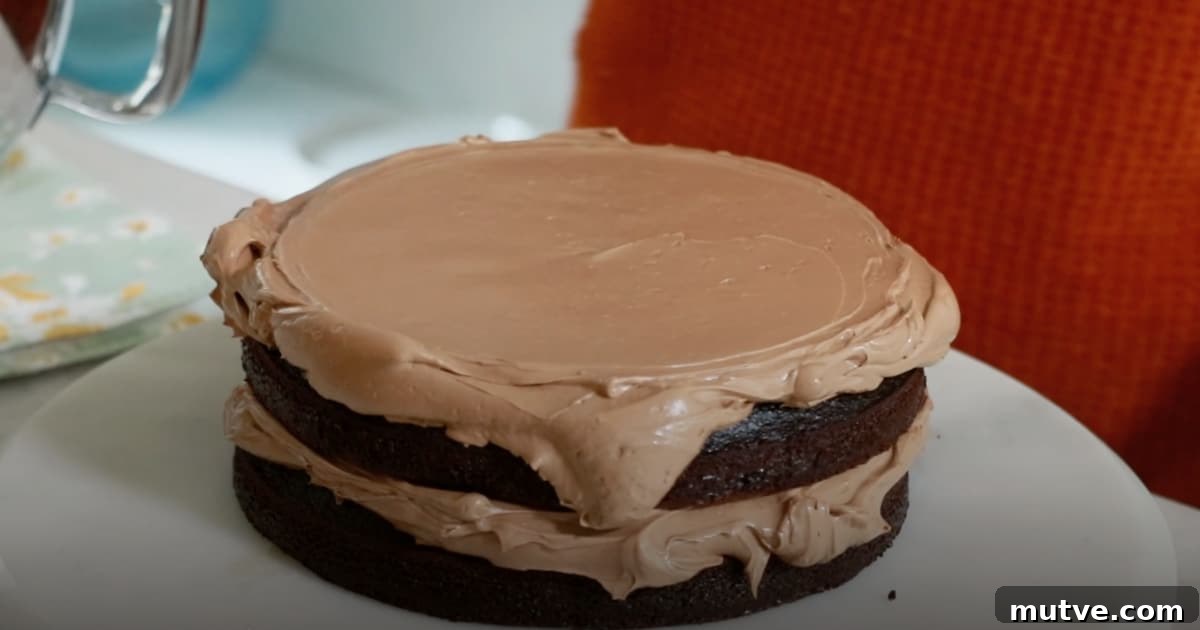
Repeat for the second layer
- Center the next layer on top and align it carefully.
- Spread frosting evenly on top as before, then repeat until all layers are stacked.
Check the cake from all sides as you stack to keep it straight and centered.
Place the final layer on top
- For the top layer, place the bottom side up if it has a smoother, flatter surface — this gives sharper edges and a neater top.
- Center it and press gently so the layers settle evenly.
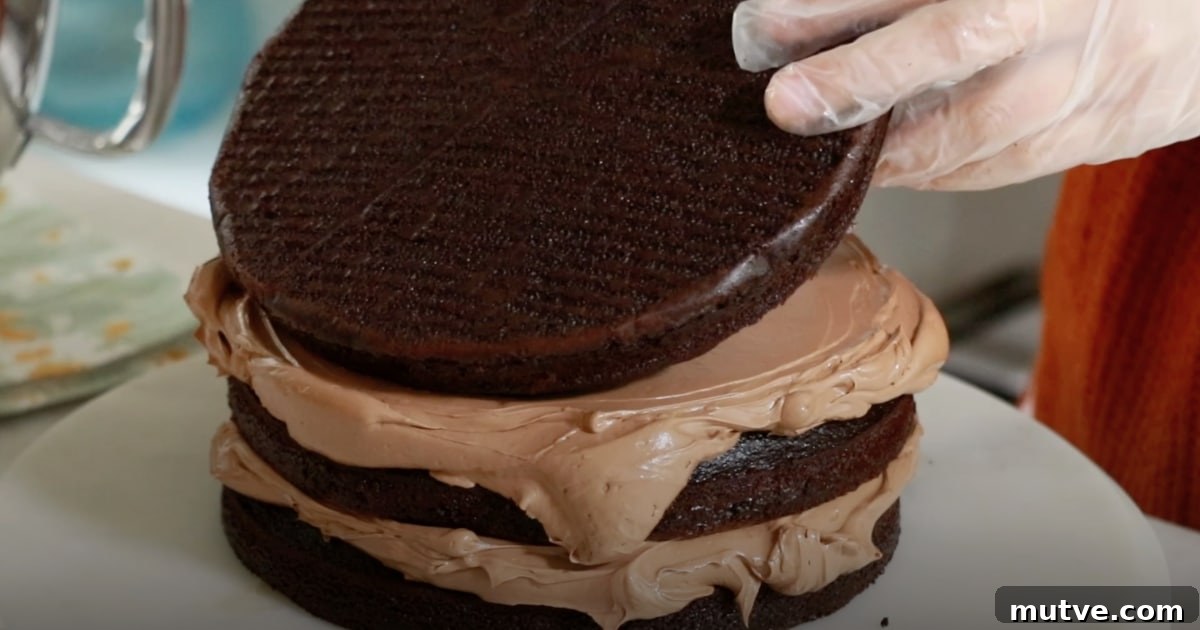
Crumb coat: Spread frosting thinly on top
The crumb coat is a thin layer of frosting that traps stray crumbs and creates a uniform base for the final layer. Apply sparingly—this is just a primer, not the finished look.
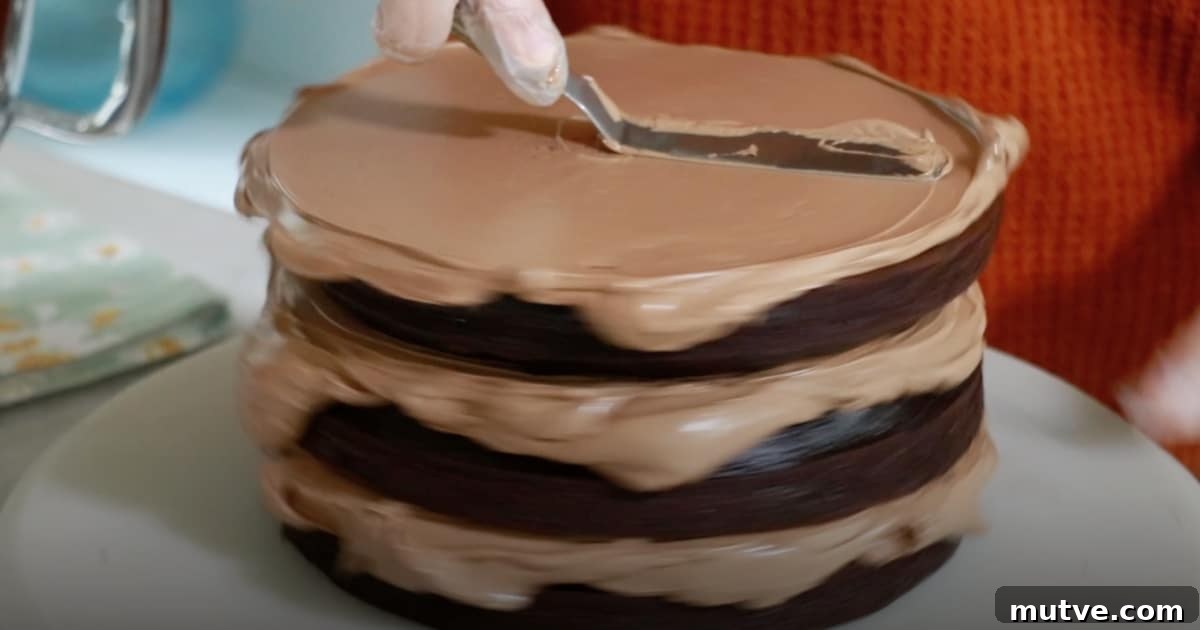
Crumb coat: Spread frosting thinly on the sides
Fill gaps between layers and keep the side coat thin and even so the crumb coat can chill and set properly.
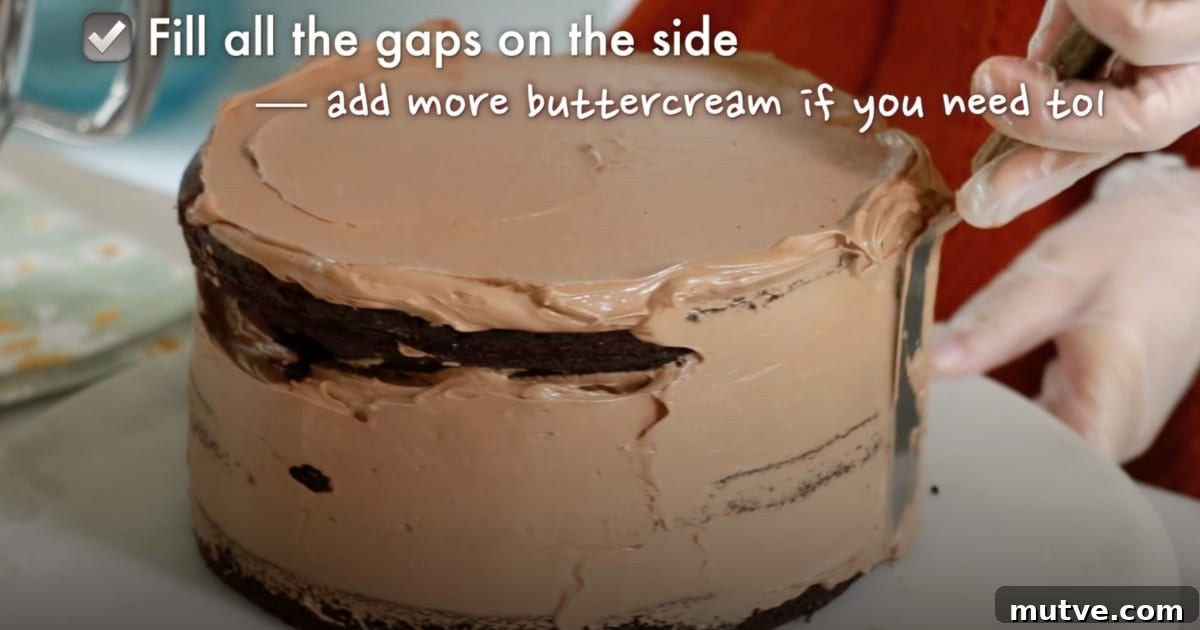
Clean frosting off the turntable
Rotate the table and scrape away excess frosting around the base so you have a tidy working surface.
Create sharp corner edges with an icing spatula
Hold the spatula at a shallow angle (about 20–40 degrees) and remove excess frosting while rotating the turntable, similar to the motion of an airplane landing. This helps form clean corners on the crumb coat.
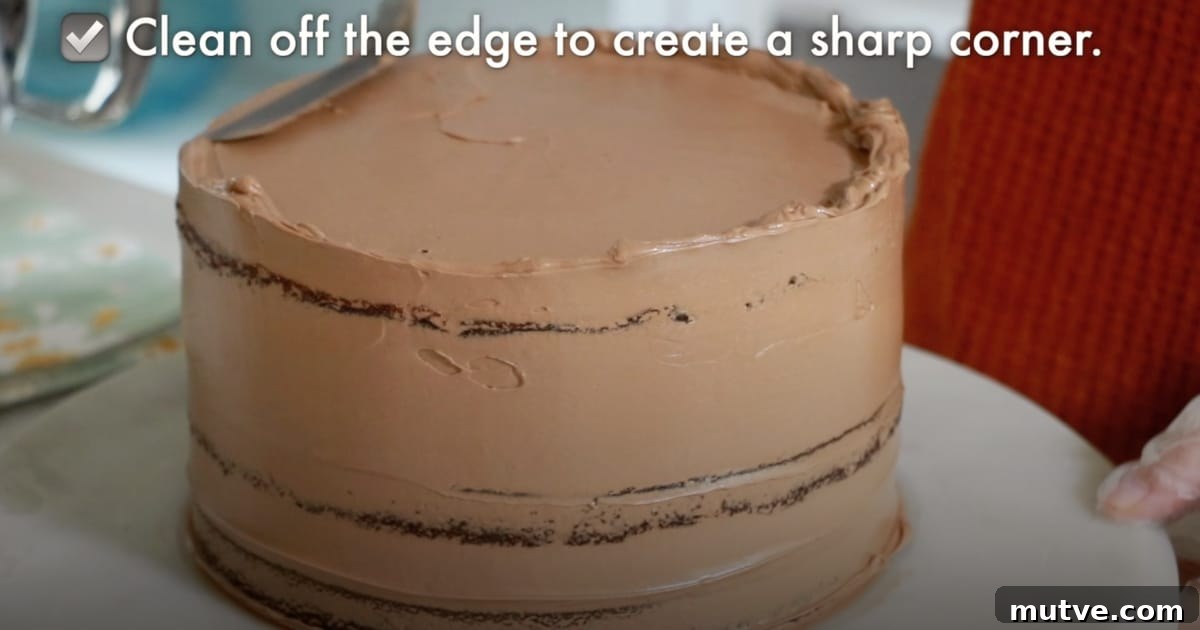
Chill the cake in the fridge
Refrigerate the crumb-coated cake to firm up the frosting before attempting the final coat. Chilling reduces wobble and makes smoothing much easier, especially for beginners.
If you are making a naked cake, skip the final coat and move directly to decoration.
Final coat: Spread the frosting evenly on top
Place a large scoop of frosting on the top and spread evenly with an offset spatula, repeating the smoothing motions used earlier.
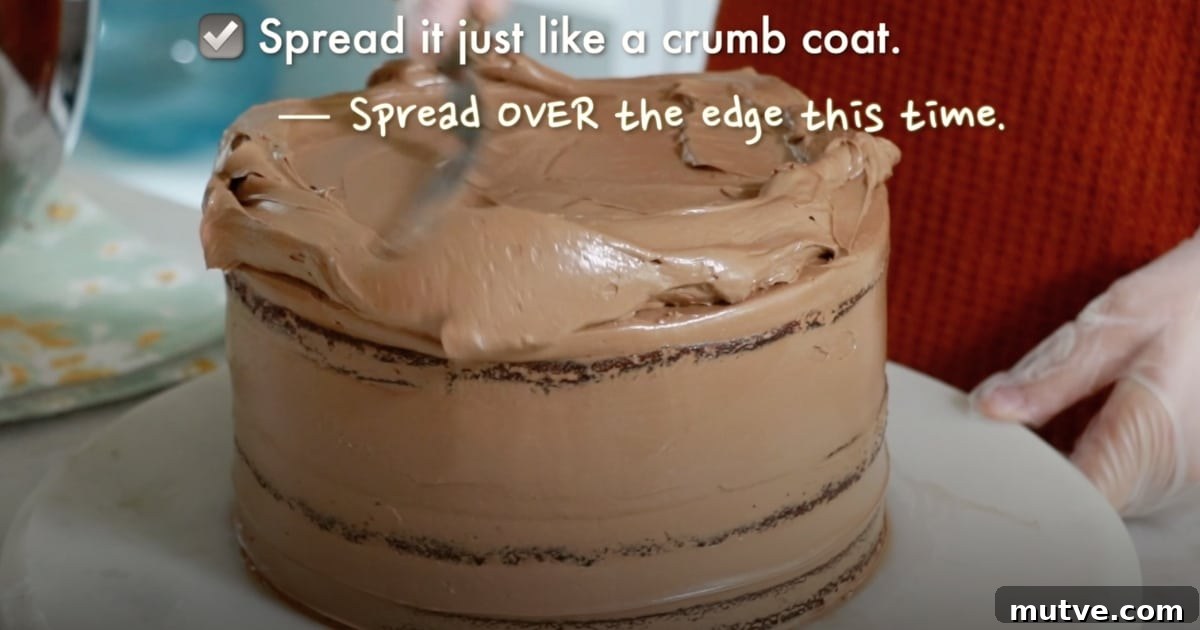
Final coat: Frost the sides
Add frosting around the sides, aiming for an even thickness all the way around. You do not need to make it perfectly smooth at first—establish the volume, then refine.
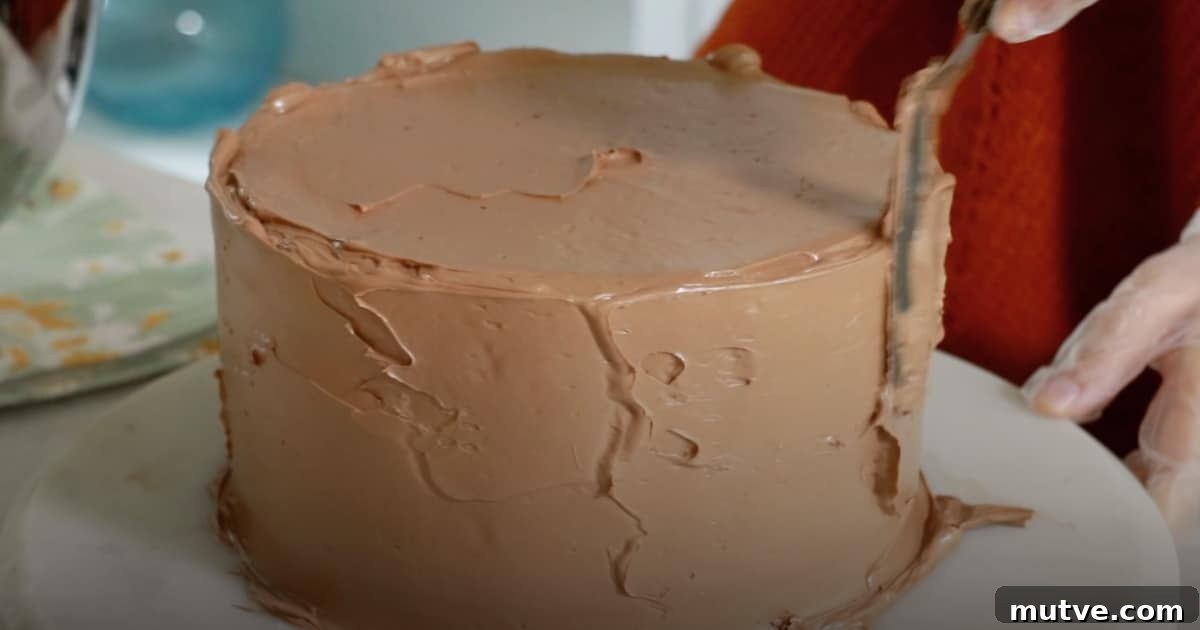
Add extra frosting to top corners
Placing a little extra buttercream near the top edges helps you form crisp, 360-degree corners when you smooth the sides.
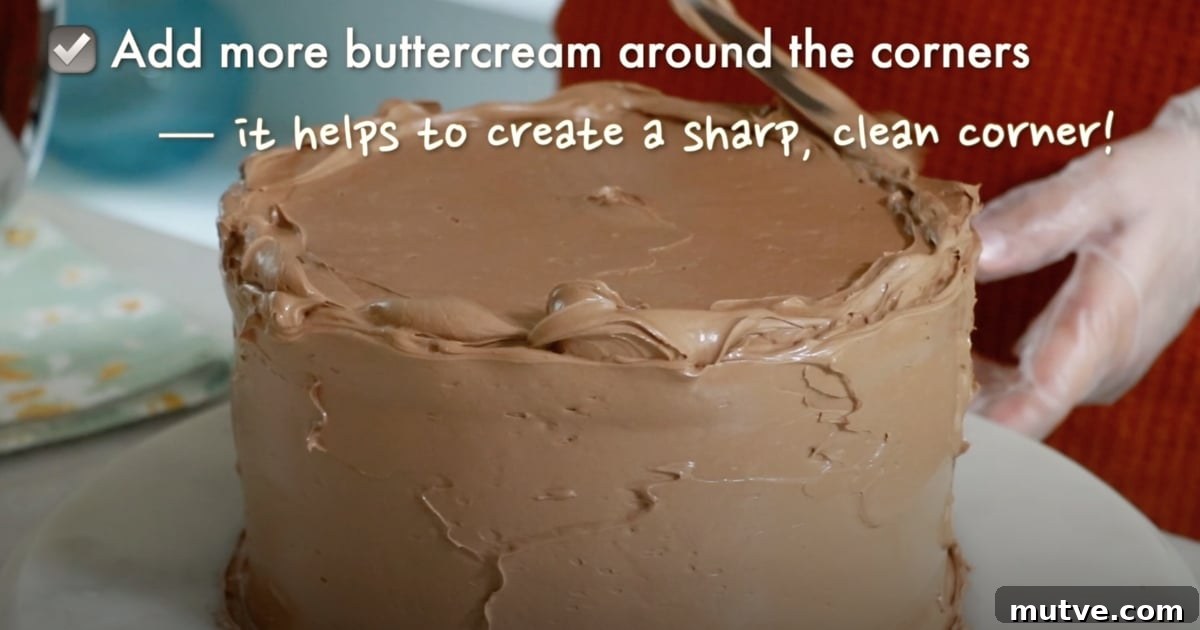
Smooth the sides with a dough scraper
Technique:
- Hold the scraper steady with your dominant hand at roughly 4 o’clock (or 8 o’clock if left-handed).
- Rotate the turntable with your other hand while the scraper stays fixed to remove excess and create a smooth plane.
- Lift and fade the scraper away when the surface looks even.
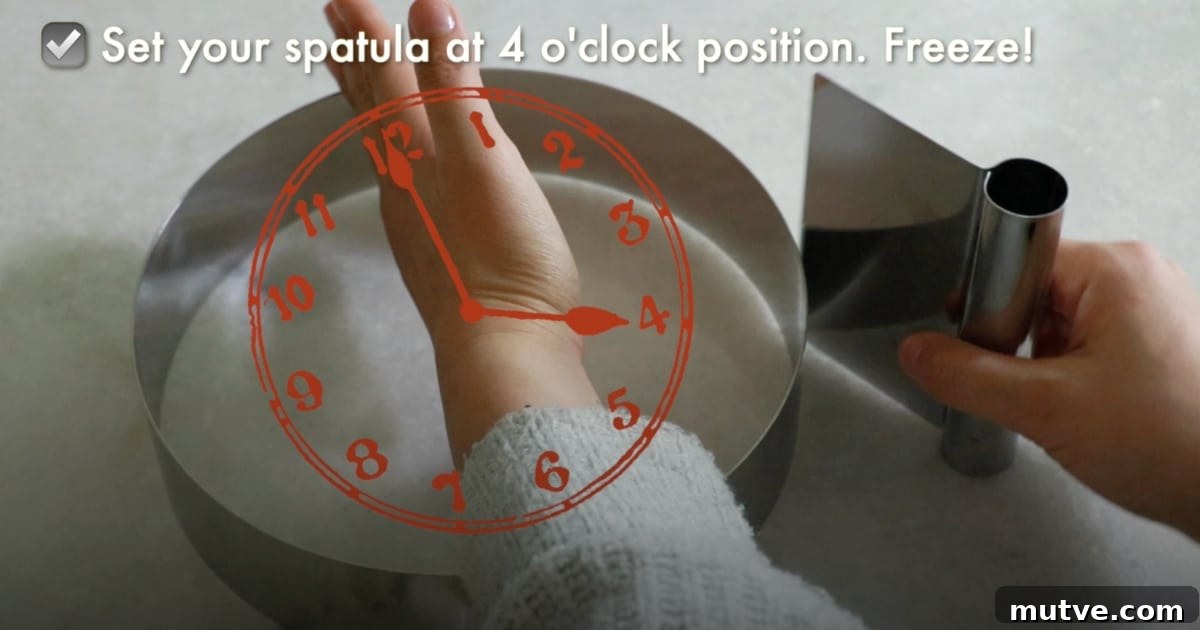
Keeping your arm and scraper steady while turning the table prevents a wobbly finish. A smooth-turning table makes this step much easier; ensure the cake is centered before you begin.
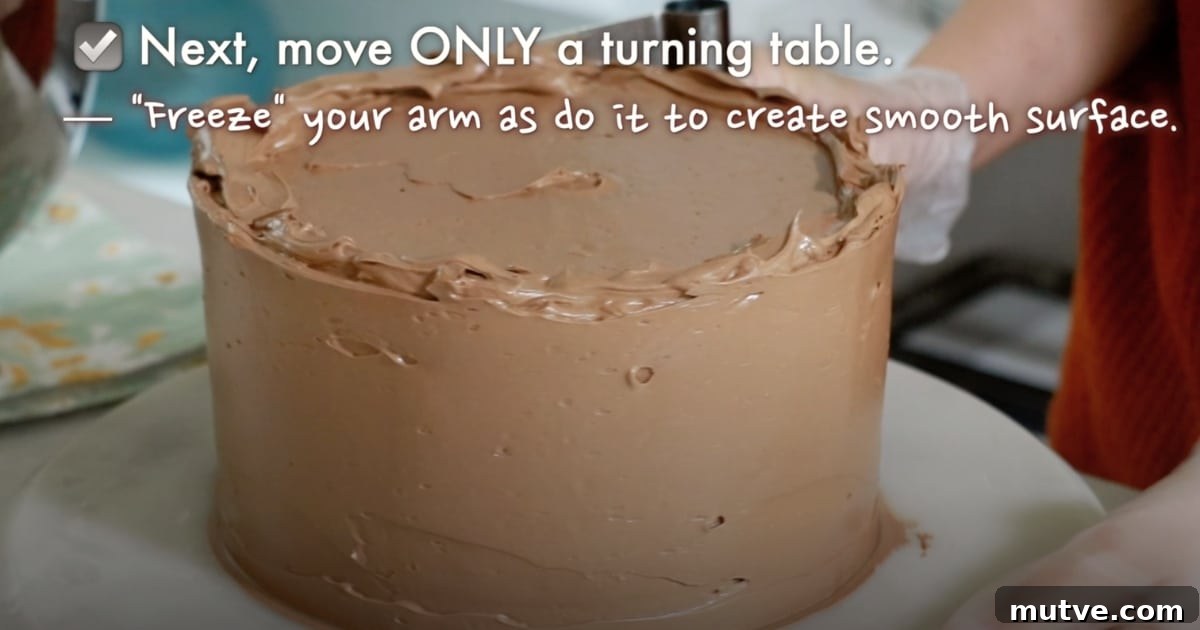
Fill any gaps or holes, then smooth again
Add frosting to imperfections and repeat the smoothing motion until the surface is even. For whipped cream frostings, avoid overworking the surface, as repeated handling can roughen the texture.
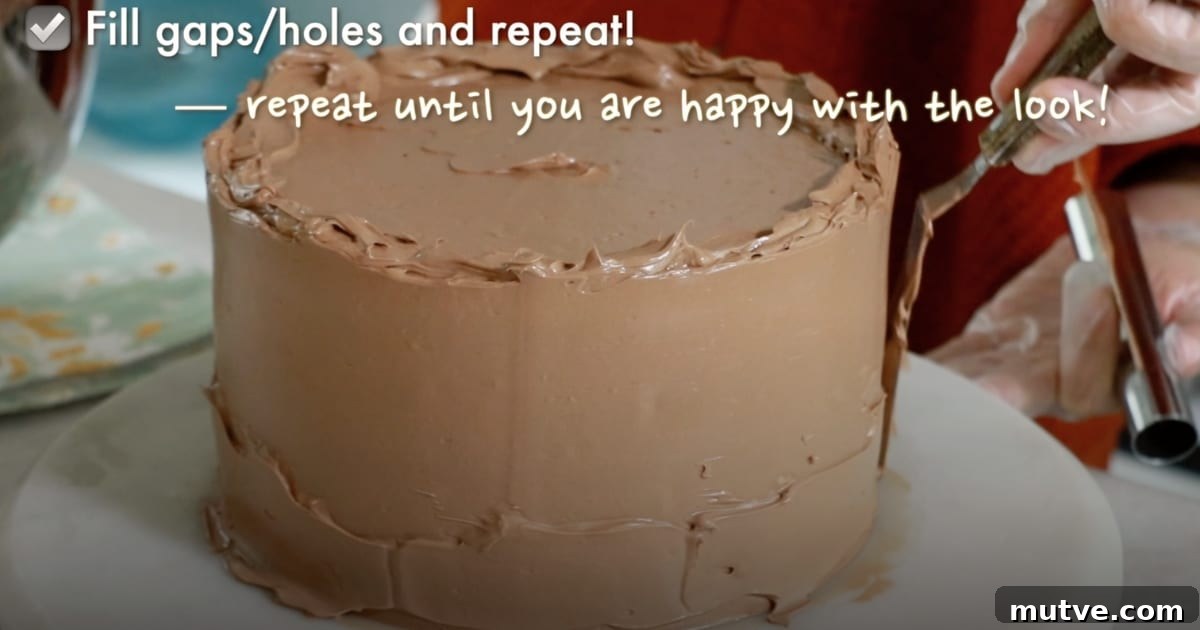
Clean the top edge with a spatula
Use an angled spatula to remove excess from the top rim and create a crisp meeting point between top and side frosting.
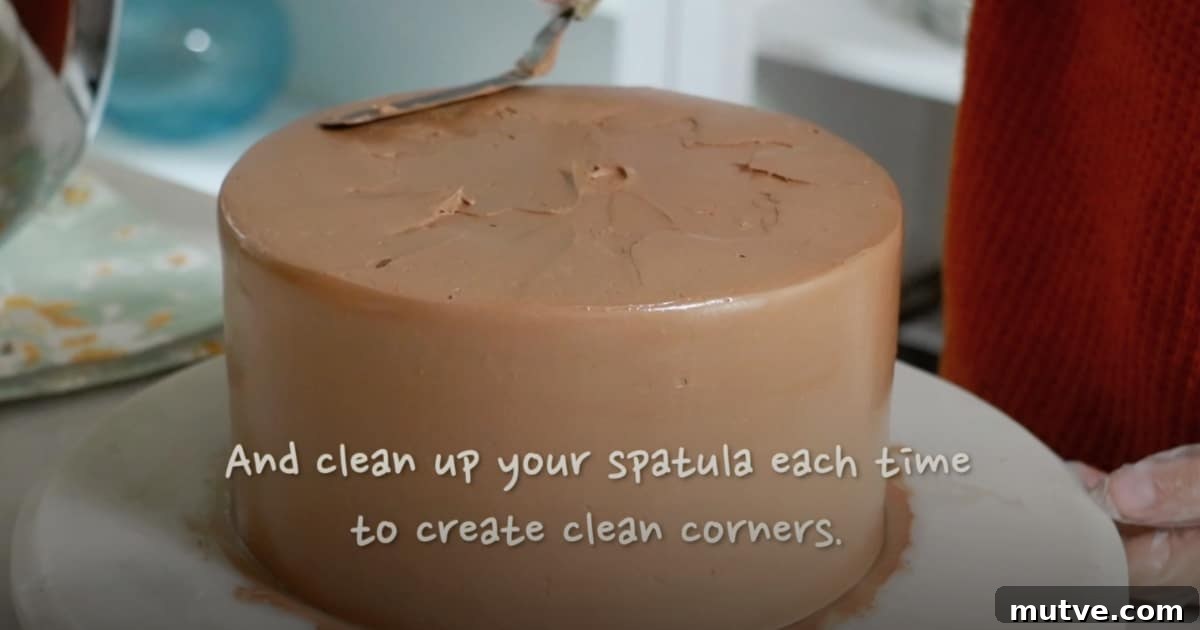
Chill before decorating
Chill the finished base before piping or applying fragile decorations. This keeps edges intact and prevents piping from squashing the buttercream.
Attach an accent around the bottom edge (optional)
Small accents such as nuts, cocoa nibs, sprinkles, or chopped cookies applied to the bottom edge can hide imperfections and add a festive touch.
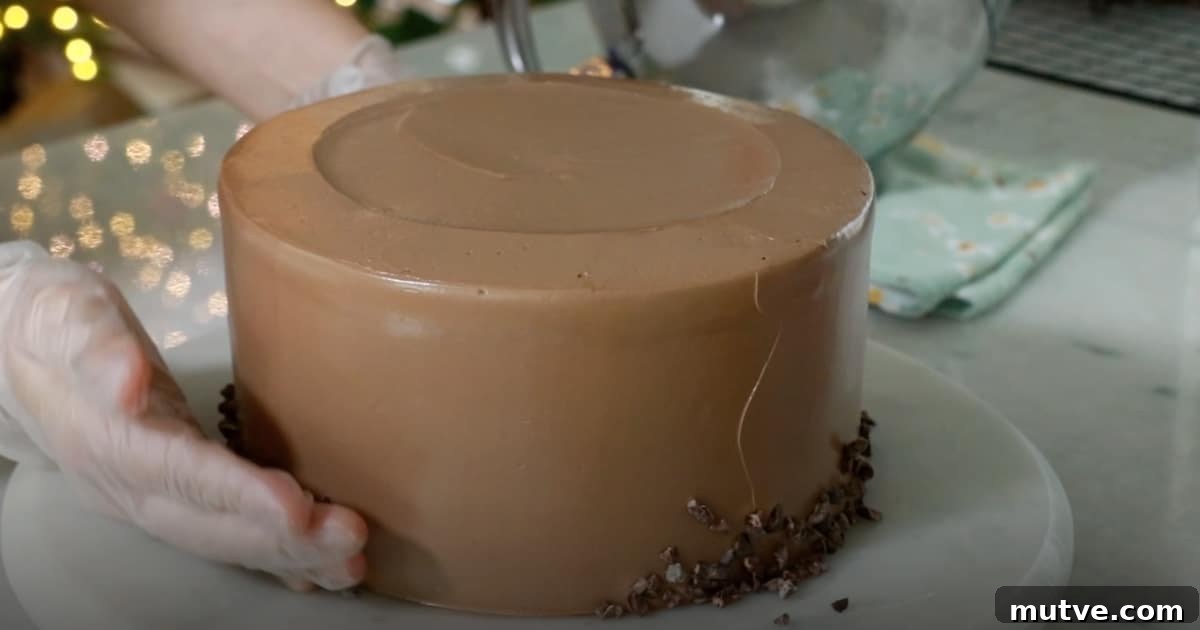
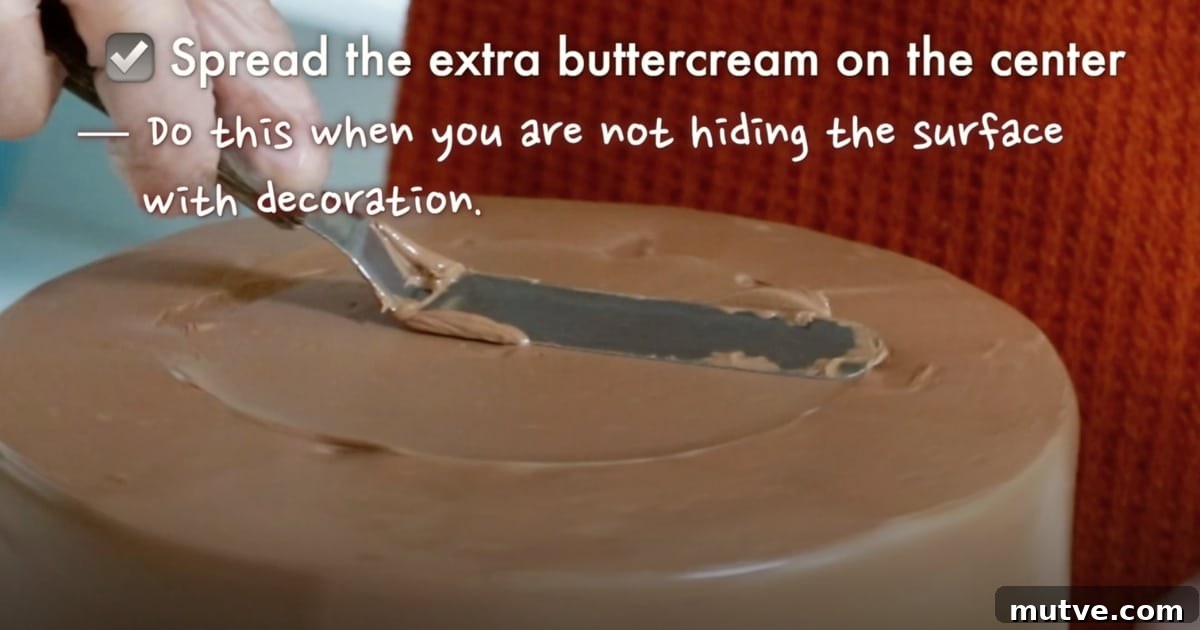
Add extra frosting to center and smooth (optional)
If you plan to leave the top exposed, add and smooth a final thin layer. If you will cover the top with a glaze or fruit, this step can be skipped.
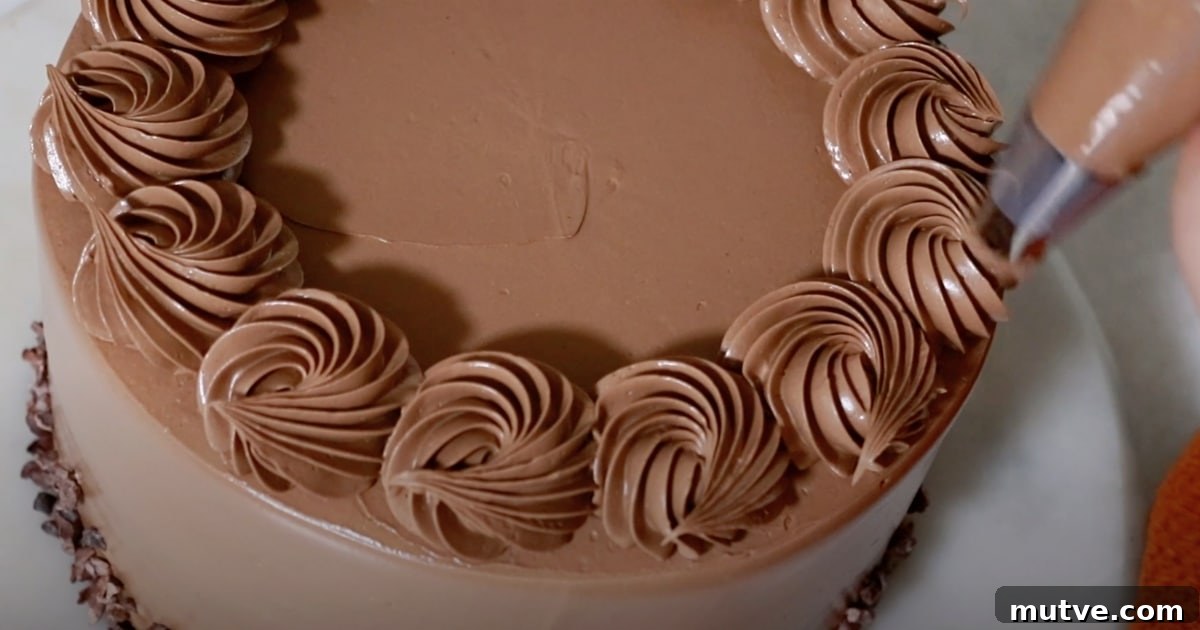
Pipe frosting on top
Fill a pastry bag with remaining frosting and pipe consistent swirls, rosettes, or dots. Keep spacing and size uniform for a polished look; simple swirls create an elegant finish.
Piping ideas and tips
Practice a few basic piping patterns—shells, rosettes, and simple stars—so you can choose a look that matches the cake. Vary tip sizes to change the scale of decorations.
Decorate the top with any topping
Finish the cake with toppings that suit the flavor and occasion. Popular options include:
Topping ideas
- Fresh fruits
- Fresh herbs like mint
- Chocolate chips or curls
- Edible gold leaf accents
- Sprinkles
- Powdered sugar dust
- Macarons or small confections
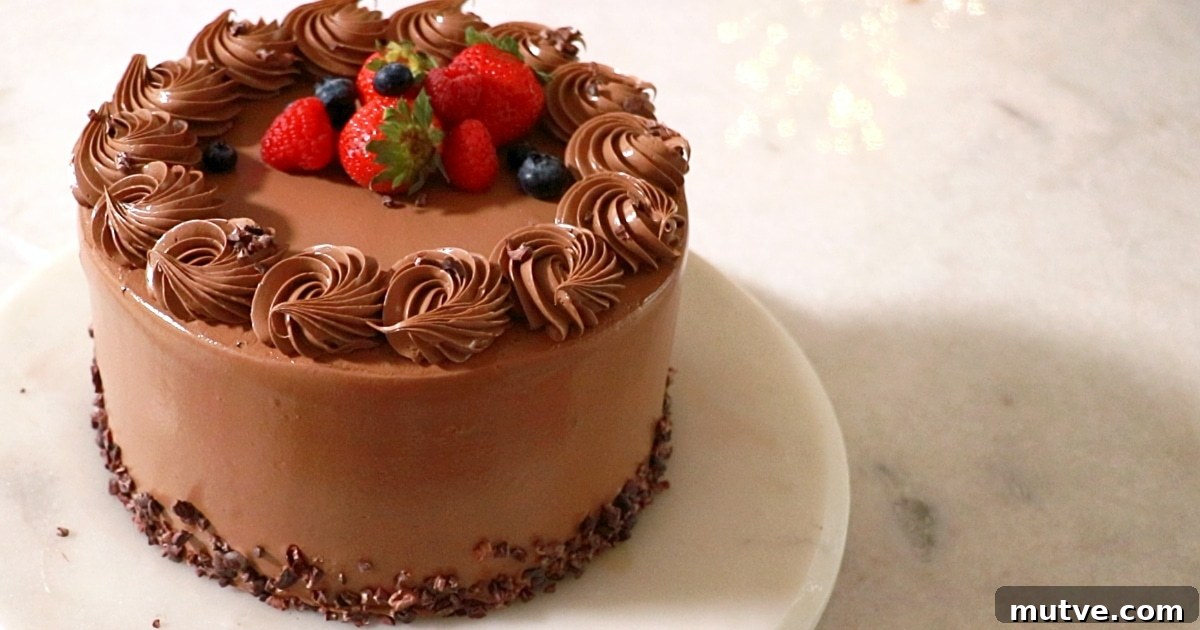
Well done — you completed the cake! Give yourself a round of applause for finishing a full frosted cake.
How To Transfer A Cake
To move a cake from the turntable to a plate or stand:
- Run the tip of an icing spatula around the base to make sure nothing sticks.
- Slide a large cake spatula under the cake, working it halfway underneath.
- Lift slightly and slide your other hand under for support.
- Lift the cake level and place it gently in the center of the plate or stand.
- Remove the spatula carefully while supporting the cake until it sits securely.
- Press the spatula down firmly when withdrawing it so you do not drag the cake.
How To Store The Frosted Cake
Store the finished cake in an airtight container or cover to prevent the frosting from drying out. After slicing, cover exposed cut surfaces with plastic wrap or cake film to retain moisture. Refrigerate or freeze based on the cake and frosting type; shelf life varies by recipe.
How can I store leftover buttercream?
Keep leftover buttercream in an airtight container in the refrigerator for short-term use or freeze it for longer storage. Thaw and re-whip briefly before using for best texture.
Cake & Frosting Recipes To Practice
The techniques described here work with many cake and frosting recipes. Good practice options include simple butter cakes, sponge cakes, and popular buttercream styles. Try the following recipe types as practice projects:
Cakes
- Vanilla butter cake
- Classic chocolate cake
- Vanilla sponge cake
- Chocolate sponge cake
Frostings
- Swiss meringue buttercream
- Italian buttercream
- French buttercream
- Cream cheese frosting
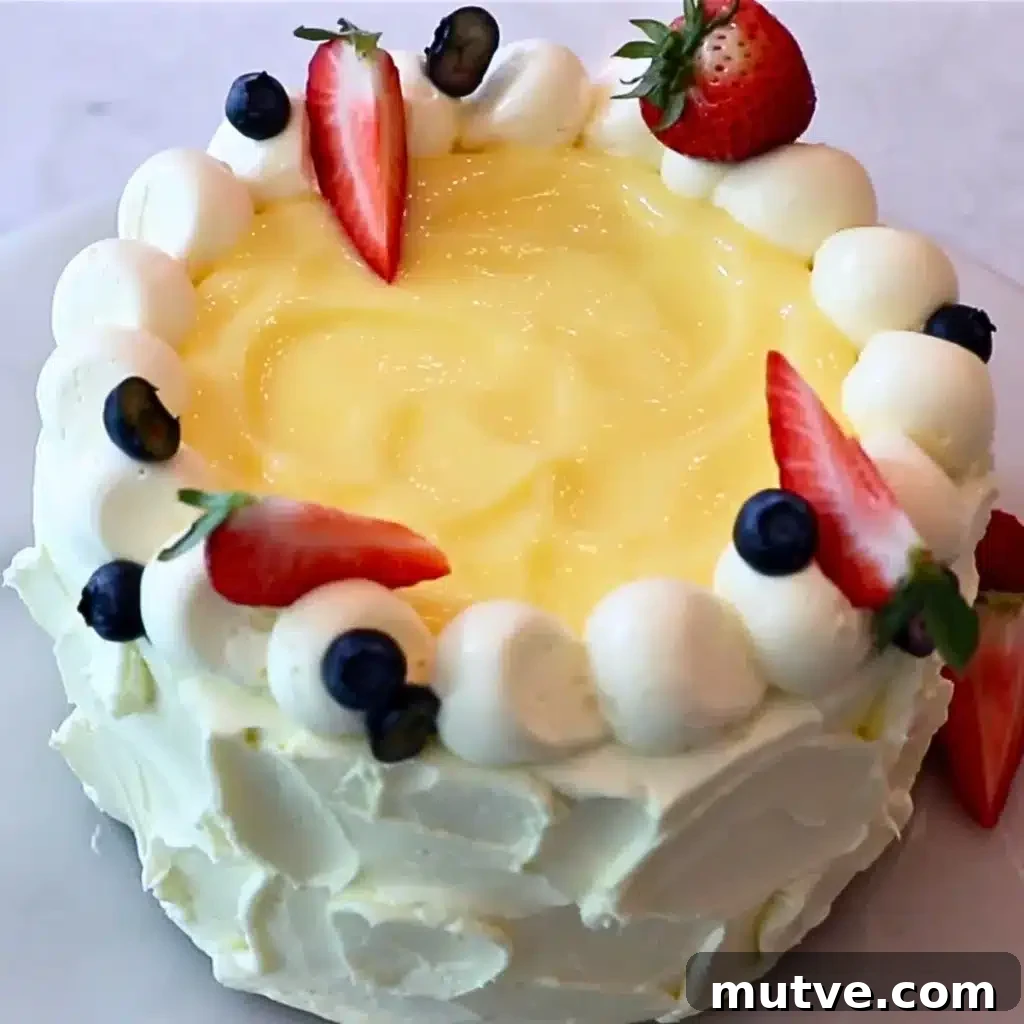
- Lemon buttercream
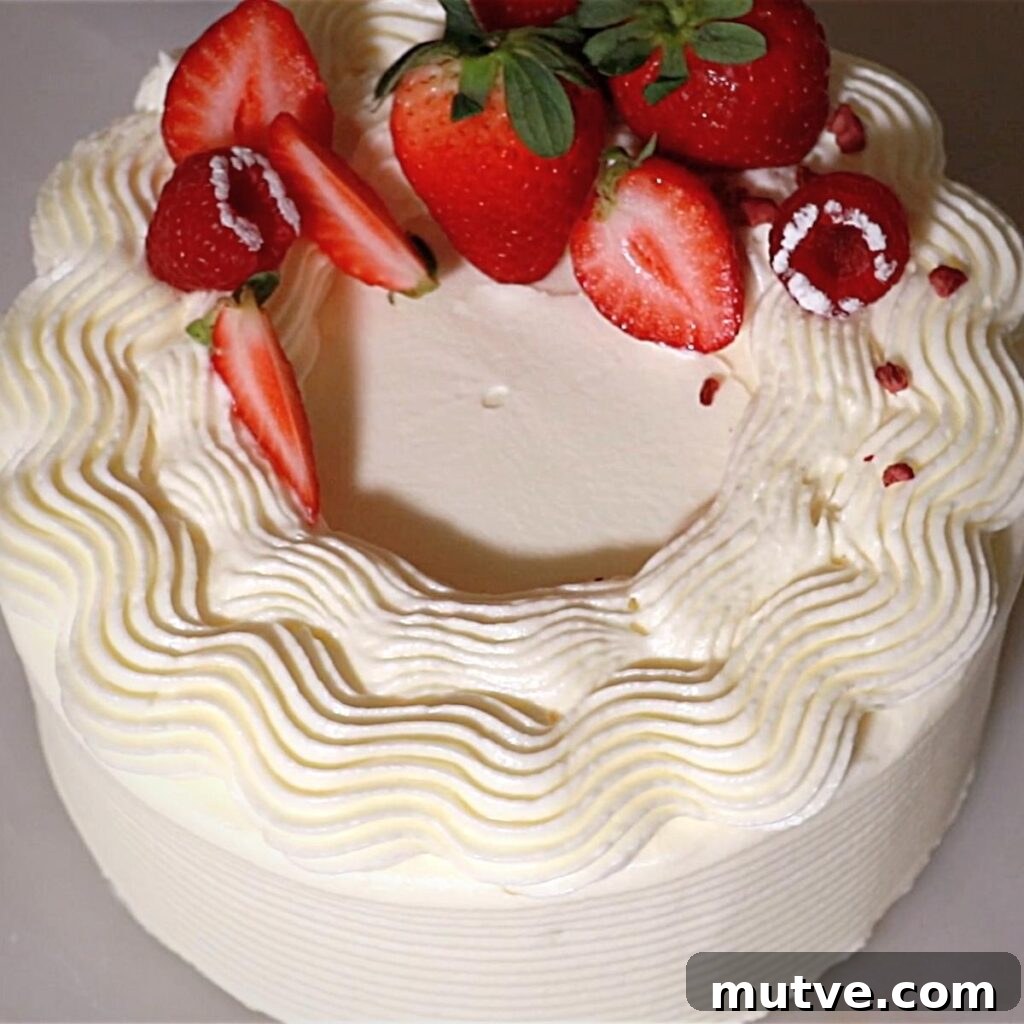
For this demonstration I used a chocolate cake and chocolate buttercream. If you follow these steps and practice regularly, you’ll soon produce consistently smooth finishes and clean edges. Enjoy the process, and remember: practice builds confidence and skill.