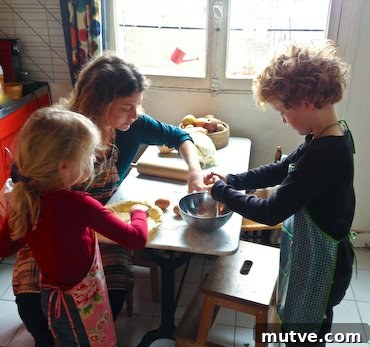
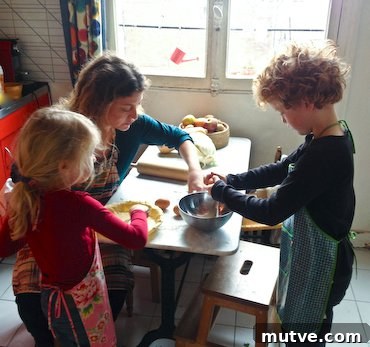
Camille Labro with Cléo, 6, and Noé, 8.
Camille Labro is a French cook and food journalist who writes for M, the weekly magazine of Le Monde. On her blog, Le Ventre libre (“the free belly”), she recounts gastronomic adventures, practical tips, and ideas for eating better in the city.
She is the mother of two children and was interviewed for the Parents Who Cook series. The conversation was conducted in French and translated here.
Can you tell us a few words about your children? Ages, names, temperaments?
Noé, 8, enjoys reading, eating, biking, and roller-skating. Cléo, 6, loves reading, eating, dancing, and drawing. Both are sociable and curious—ready to experiment with flavors and experiences. They ask big questions and, predictably, are jealous when I eat gastronomic meals without them: they’ll devour the photos while loudly protesting.
Did having children change the way you cook?
Having children didn’t change my core cooking style, but it introduced structure and a practical focus on nutrition. From the moment they started eating diverse foods I adopted a simple rule: prepare balanced meals. Typically that means a small starter—often a raw vegetable—followed by a main that combines protein, carbohydrate, and a vegetable, then a straightforward dessert like yogurt or fruit. This framework helps me cook regularly and keep meals wholesome.
Do you remember what it was like to cook with a newborn? Any tips for new parents?
When my children were newborns and I was breastfeeding, I had more time to cook. I would put the baby in a bouncy chair beside me and narrate what I was doing; the movement, sounds, and aromas were engaging for them. If they grew impatient, a carrot stick or a crust of bread often calmed them.
For parents who work, preparation is essential. Choose one day—Sunday, for example—to shop and cook several dishes to freeze: stews, soups, gratins. Simple preparations save time during the week: individually wrap small steaks or fish fillets for quick thawing, freeze pesto in ice cube trays (one cube per portion), and wash and dry fruits, vegetables, and greens in advance so they are ready to use. These logistics ease weekday cooking.
Dinner parties are harder with small children, but they’re not impossible. Invite a friend to cook with you: I’ve often offered to handle shopping and hosting while a friend cooks and I watch the baby. Rotate roles with other parents—cooking together can be convivial and supportive.
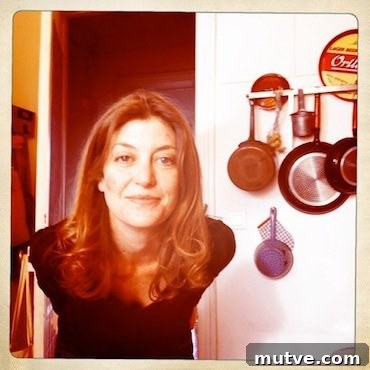
Camille Labro photographed by her son in her kitchen.
Have you developed staple dishes or strategies that keep kids happy while you prepare meals?
My children’s meals are simple but flavorful. I use spices, fresh herbs, garlic, seeds, and sometimes brewer’s yeast to boost taste and nutrition. I usually spend 30 to 45 minutes preparing dinner while they watch a short film and nibble on a snack—carrot or cucumber sticks, raw fennel, a little tarama or tapenade, olives, cornichons, almonds, or a bit of cheese.
We often start with a salad dressed lightly and scattered with toasted seeds, avocado with lemon (sometimes topped with trout roe), raw grated beets with orange and ras-el-hanout, or, in winter, a vegetable soup that serves for two or three meals. For the main course I prefer delicate fish like sardines or mackerel, chicken cutlets, and red meat only occasionally. I also make savory tarts, vegetable-rich pasta or risotto—good ways to include vegetables for reluctant eaters. Dessert is simple: yogurt or fruit. When possible I double or triple recipes and freeze extras for busier evenings.
Do you involve your children in cooking and baking?
Baking is the easiest entry point: children love stirring, whisking, pouring, and licking the bowl. Cakes are ideal rainy-day projects. We also make meatballs, samosas, and ravioli—anything that resembles crafting, because shaping and cutting feel familiar to them. I take them to the greenmarket on Sunday mornings so they can choose vegetables, fruits, and fish; being part of the selection process makes them more invested in cooking and eating.
At home I assign them careful tasks: peeling fava beans, preparing artichokes, or even removing bones from fish with tweezers. I praise their efforts and call them my “super little chefs.” Gradually I’ve started trusting them with knives and the stove under supervision.
The most reliable way to involve children is to grow food together, even on a windowsill. If tomatoes, basil, garlic, radishes, or beans are their plants, they want to care for, harvest, prepare, and taste them. Growing a few pots of herbs or vegetables gives children a tangible sense of the food cycle and pride in eating what they helped produce.
What are the joys and challenges of feeding your children and teaching them to be adventurous eaters?
Mostly joy. It’s rewarding when a child who once refused a vegetable later declares they love it, or when they discover pleasure in flavors like grilled artichokes, bottarga, or marinated anchovies—tastes that might seem advanced for kids. I enjoy finding combinations that are both delicious and nourishing and introducing wheat germ, brewer’s yeast, herbs, and spices in approachable ways.
The main challenge is never to force food, while still encouraging a taste. I insist they try at least one bite—often that’s enough for them to keep eating. The greatest pleasure remains the shared meal. We’ve always eaten together: children and adults at the same table, the same food, at the same time. That shared ritual builds connection, conversation, discovery, and a lasting appreciation for good food.