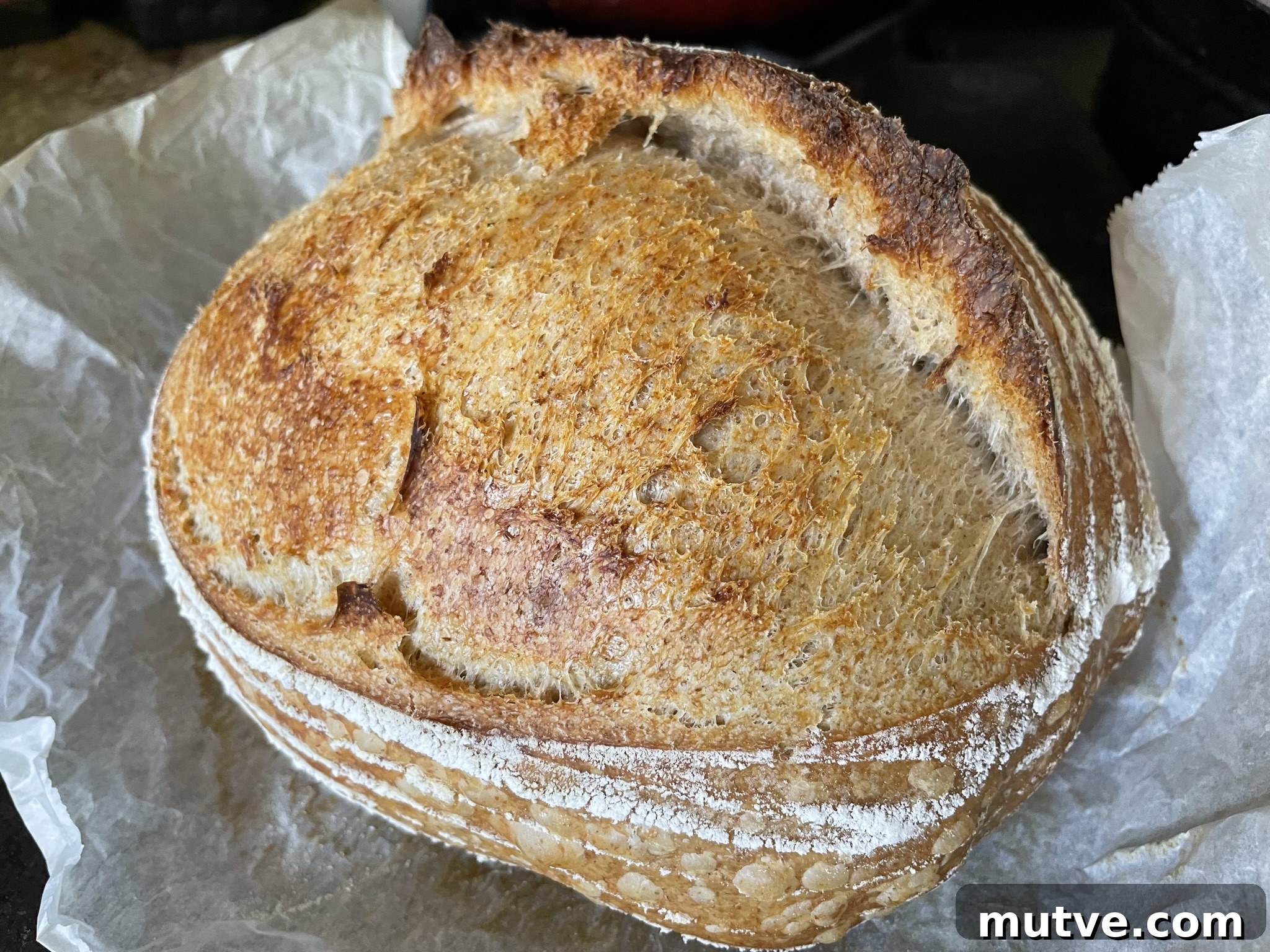
Many people assume scoring sourdough is purely decorative because the dramatic designs often seen on social media are so eye-catching. While beautiful scoring can elevate a loaf’s appearance, scoring serves an important functional purpose. Sourdough baked in a preheated cast-iron Dutch oven experiences intense heat that produces strong oven spring—the rapid rise of the dough in the first minutes of baking. Without deliberate scoring, the crust forms quickly and the dough will find weak points to release pressure, producing unpredictable cracks.
Scoring creates a controlled area of least resistance so the loaf can expand predictably along the cut. That controlled expansion not only produces the signature “ear” on a sourdough crust but also helps the interior crumb develop properly by allowing steam and gases to expand in a planned direction instead of ripping the loaf open at random spots.
Tips for scoring your sourdough
Work with cold dough when possible. Chilling your shaped loaf in a banneton for a long, cold proof in the refrigerator—48 hours is a common recommendation—firms the dough and makes it easier to score cleanly. Cold proofing also contributes to flavor development and can influence surface characteristics like blistering.
Use the sharpest blade you can. A bread lame, razor blade, or a very sharp paring knife will give the cleanest incision. If needed, scissors can be used in a pinch, but sharper tools produce crisper, more controlled cuts. Hold the blade steady and make a single confident motion rather than sawing back and forth.
Angle the blade for a pronounced ear. Position the lame at about a 45-degree angle to the surface and make one decisive cut roughly 1/2″ (about 1.25 cm) deep for a typical loaf. The angled cut encourages the crust to lift and form an ear as steam forces the dough to expand along the slit. A well-formed ear doesn’t change the flavor, but it helps the loaf open cleanly and can contribute to a lighter crumb by allowing better oven spring.
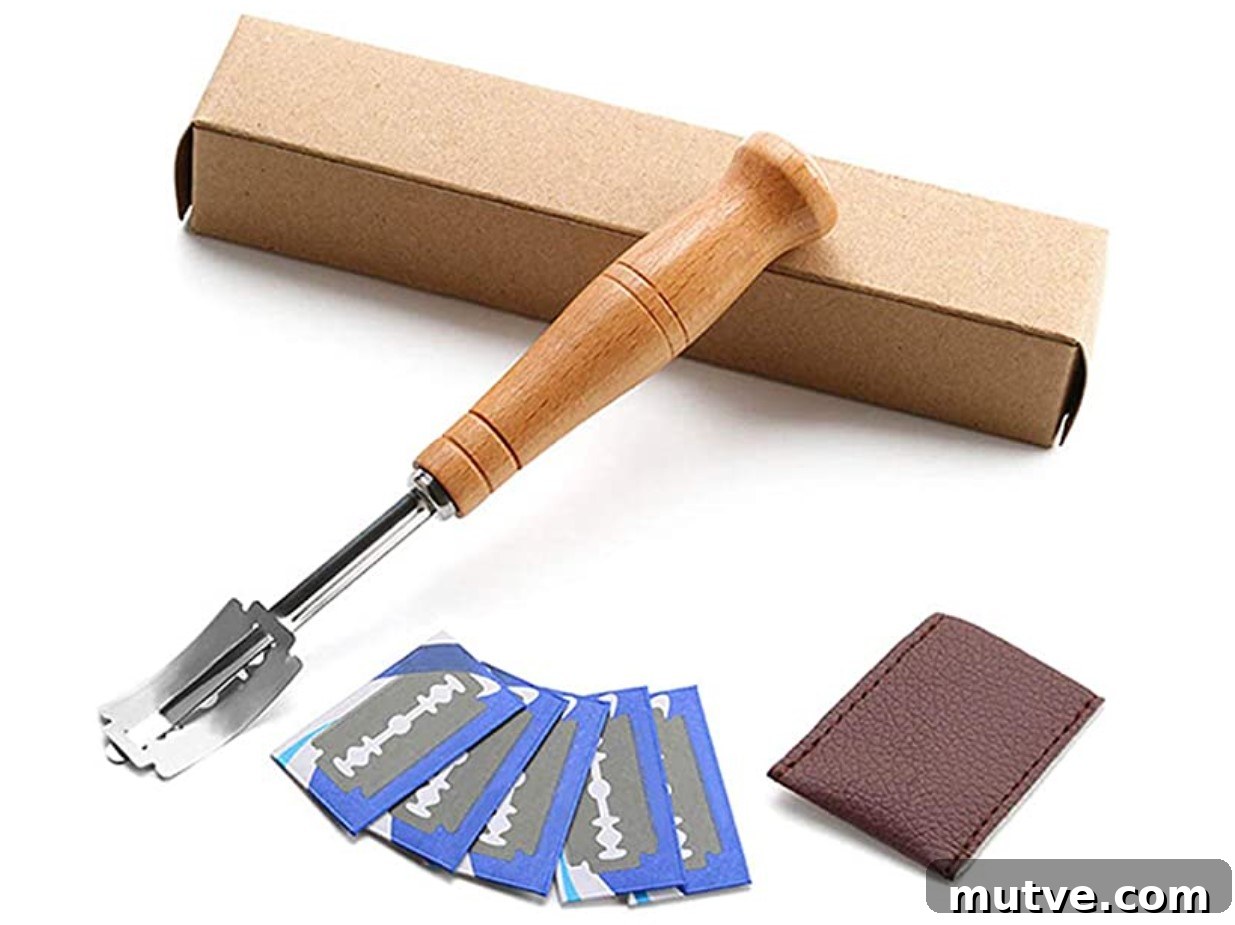
Simple scoring patterns work best for reliable results, especially when you’re learning. A single central slash, a few shallow diagonal cuts, or a flower pattern can all work well—what matters most is depth, angle, and confidence in the cut. For larger boules or batards, adjust the length and number of cuts to match the loaf size so the dough can expand evenly.
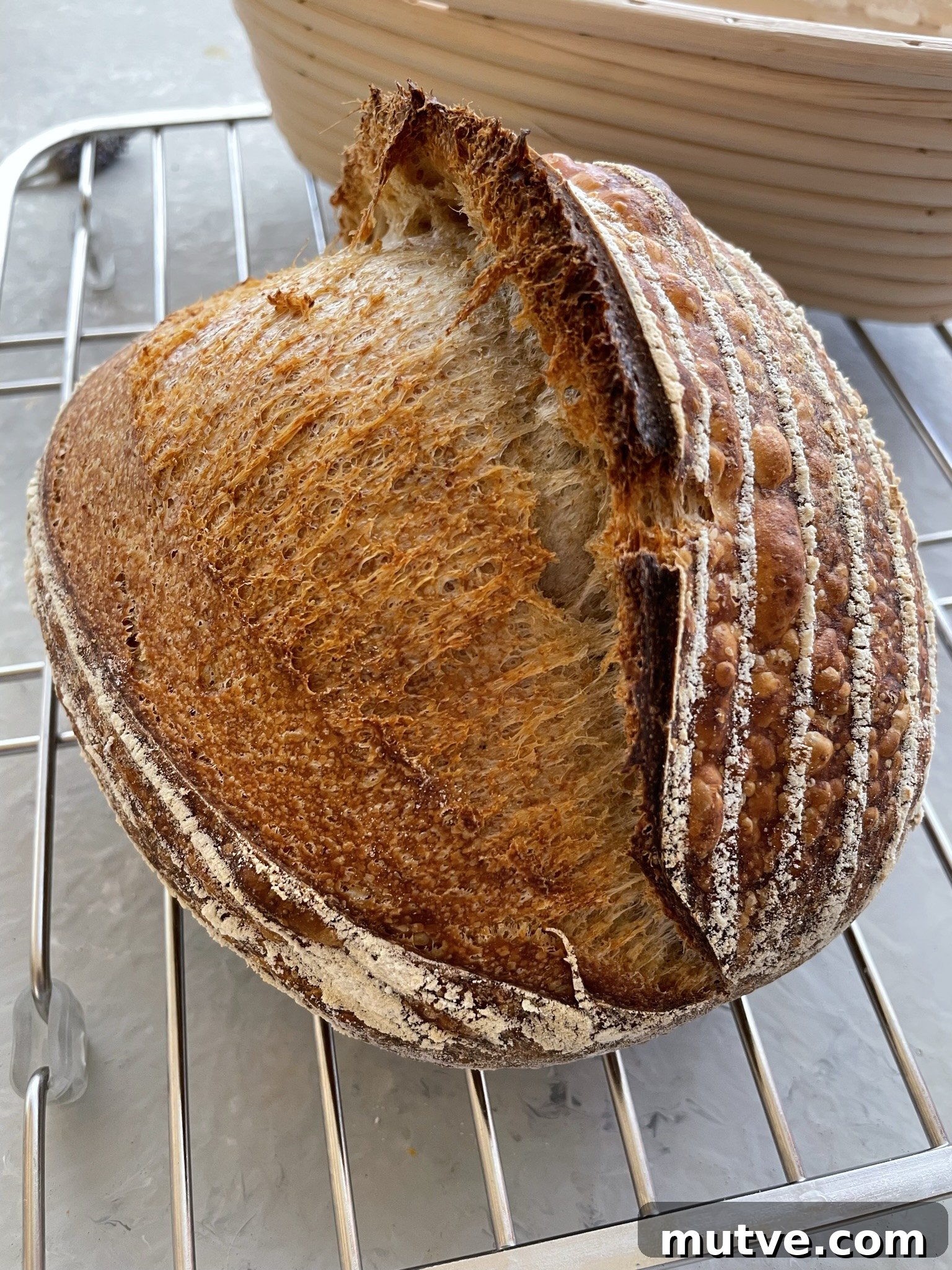
Blistering on the crust is another hallmark of many sourdough loaves. These small surface bubbles are typically the result of long, cold fermentation and the way carbon dioxide behaves during baking. During a prolonged cold proof, gas pockets form and stretch the dough surface. When the loaf hits high oven temperatures, the outer crust sets rapidly while gases expand beneath the surface, creating blisters rather than escaping freely. Bakers vary in their appreciation of blisters—some prize them as a sign of a long, active fermentation; others prefer a smoother crust. Either way, blistering is a natural outcome of certain fermentation and baking conditions rather than a defect.
Some practical pointers: always score with a steady hand and a single confident stroke; keep blades razor-sharp and clean; practice different angles and depths to see how they affect ear and crumb; and be mindful of safety by cutting away from your body. As you gain experience, you’ll learn which scoring styles and proofing schedules suit your oven, starter, and personal taste.
Scoring is a small but crucial step that bridges technique and aesthetics. With the right blade, a chilled boule, and a confident stroke, you can control oven spring, encourage a defined ear, and produce a loaf that looks as intentional as it tastes.