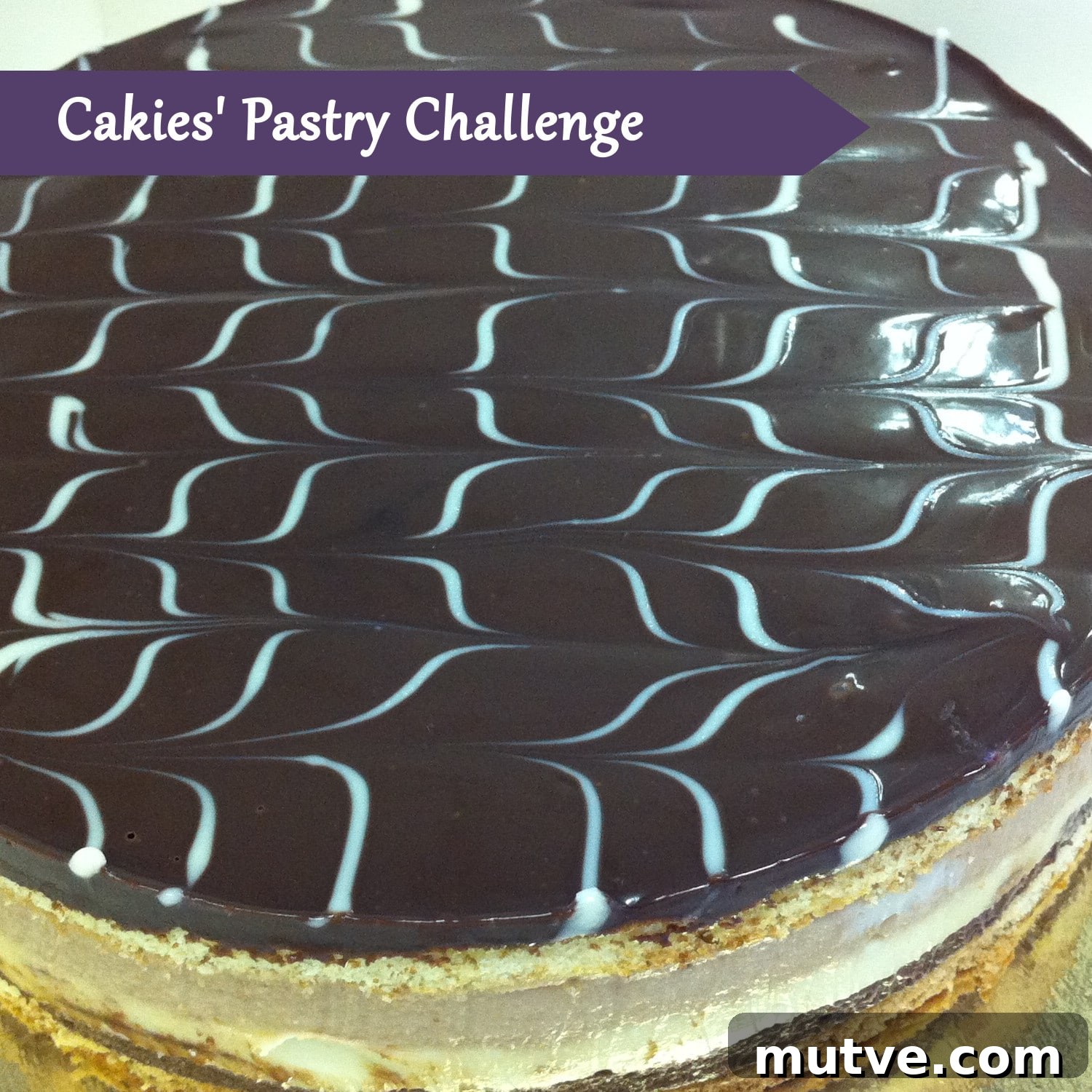
Last week we completed the first module of the course, which focused on the different types of cake batter and basic sponge techniques. For our final assignment we baked a triple coloured chocolate cake, a project that combined sponge preparation, ganache work and careful assembly. To start, we baked a large, even sheet sponge and cut two circles from it—one for the base and one for the top. Between these layers we spread three distinct chocolate ganaches: dark, milk and white, each added to give a clear contrast in flavour and colour. The cake was finished with a thin, glossy layer of chocolate on top to seal the flavors and create a neat surface. The final result was impressive: visually striking and rich in chocolate flavour. Of course, I noticed a few areas where I can improve—crisp edges and slightly cleaner layering—but overall I was very proud of the outcome.
From a technical perspective, the exercise reinforced several key skills for working with sponge cake and chocolate ganache. Rolling and trimming the sheet sponge to an even thickness made assembling the cake much easier, and cooling the ganaches to the right consistency helped achieve clean, separate layers. I also practiced smoothing ganache edges with a palette knife and chilling the cake briefly between layers to keep the structure stable. These small steps make a big difference when you want a neat, professional-looking triple coloured chocolate cake.
With the leftover sponge we made a cake log, a simple and satisfying second project. My baking partner and I chose a filling of dark chocolate ganache combined with chopped nuts for texture. We kept the decoration deliberately minimal—after a long day of baking we prioritized flavor over appearance. The cake log’s look could use more attention, but its rich taste and the contrast between silky ganache and crunchy nuts were a hit with everyone who tried it.
Between the cakes we baked a batch of bitterkoekjes, a cookie type that is often compared to macaroons. Learning the technique for these almond-flavoured cookies was surprisingly enjoyable; the batter and piping process taught me to pay careful attention to texture and baking time. Normally I’m not the biggest fan of this style of cookie, but these turned out to be delicious—crisp on the outside and tender inside. To add variety, we finished several cookies with a small buttercream swirl that was lightly dipped in fondant for a smooth, decorative finish. The combination of textures worked well and added a bakery-style touch to the cookies.
Overall, it was a very busy and productive day. The exercises reinforced what I’ve learned over the past few weeks about sponge cake structure, ganache consistency and simple decorative techniques. The results were well received by colleagues and family—everyone enjoyed tasting the triple coloured chocolate cake, the cake log and the bitterkoekjes. Their feedback was encouraging and highlighted a few areas for refinement, such as cleaner edges on layered cakes and more polished finishing on logs and cookies.
I’m looking forward to the next module, which focuses entirely on chocolate. It’s a perfect follow-up to this week’s work, and I’m excited to deepen my skills in tempering, ganache variations and chocolate-based decorations. After this module, I feel more confident about assembling multi-layer cakes and experimenting with different chocolate textures and flavours—skills that will be useful for future baking projects and for perfecting a signature triple coloured chocolate cake.