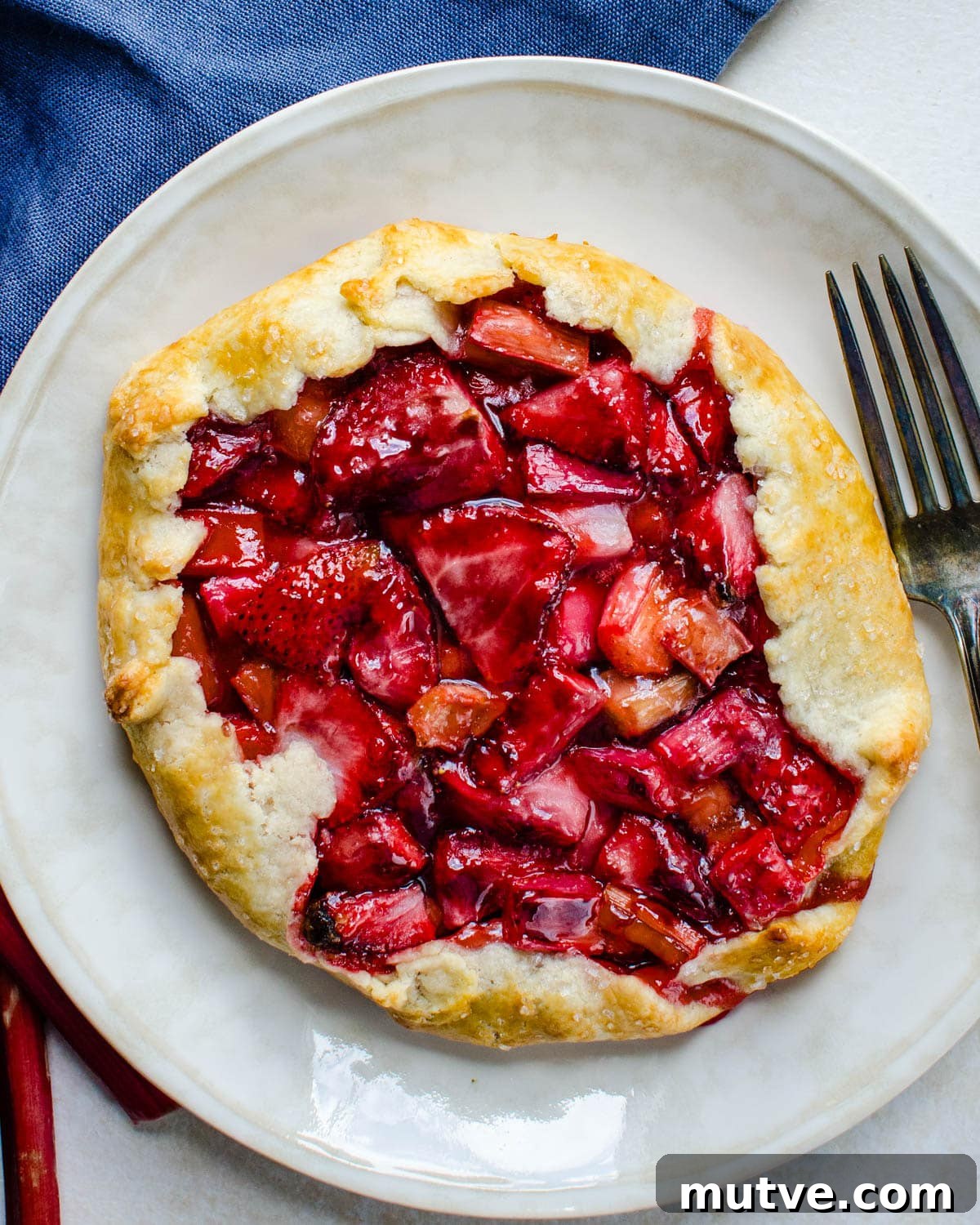
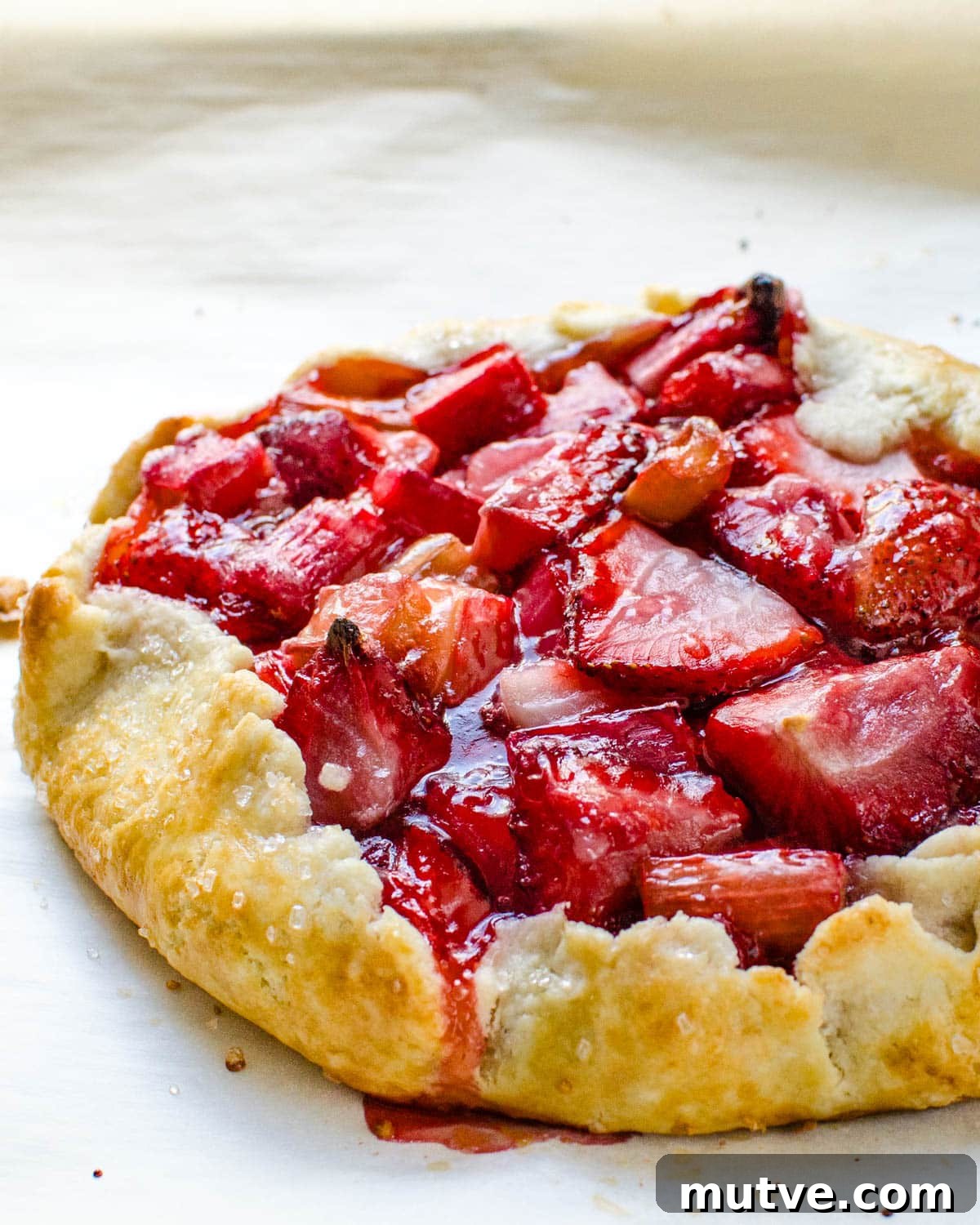
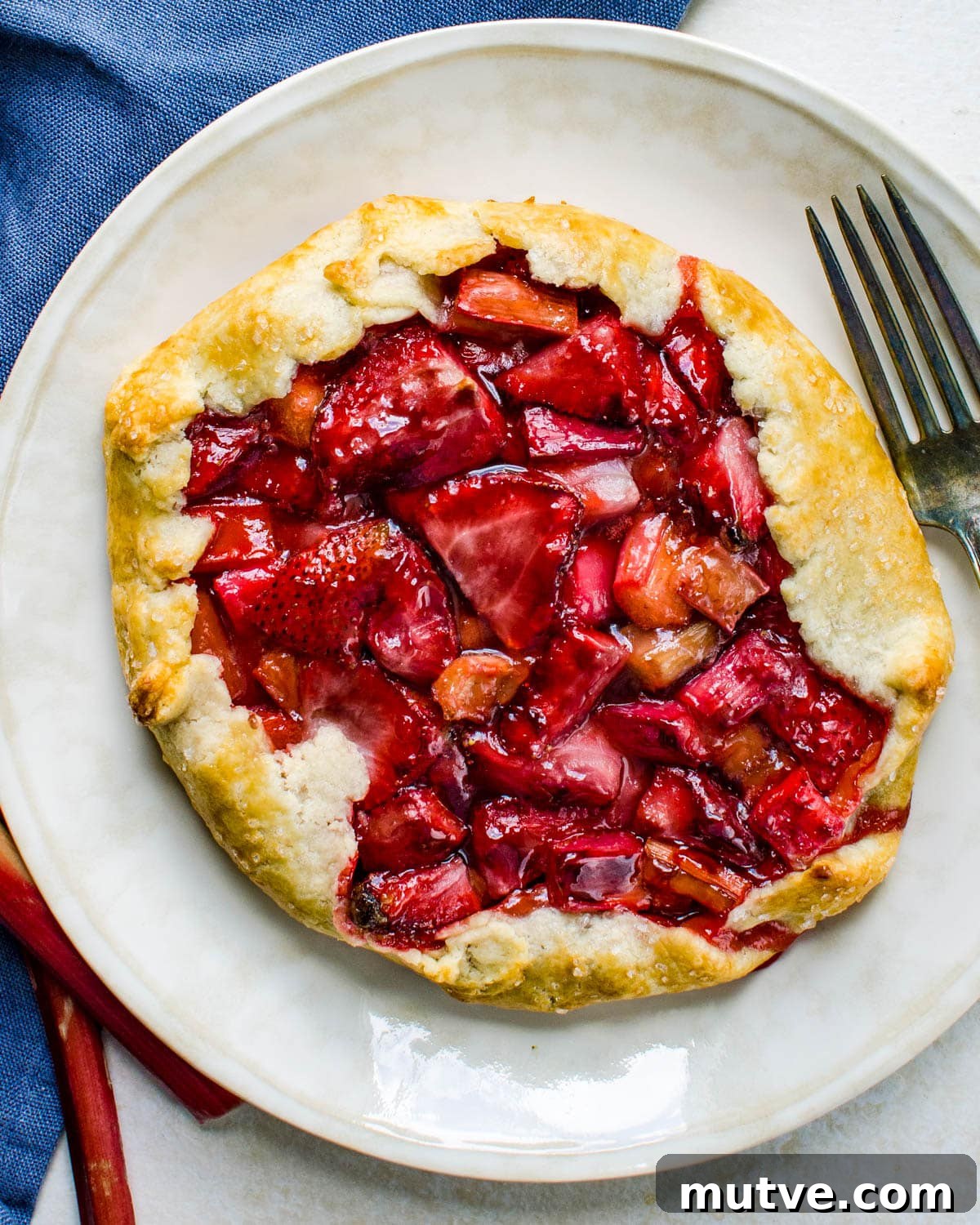
Today I’ll show you how to make a homemade strawberry rhubarb galette with sweet, juicy strawberries and tangy rhubarb tucked into a flaky, buttery crust. This rustic, free-form tart doesn’t require advanced pastry skills. I’ll share an easy, reliable method for making and rolling the crust, a tip for preventing a soggy bottom, and options for scaling or varying the filling.
What is a galette?
A galette is a single-crust tart baked flat on a sheet pan. The filling is piled in the center and the dough is folded up around the edges to create a rustic edge. Unlike a double-crust fruit pie, the filling remains exposed, showcasing the fruit and glaze. Also called a crostata, a galette is an easy, forgiving way to enjoy fruit-filled pastry without specialized tools or techniques.
Why this recipe works
- Balanced sweet-tart filling with a flaky, buttery crust.
- Free-form assembly — no pie plates or lattice work needed.
- Simple food-processor method for the pastry keeps the dough cold and tender.
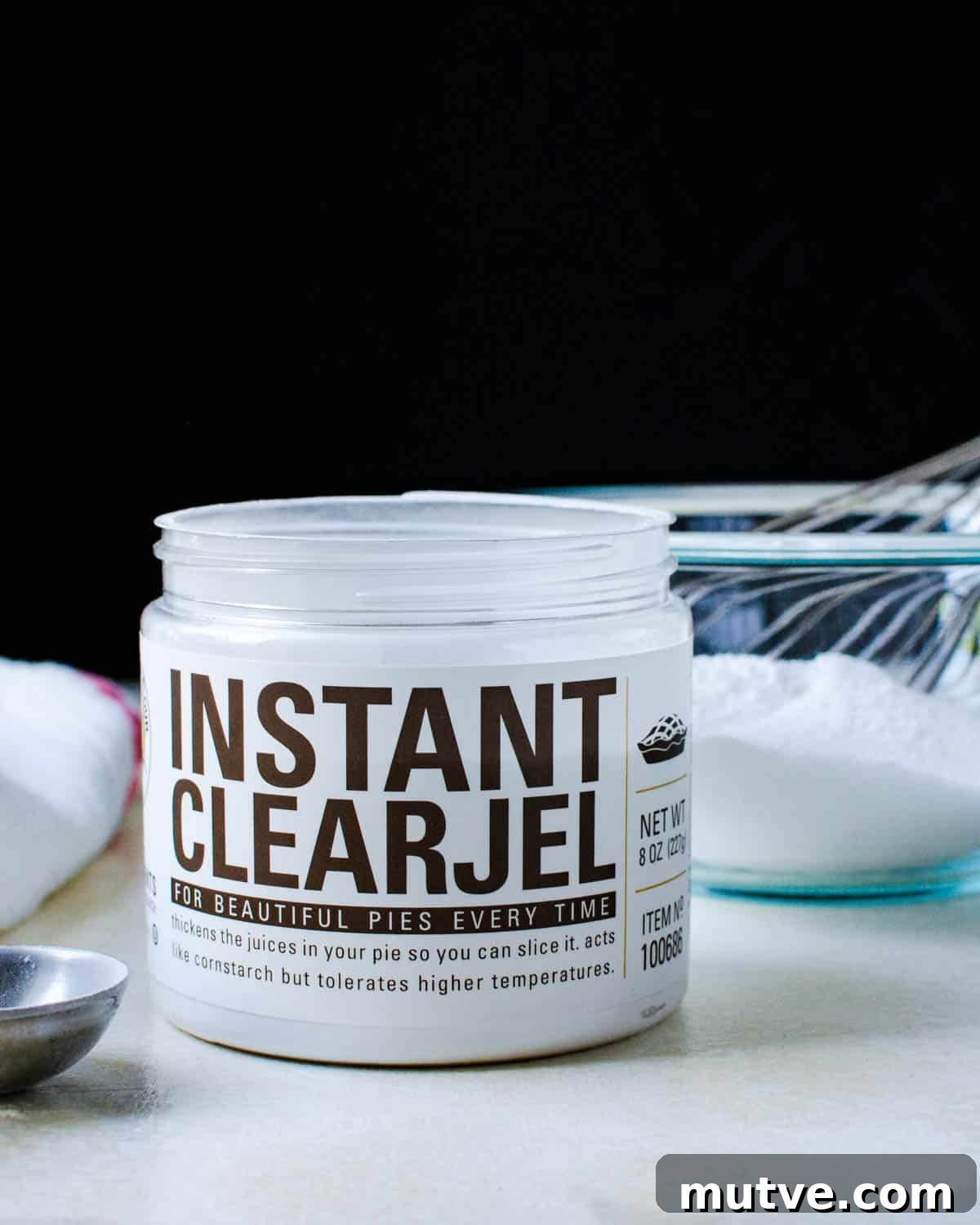
- Instant ClearJel (a powdered thickener) helps the filling set without becoming runny.
- Makes multiple individual galettes, so you can bake a few or one large tart.
- Leftovers refrigerate or freeze well.
- Beginner-friendly: no advanced baking skills required.
What’s in it?
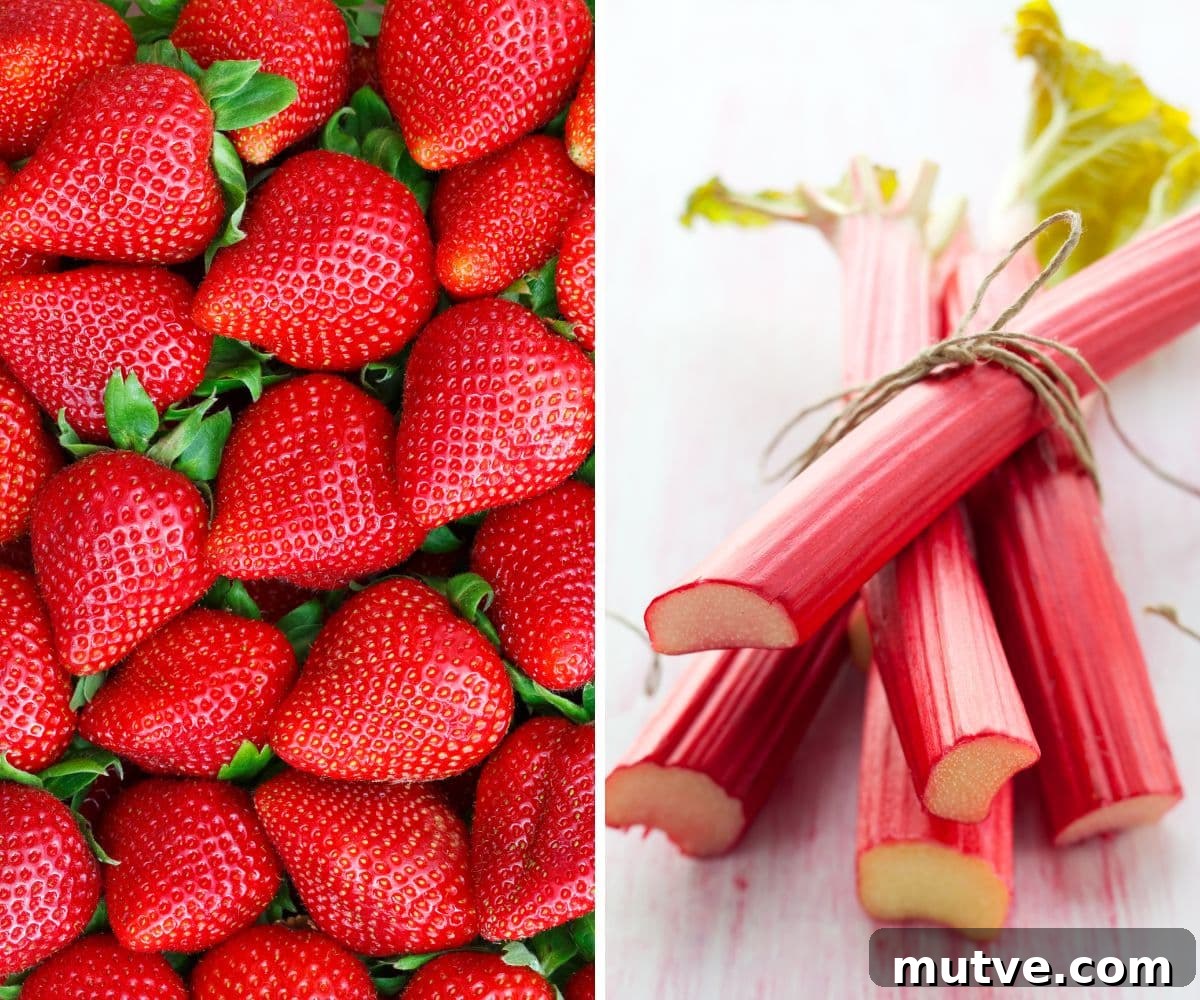
- Fresh strawberries — choose ripe berries for the best flavor.
- Fresh rhubarb — look for firm stalks; color does not affect taste.
- Instant ClearJel — a reliable thickener for fruit fillings that keeps the juices glossy and prevents a soggy crust.
- All-purpose flour
- Granulated sugar
- Kosher salt
- Cold unsalted butter — cut into small cubes; very cold butter is essential for flakiness.
- Ice water — helps keep the dough cold while you bring it together.
- Egg — for egg wash to give the crust a golden sheen.
- Sparkling or turbinado sugar — optional, for sprinkling on the crust.
Thickening fruit juices
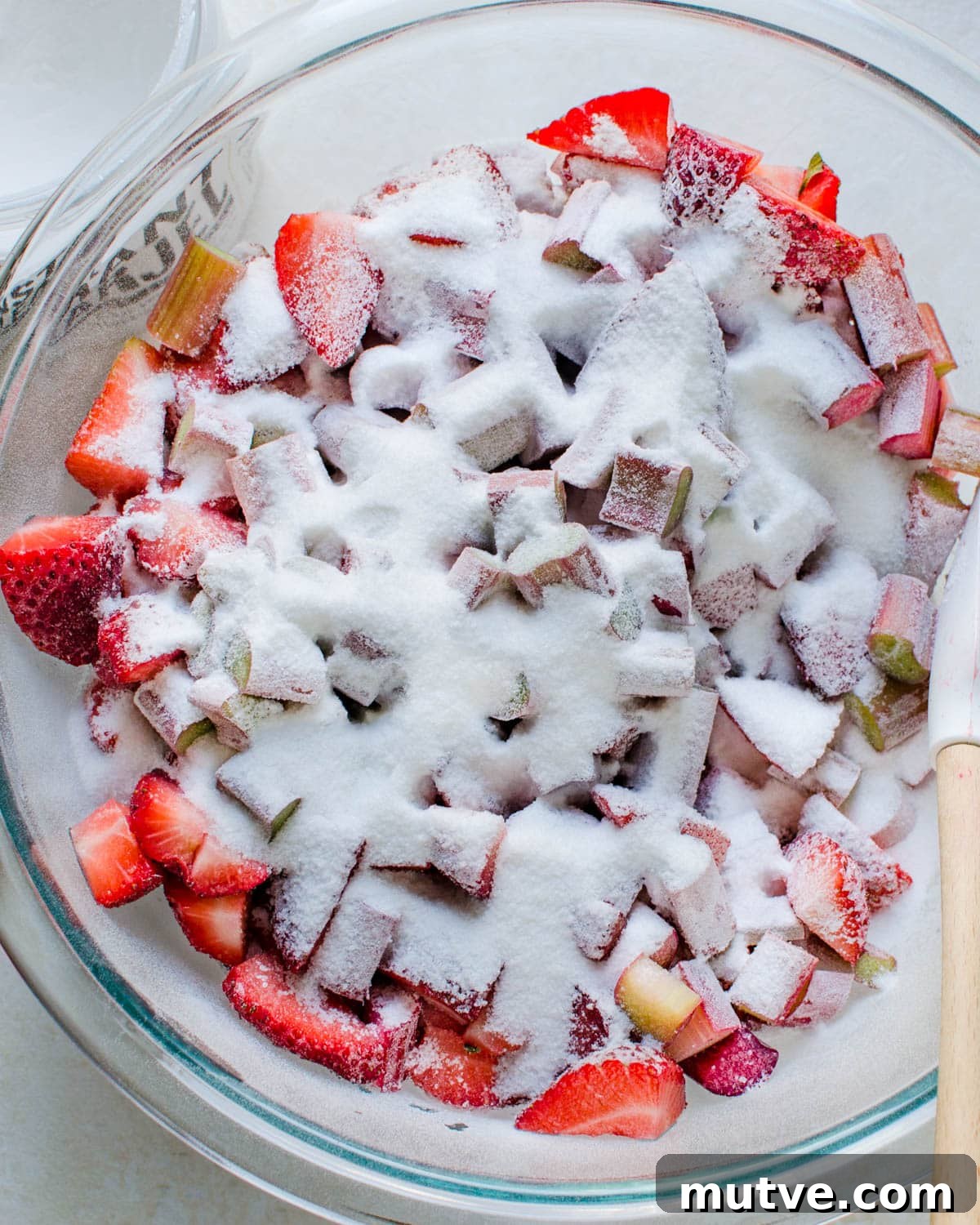
Fruits like strawberries release a lot of juice when macerated, which can make the crust soggy. Instant ClearJel is a favored thickener for fruit tarts because it activates without precooking and yields a clear, glossy filling. If you don’t have ClearJel, cornstarch is a substitute, but the finish may be less glossy.
How to use ClearJel
- Whisk the ClearJel together with the sugar to prevent clumping.
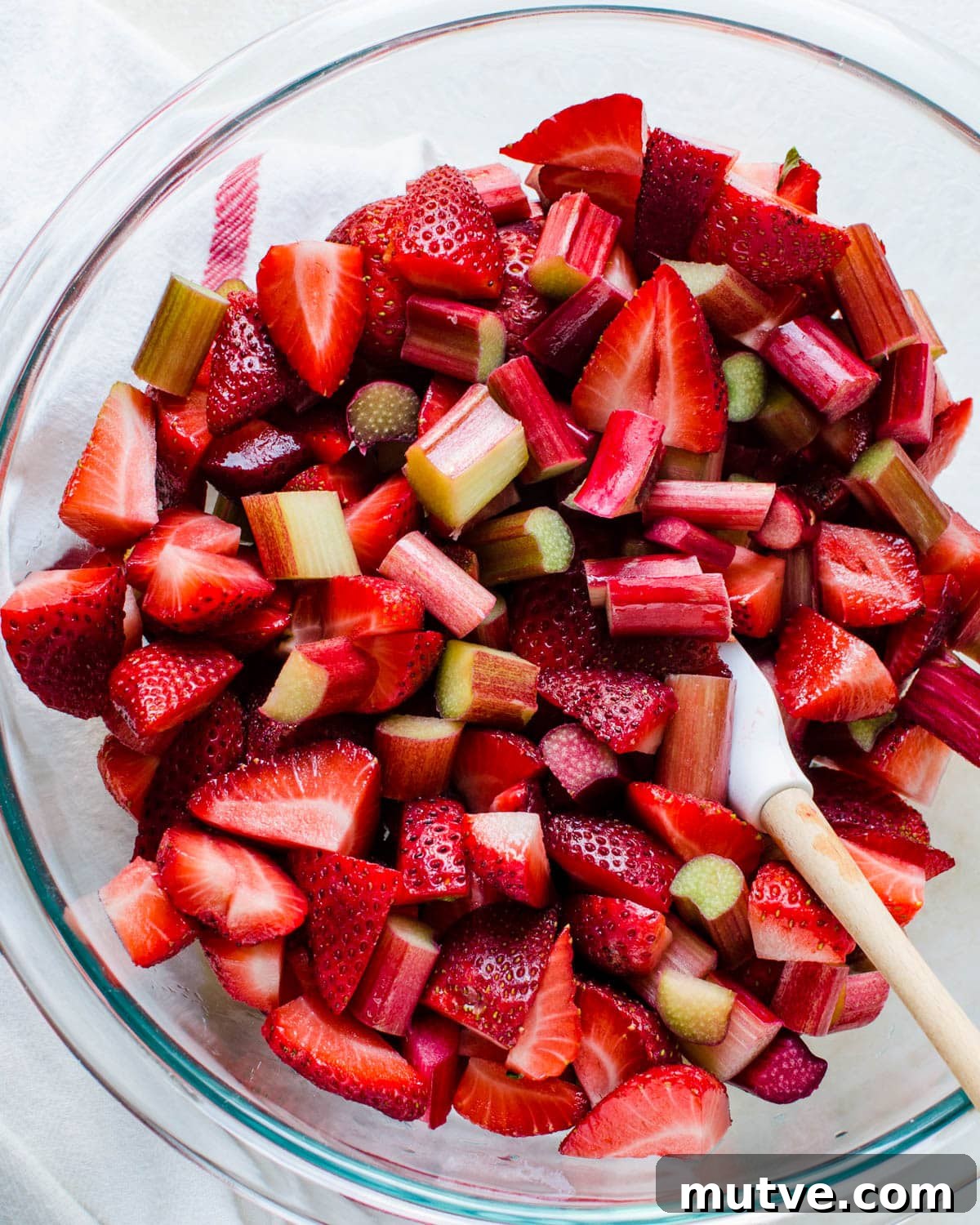
- Toss the cut fruit with the ClearJel-sugar mixture and let it rest so the thickener can hydrate.
- The macerated fruit will develop a shiny glaze that holds up during baking.
Making the pastry
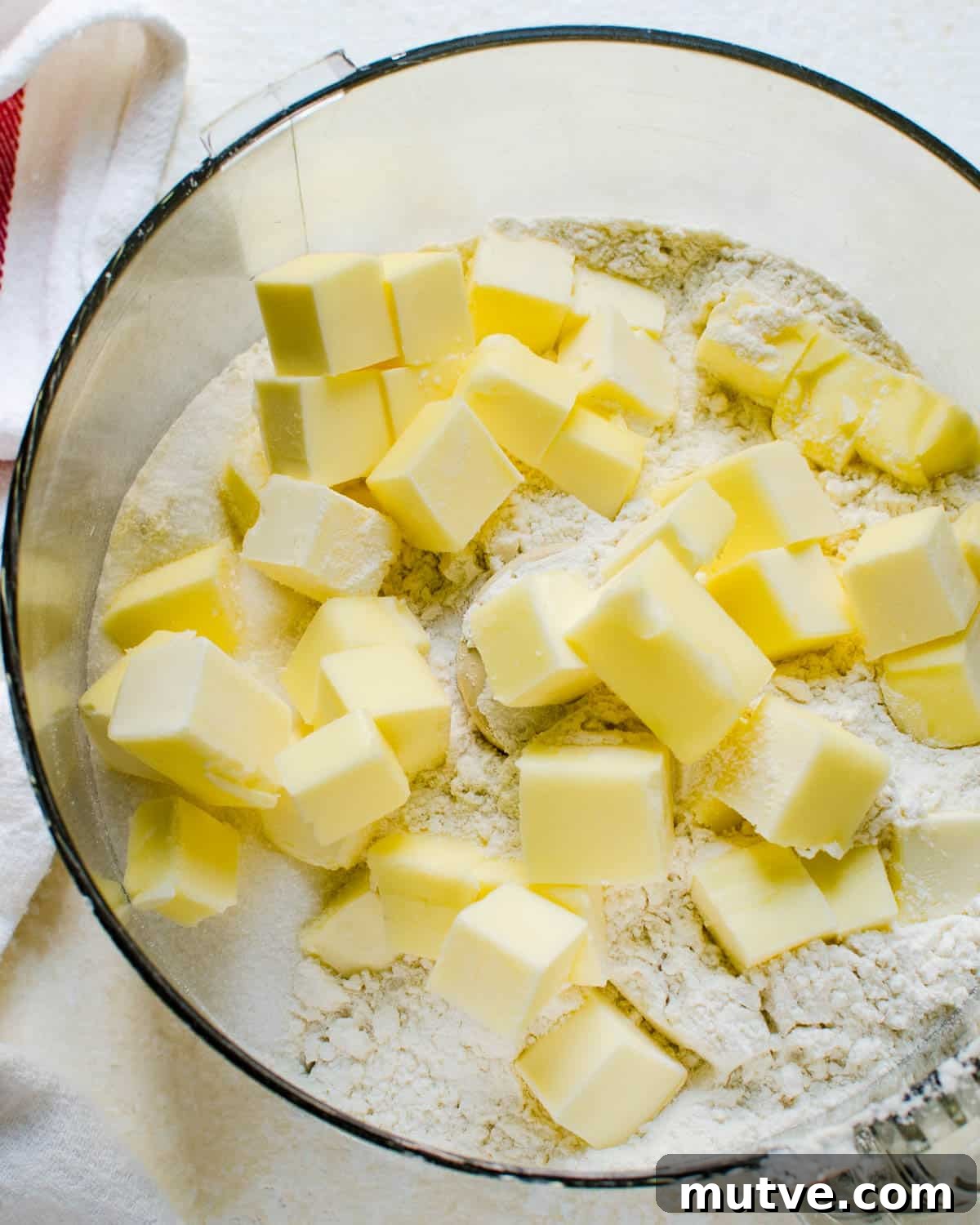
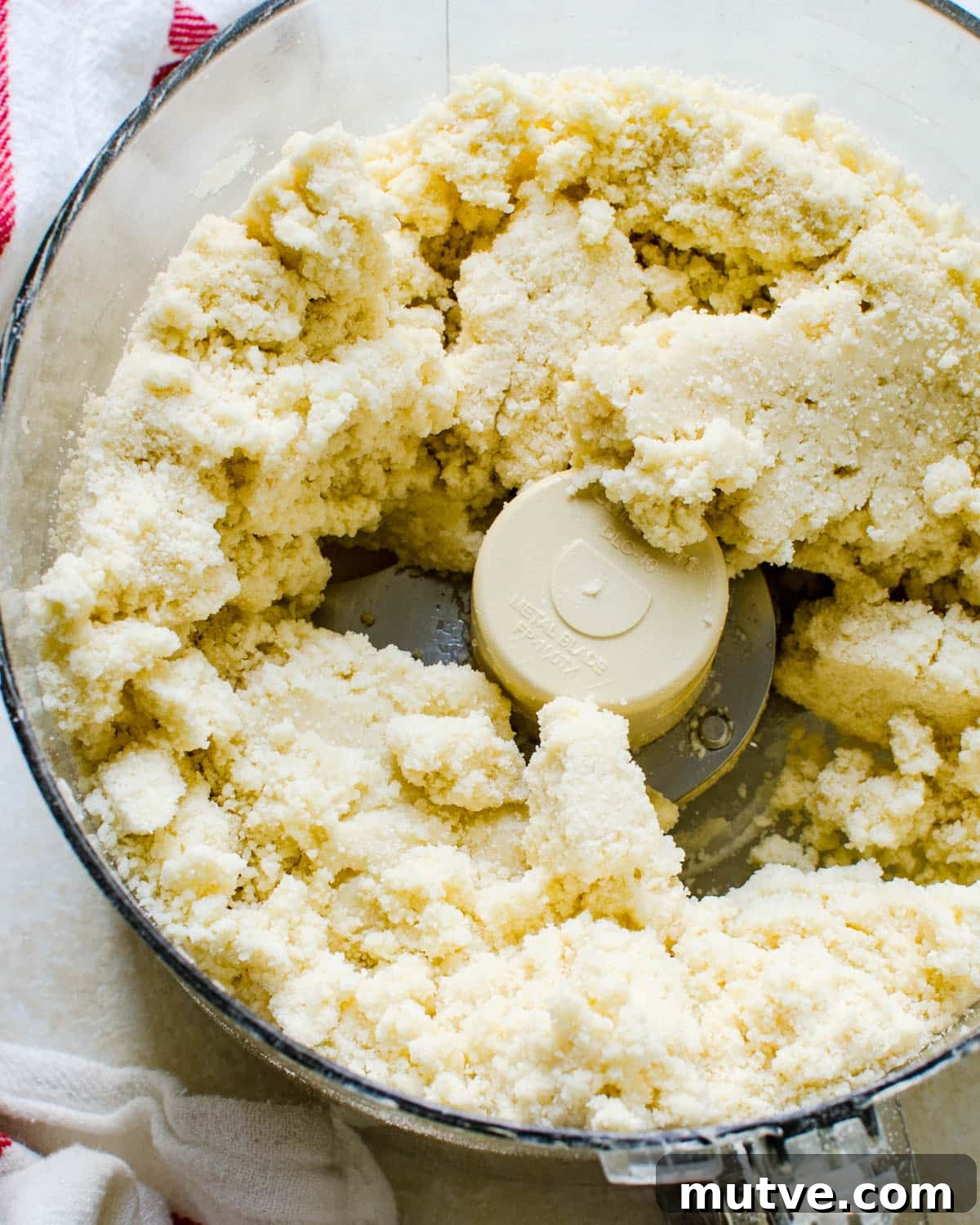
The crust is crucial. Use a food processor to keep the butter cold and to get a coarse texture with some pea-sized pieces. That texture yields a flaky crust when baked. Keep the dough chilled and handle it as little as possible to avoid toughness.
How to make the pastry for the galette
- Combine 2 cups all-purpose flour, 2 tablespoons sugar and 1/2 teaspoon kosher salt in the bowl of a food processor.
- Add 12 tablespoons (1½ sticks) cold, cubed unsalted butter and pulse until the mixture resembles coarse cornmeal with some larger bits.
- Add 3–5 tablespoons ice water, a few tablespoons at a time, pulsing until the dough just begins to hold together. Don’t over-process.
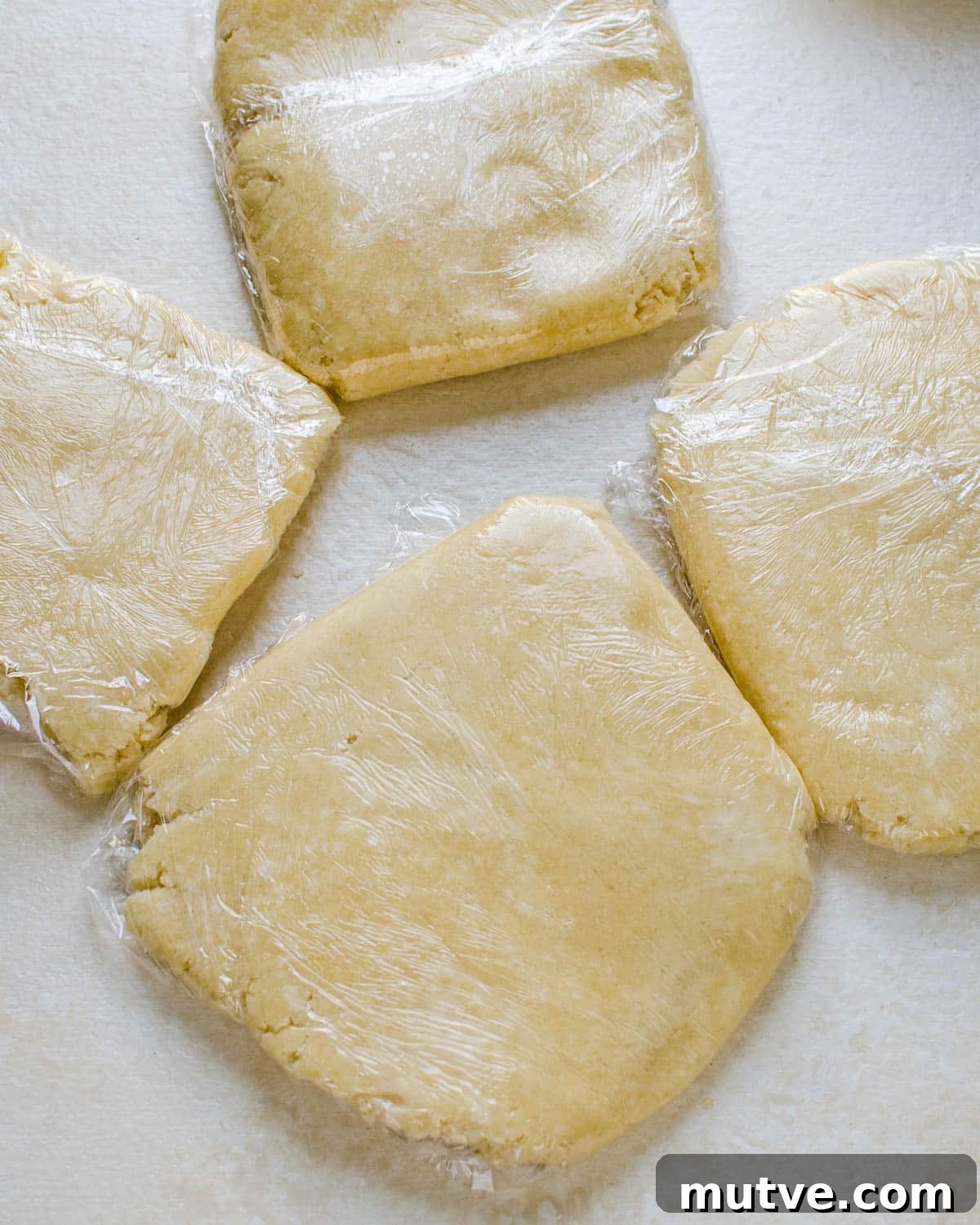
- Turn the dough onto a floured surface, form into a ball and divide into four equal portions.
- Flatten each portion into a disc, wrap in plastic, and refrigerate for at least 20 minutes.
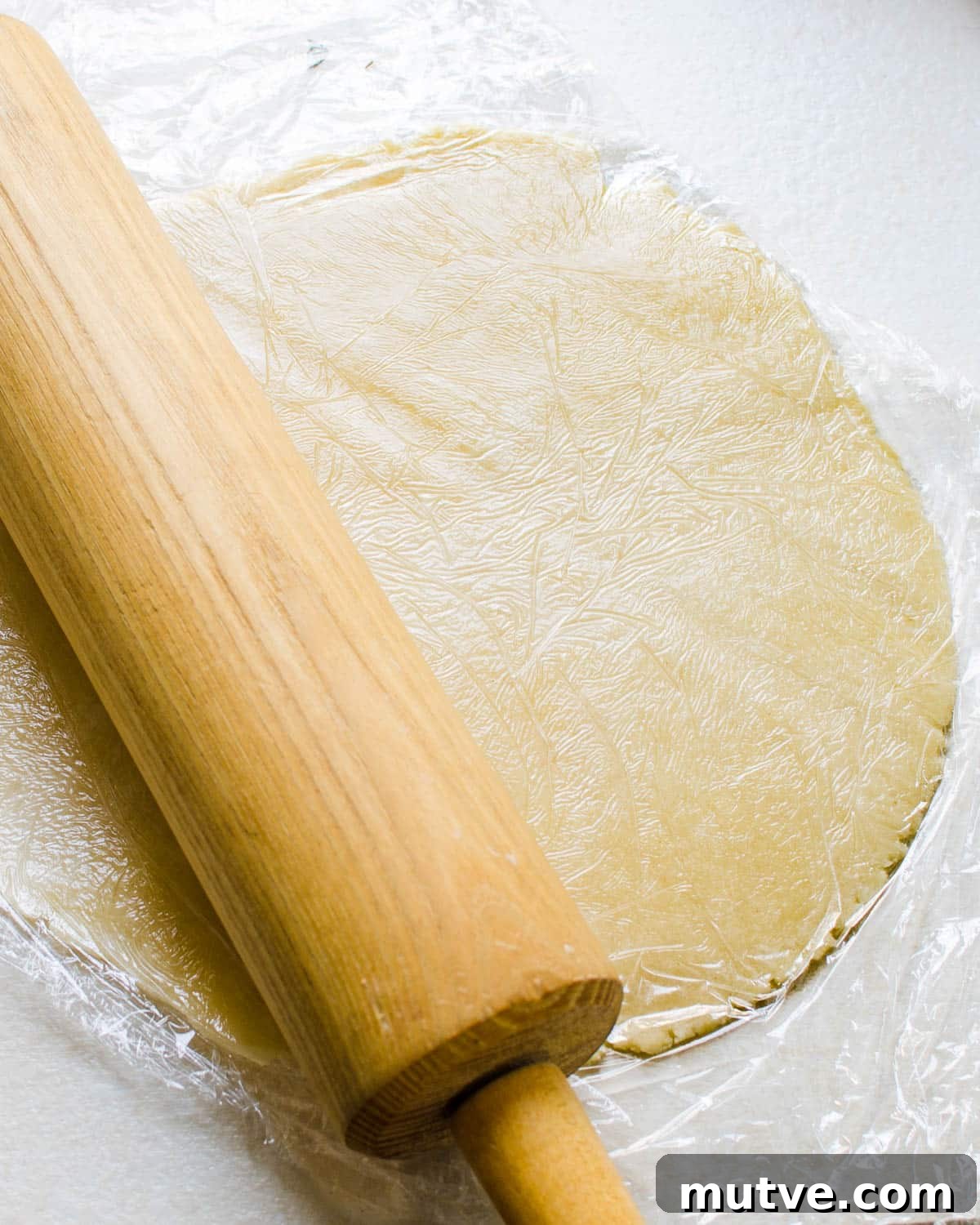
- When ready, sandwich a chilled disc between two sheets of plastic wrap and roll into a roughly 1/4″ thick round, turning the dough as you roll to keep it even. Chill rolled rounds while you roll the remaining discs.
The plastic wrap helps with two things
- It lets you roll the dough thin without adding extra flour, which can make pastry tough.
- It prevents sticking and speeds cleanup.
Pro tips
If you’re serving a crowd, make one large galette or several individual ones. Individual galettes reheat easily and freeze well for future servings. Keep butter and water very cold, and don’t overwork the dough.
How to assemble
- Preheat the oven to 425°F (220°C) and line a baking sheet with parchment.
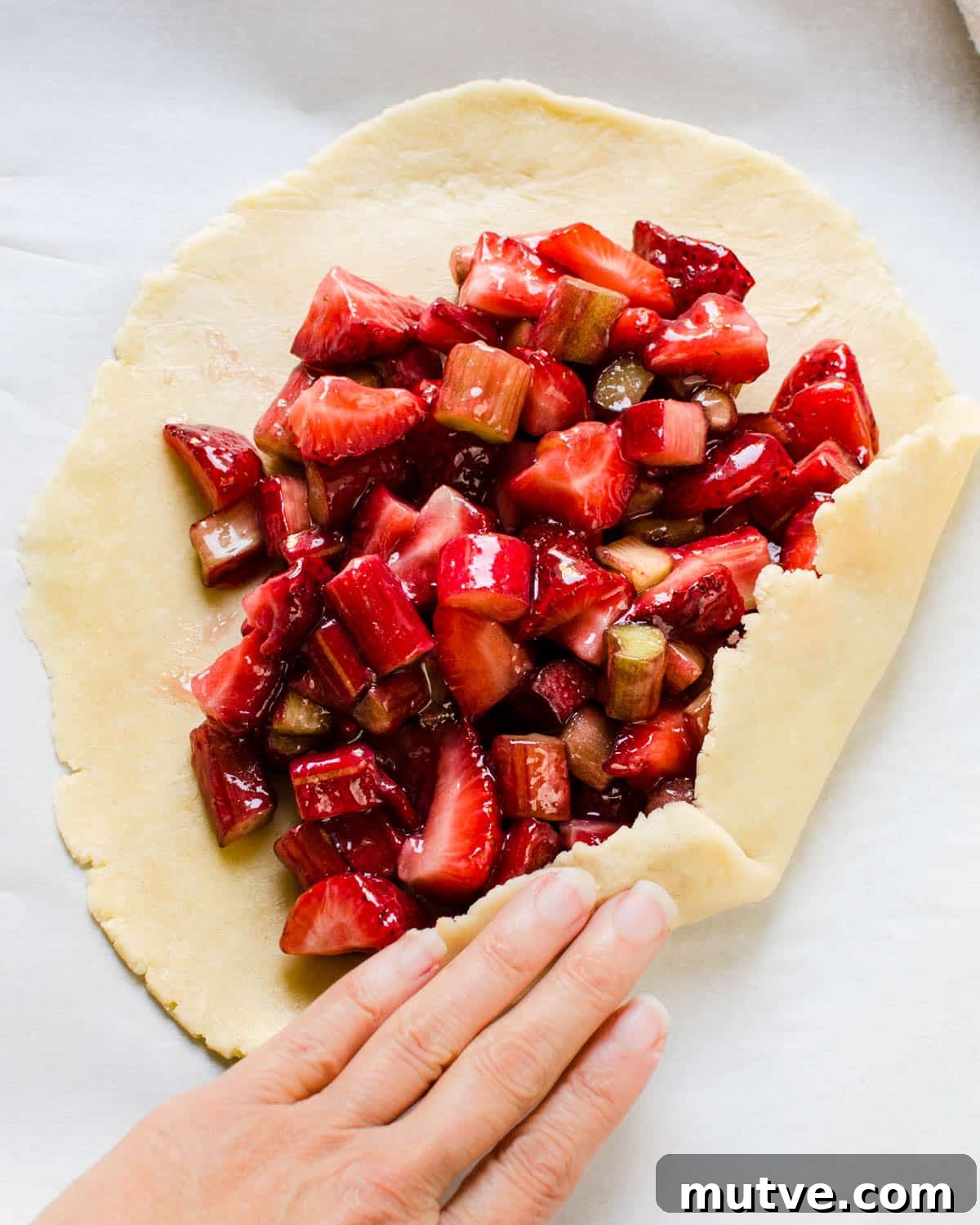
- Place one rolled pastry round on the parchment and mound one-quarter of the fruit filling in the center, leaving a 1½–2″ border.
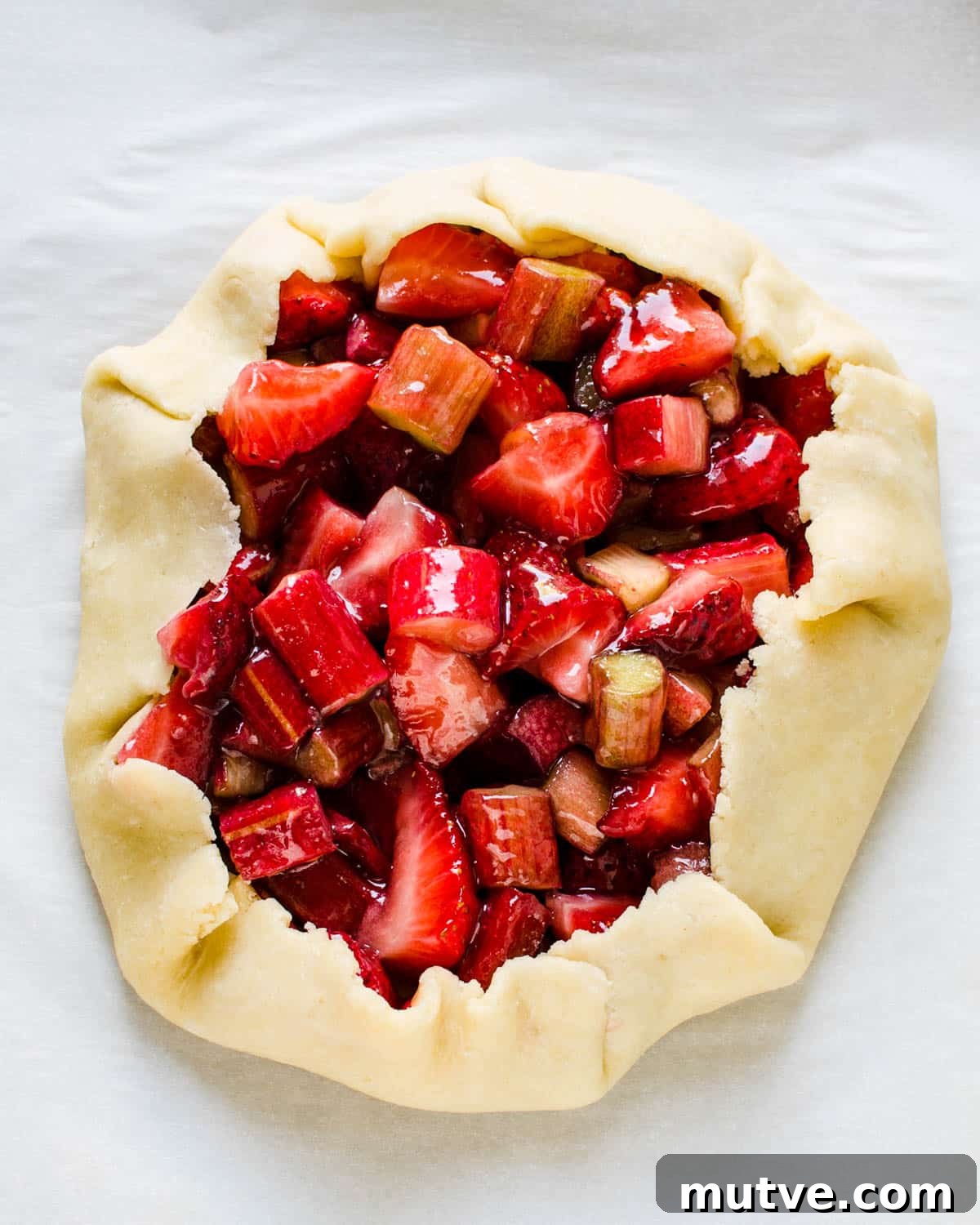
- Fold the pastry edge up and over the filling, pleating as needed to form a rustic edge.
- Mix one large egg with 1 tablespoon water and brush the edge of the pastry with the egg wash.
- Sprinkle lightly with sparkling or turbinado sugar if desired.
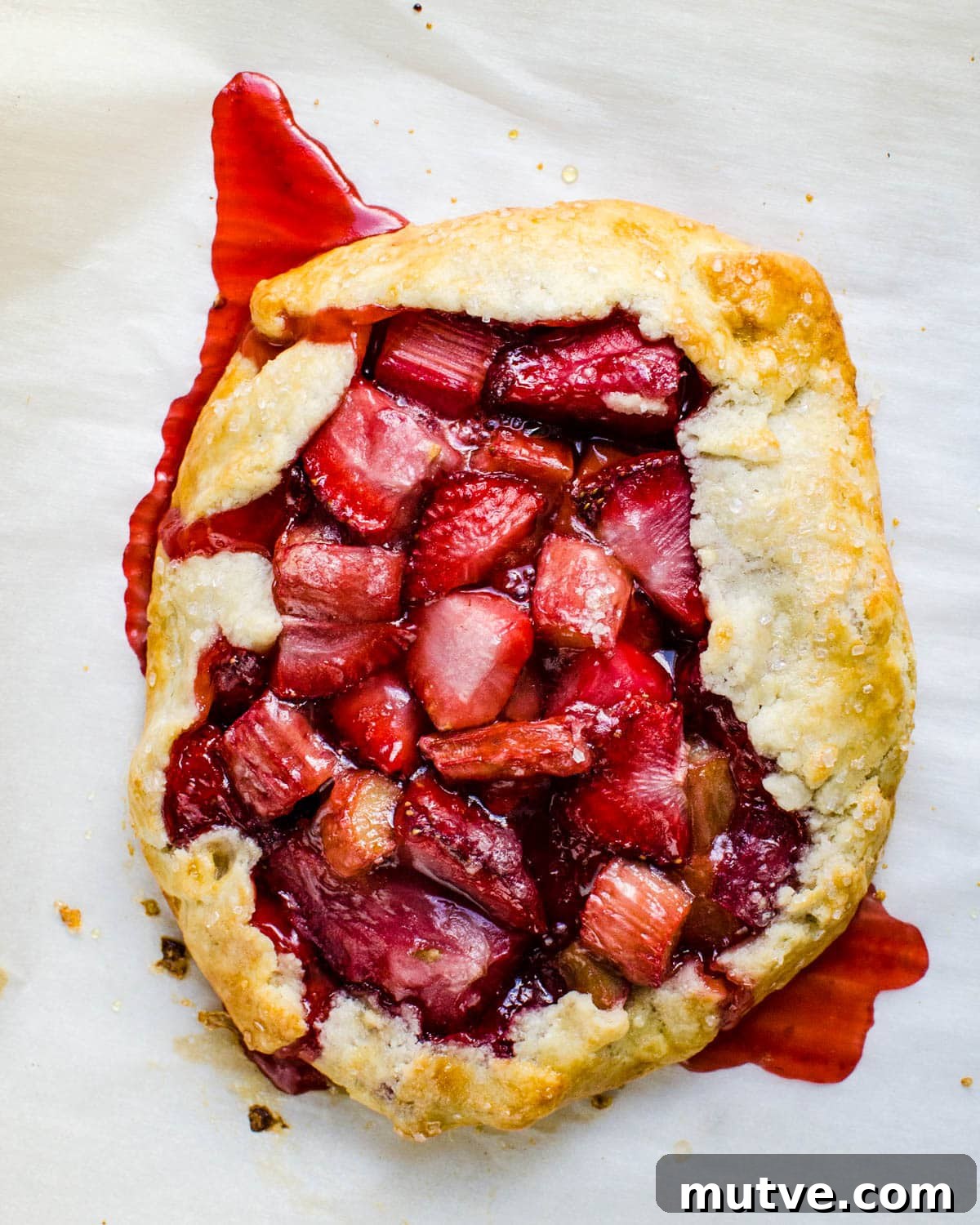
- Bake until the crust is golden and the filling is bubbly, about 23–25 minutes.
Swaps and variations
- Omit rhubarb for a plain strawberry galette.
- Add ½ teaspoon lemon zest and a squeeze of lemon juice to brighten the filling.
- Substitute other berries or stone fruit such as raspberries, blueberries, peaches, nectarines, or apricots.
- Use apples or pears; drier fruit will need less thickener.
- For a rhubarb-only galette, increase sugar by about 1/4 cup to balance tartness.
Frequently asked questions
Is galette dough the same as pie dough?
Yes. Galette, crostata and pie dough are usually the same basic dough. The flakiest crusts use very cold butter and minimal handling.
How do you keep a galette from getting soggy?
Soggy crusts come from excess liquid. Using a thickener like Instant ClearJel with the fruit helps absorb juices and form a stable filling.
Can I make dough the night before?
Yes. The pastry can be made ahead and refrigerated. For best results, assemble the fruit filling the day you bake.
Can I use puff pastry instead?
Yes. Thawed puff pastry can be rolled and used in place of pie dough; bake until golden and bubbly.
Can I use frozen fruit?
Frozen fruit can be used, though it may release more liquid and require a longer bake time. Fresh berries are firmer and often more flavorful.
How to serve
Let the galette cool slightly on the baking sheet before serving so the filling sets. Serve warm or at room temperature with vanilla ice cream, whipped cream or a splash of cream.
Storage and freezing
Store leftovers wrapped in foil or plastic in the refrigerator for up to 3 days. Reheat at 300°F for about 10 minutes. To freeze, cool to room temperature, wrap tightly in foil, and freeze for up to 2–3 months. Thaw before reheating.
Strawberry Rhubarb Galette — Recipe
Prep time: 45 minutes (plus chilling). Cook time: 23–25 minutes. Total time: ~1 hour 10 minutes. Servings: 8 (four individual galettes or one large).
Ingredients
- 2 cups all-purpose flour, plus more for dusting
- 3/4 cup plus 2 tablespoons sugar
- 1/2 teaspoon kosher salt
- 12 tablespoons cold unsalted butter (1½ sticks), cubed
- 3–5 tablespoons ice water
- 1 3/4 pounds strawberries, halved or quartered
- 3/4 pound rhubarb, sliced into 1″ pieces
- 2 tablespoons Instant ClearJel
- 1 large egg
- 1 tablespoon water
- 2 tablespoons sparkling or turbinado sugar
Directions
- Preheat oven to 425°F (220°C).
- In a food processor, combine flour, 2 tablespoons sugar and salt. Add cold cubed butter and pulse until coarse crumbs form.
- Add 2–3 tablespoons ice water and pulse until the dough begins to come together. Add more water by the tablespoon if needed.
- Turn dough onto a floured surface, form into a ball and divide into fourths. Flatten each into a disc, wrap and chill for 20 minutes.
- Whisk the remaining sugar with the Instant ClearJel. Toss the cut strawberries and rhubarb with this mixture and let rest for 10 minutes.
- Roll each chilled disc between sheets of plastic to 1/4″ thickness. Chill rolled rounds while you work.
- Place a round on parchment, mound a quarter of the fruit in the center leaving a 1½–2″ border, and fold the edges up and over the filling.
- Chill assembled galettes for 10 minutes. Whisk the egg with 1 tablespoon water and brush the pastry. Sprinkle with sparkling sugar.
- Bake 23–25 minutes until golden and bubbly. Serve warm or at room temperature.
Notes
Leftovers keep in the refrigerator for 2–3 days. Freeze wrapped galettes up to 2–3 months; thaw before reheating at 300°F for about 10 minutes. Adjust thickener depending on how juicy your fruit is — less for drier fruit.