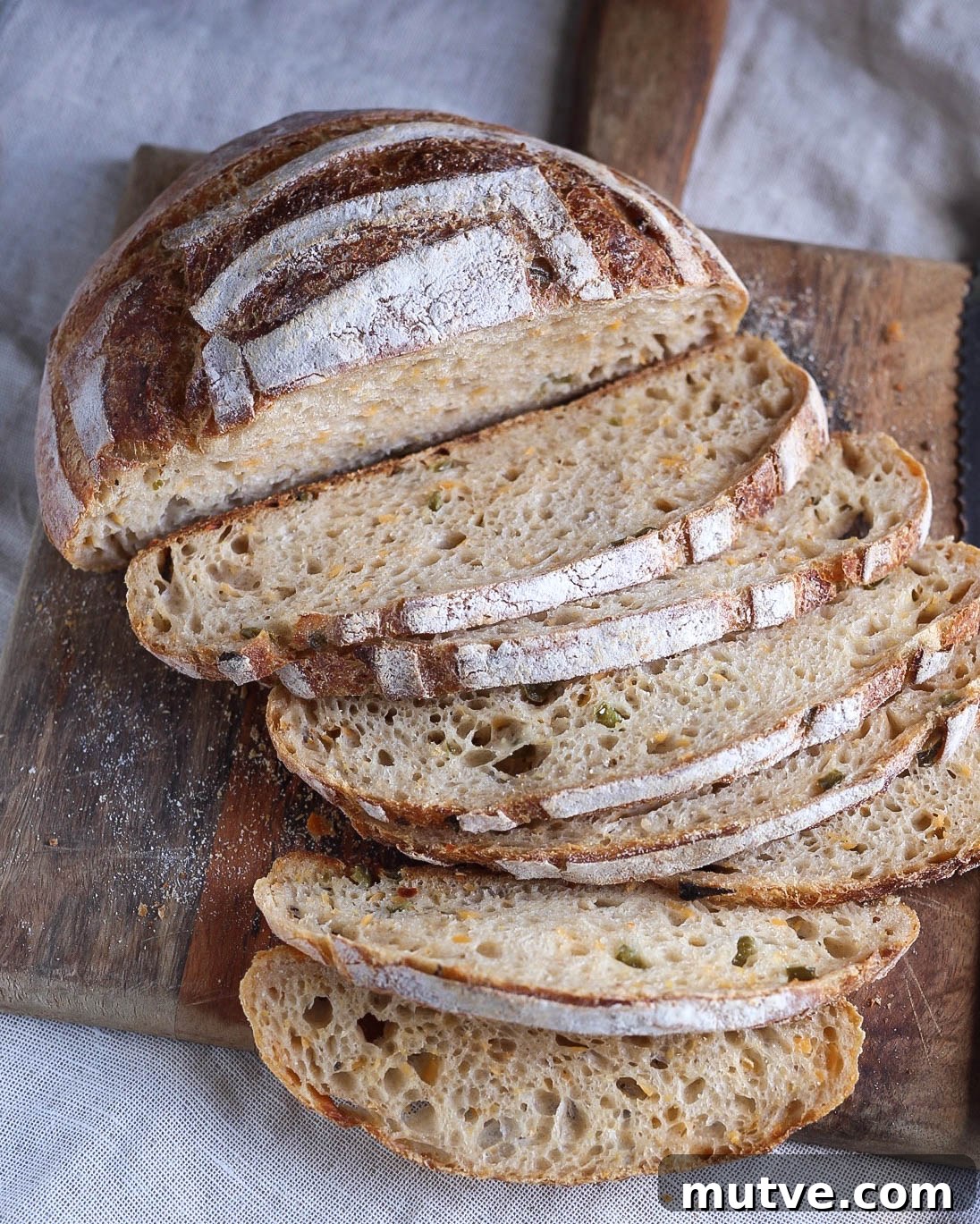
Years ago I spent a summer working in a bakery in Austin, Texas, where one of the loaves was a yeasted cornmeal bread — not the quick cornbread made with baking powder, but a true yeasted loaf with cornmeal folded into the dough. That memory inspired an experiment: could I combine those cornbread flavors with my favorite sourdough? The result was a sourdough discard loaf featuring cornmeal, sharp cheddar, and jalapeño. While the formula is still being refined, the first bakes were so rewarding that I wanted to share the method and tips now.
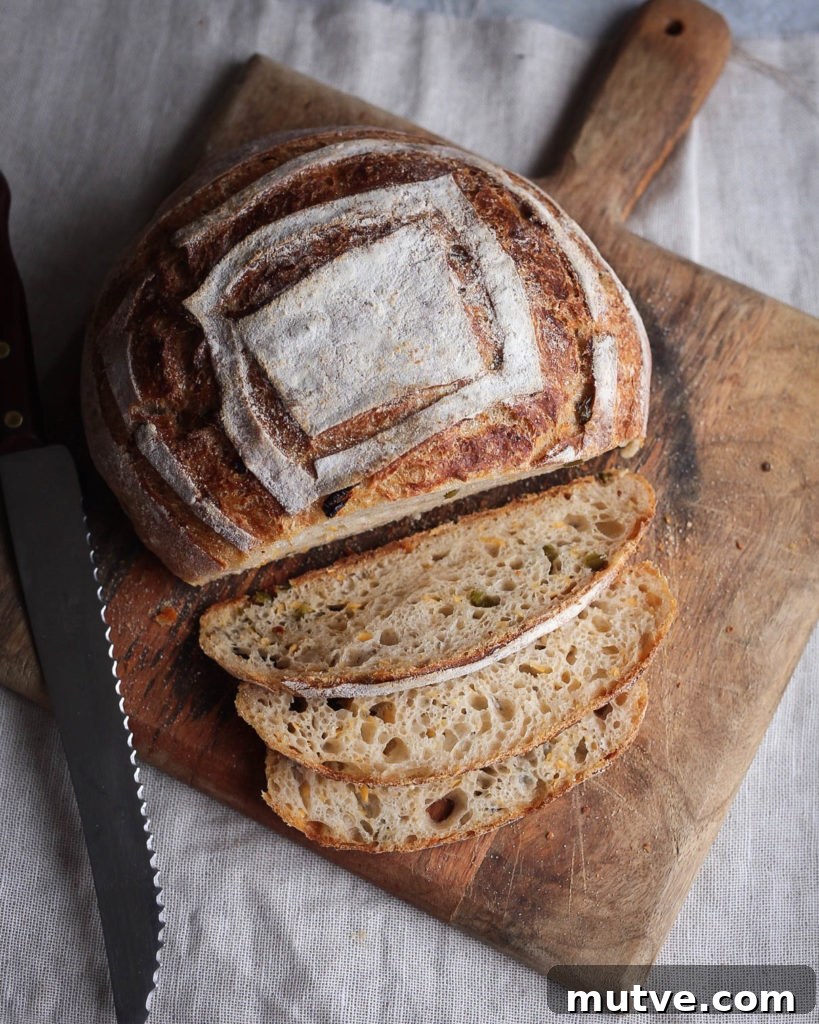
This loaf is leavened entirely with discard sourdough starter. If you’re familiar with working solely with discard starter, many of the underlying techniques are the same as in my basic discard country loaf: building extensibility through autolyse, using folds instead of heavy mixing, and managing fermentation time. For this version I changed a few steps to protect gluten development and to keep the cornmeal from tearing the dough. The key moves were a long autolyse before adding the starter and turning the cooked cornmeal into a porridge that gets laminated into the dough instead of mixed in dry.
Because shredded cheese and diced jalapeño can scorch at very high oven temperatures, I bake this loaf a bit cooler than some sourdough recipes: 20 minutes covered at 475°F, then 25 minutes uncovered at 425°F. In prior versions I used cold water to slow fermentation during long daytime absences, but now that I work from home I use room-temperature water and monitor the bulk rise more closely.
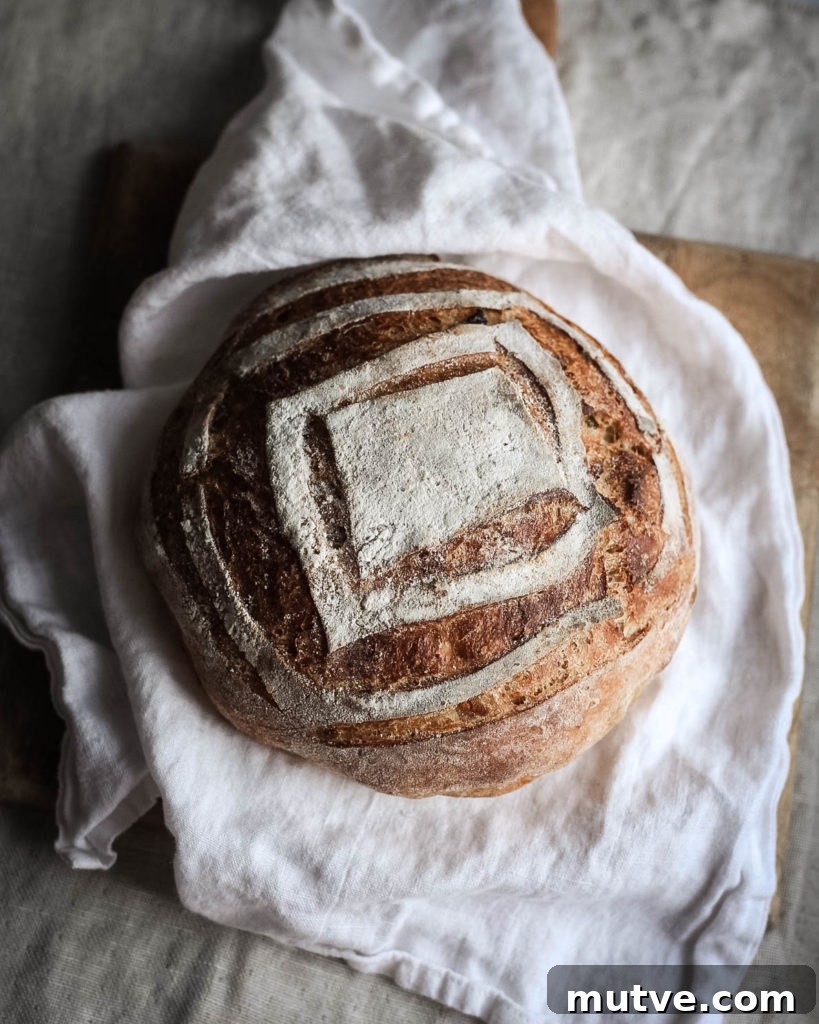
The finished loaf develops a softer, slightly lighter crust than a typical country sourdough, and it slices cleanly — excellent for buttered toast, avocado toast with a kick, or served alongside soups and stews. The aroma as it bakes leans warm and savory, with the cheddar and jalapeño complementing the sweet cornmeal porridge.
A few practical caveats: the dough can end up very wet once you factor in all the liquids — autolyse water, the discarded starter, and the cornmeal porridge — so expect a soft, somewhat slack dough. In my trial I likely reached hydration in the neighborhood of 85–90%, which made shaping tricky. Gentle handling, light preshaping, and a long cold proof in the refrigerator helped the loaf hold its shape. If you prefer easier handling, reduce the water and use the lower end of the porridge amount.
Sourdough Discard Loaf with Cornmeal, Cheddar, and Jalapeno
A savory discard-starter sourdough loaf that blends cornmeal porridge with sharp cheddar and jalapeño for a Southwestern-inspired bread.
Ingredients
For the bread:
- 230–240 g spring or bottled water at room temperature; divided
- 270 g bread flour
- 30 g whole wheat flour
- 30 g discard sourdough starter
- 6 g table salt or fine sea salt
- 65–75 g cornmeal porridge (see below)
- 1 medium jalapeño seeded and finely chopped
- 56 g extra-sharp cheddar shredded
For the cornmeal porridge:
- 1/4 cup yellow cornmeal (medium grind works well)
- 1/4 cup boiling water
- 1 cup water
- dash salt
Instructions
-
Autolyse: In a large, wide mixing bowl combine 210 g of the water with the bread flour and whole wheat flour. Stir until no dry flour remains, then cover and rest for 1–2 hours to hydrate the flour and begin gluten formation.
-
Make the cornmeal porridge: In a small bowl mix the cornmeal with 1/4 cup boiling water and let it sit 10 minutes to soften. Transfer to a small saucepan with 1 cup water and a dash of salt. Bring to a simmer and cook, stirring constantly, until the mixture thickens into a porridge. Remove from heat and cool to room temperature.
-
Add starter: Mix the discard starter into the autolysed dough along with 10–15 g of the reserved water. Work the starter in with your hands or a bench scraper until distributed, then cover and rest 30 minutes.
-
Add salt: Sprinkle in the 6 g salt and add another 10–15 g water. Incorporate fully, cover lightly, and rest for 20 minutes to let the dough relax.
-
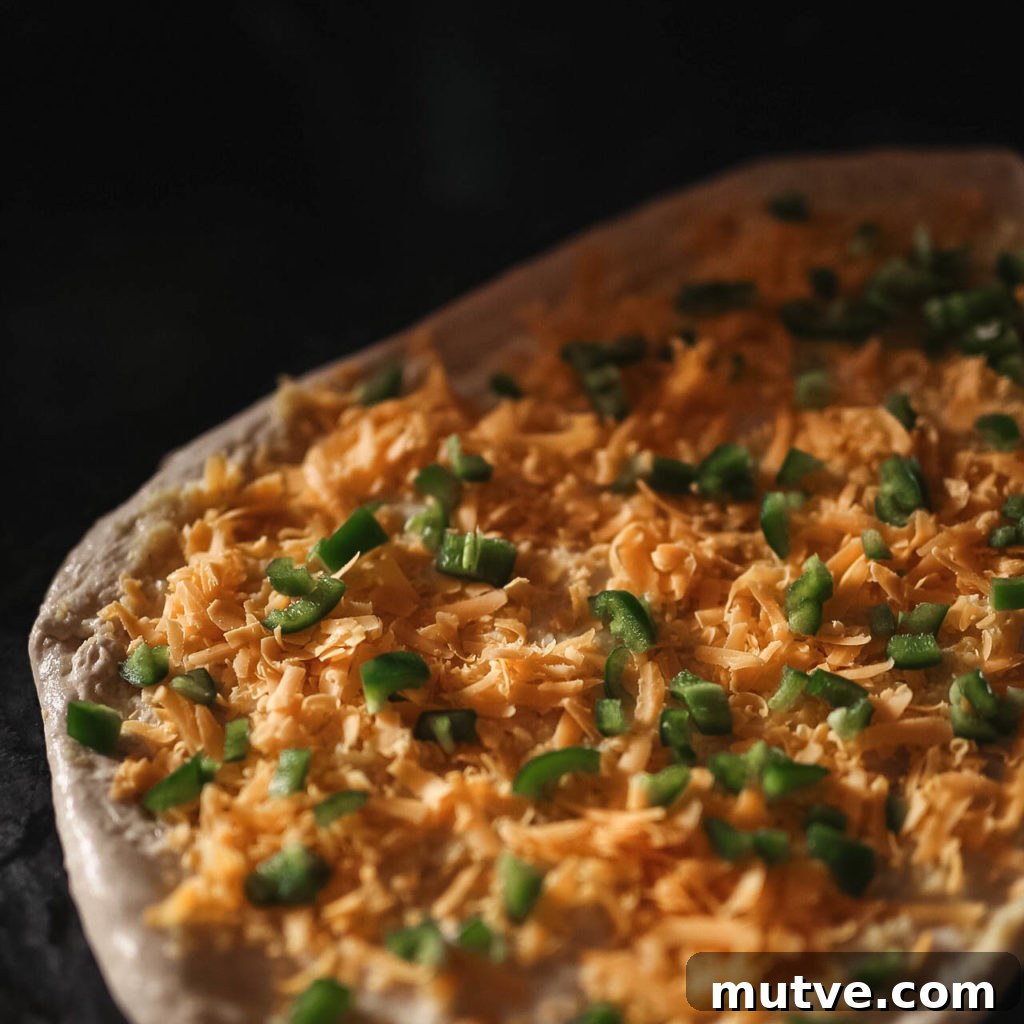
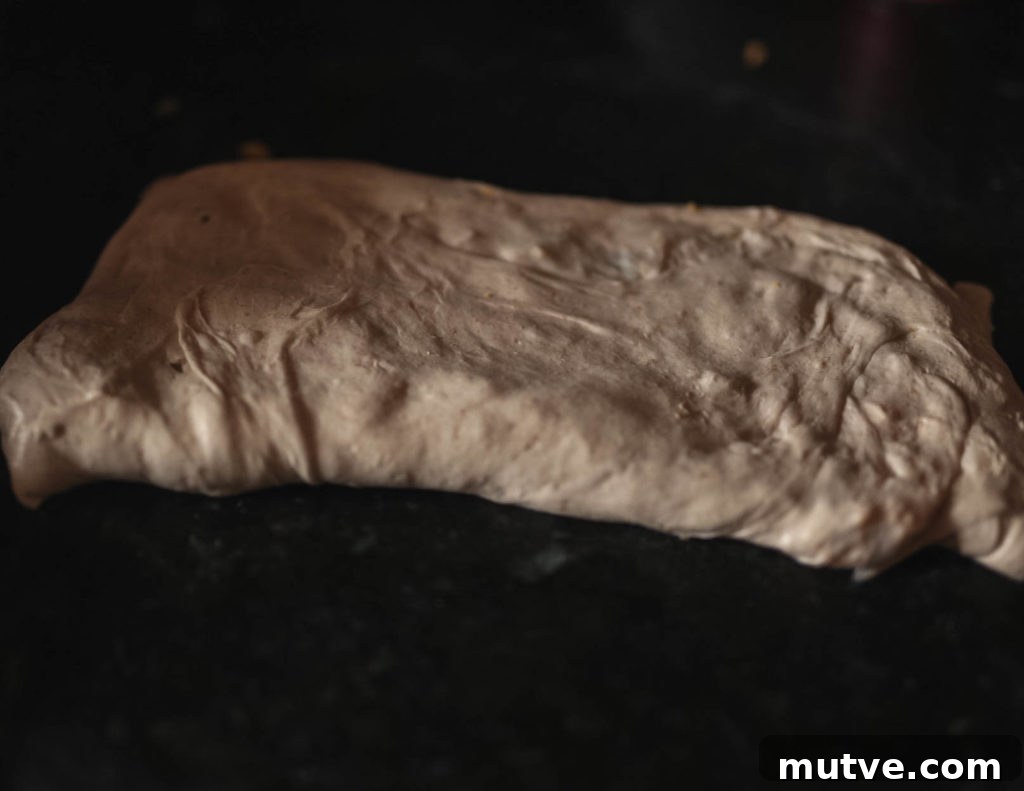
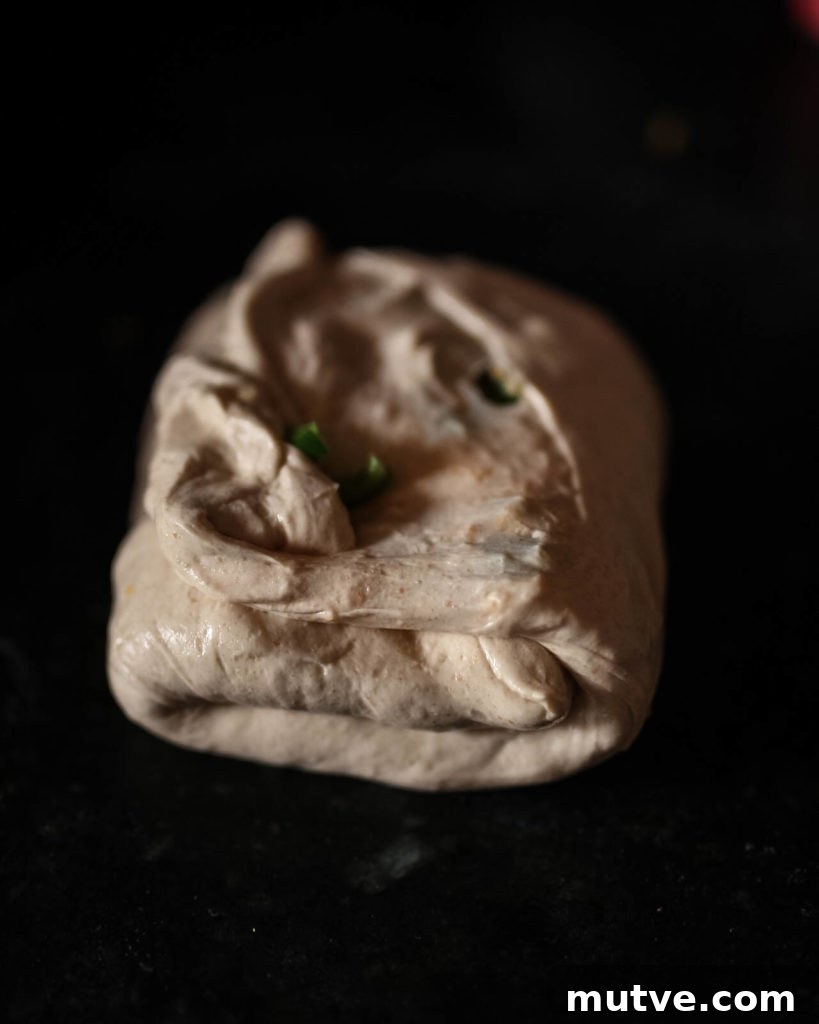
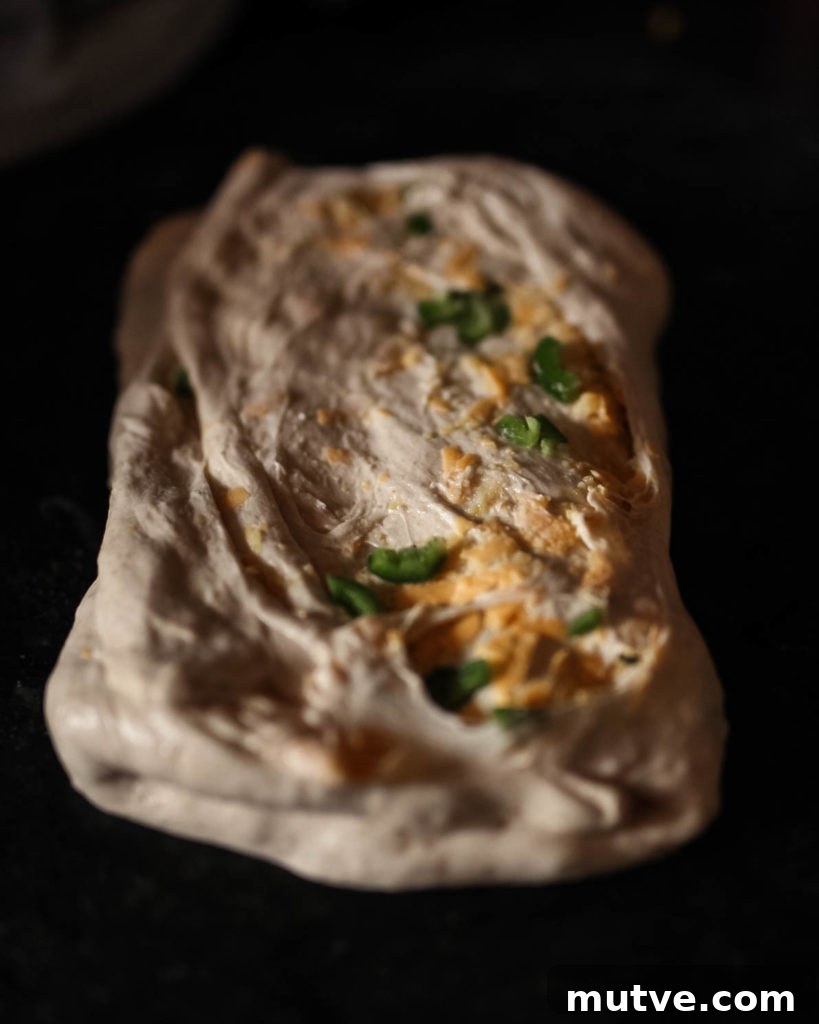
Lamination with mix-ins: Turn the dough onto a lightly floured surface and gently stretch it into a large rectangle. Spread 65–75 g of the cooled cornmeal porridge evenly across the surface. Scatter the chopped jalapeño and shredded cheddar over the porridge and press lightly so they adhere. Fold the dough into thirds like a letter, rotate 90°, flatten gently, and repeat the letter fold two more times to distribute the porridge and mix-ins. Transfer the folded dough to a bulk-rise container, cover, and rest 30 minutes.
-
Stretch-and-folds: After the 30-minute rest perform one stretch-and-fold. Repeat every 30 minutes for a total of 4–5 stretch-and-fold sessions. Then leave the dough undisturbed until it has increased about 50–60% in volume; this bulk fermentation can take roughly 6–12 hours depending on starter activity and temperature.
-
Pre-shape and cold proof: When the dough has risen, gently tip it onto the work surface, perform a light preshape, dust with flour, cover, and rest 15–20 minutes. Shape the loaf to your preference (boule or batard), place it seam-side up in a well-floured banneton, cover, and refrigerate overnight (12+ hours) to firm up and develop flavor.
-
Preheat oven: Place a cast-iron Dutch oven or other heavy baking vessel in the oven and preheat to 475°F (245°C).
-
Bake: Turn the chilled loaf onto parchment, dust the top with flour, and score as desired. Carefully transfer the loaf into the preheated vessel, cover, and bake for 20 minutes at 475°F. Remove the cover, reduce the temperature to 425°F (220°C), and bake another 25 minutes until the crust is golden and the loaf sounds hollow when tapped.
-
Cool: Remove the bread from the oven and cool completely on a rack before slicing to allow the crumb to set.
Recipe Notes
– Water choice: I recommend spring or bottled water if your tap water is heavily chlorinated, since chlorine can inhibit wild yeast. If your tap water is low in chlorine, it should be fine.
– Hydration and handling: I provide ranges for water and cornmeal porridge because the porridge adds significant moisture. Using the higher amounts produces a very soft, open loaf that can be challenging to shape. For easier handling, use the lower amounts.
– Flour choice: Bread flour helps support gluten when adding cornmeal and other mix-ins. Unbleached all-purpose can work in a pinch, but expect a slightly different texture.
– If you want more context on working with discard starter as your sole leavening agent, consult notes or a recipe you already use for a discard country loaf; the same principles and timing guidance apply.