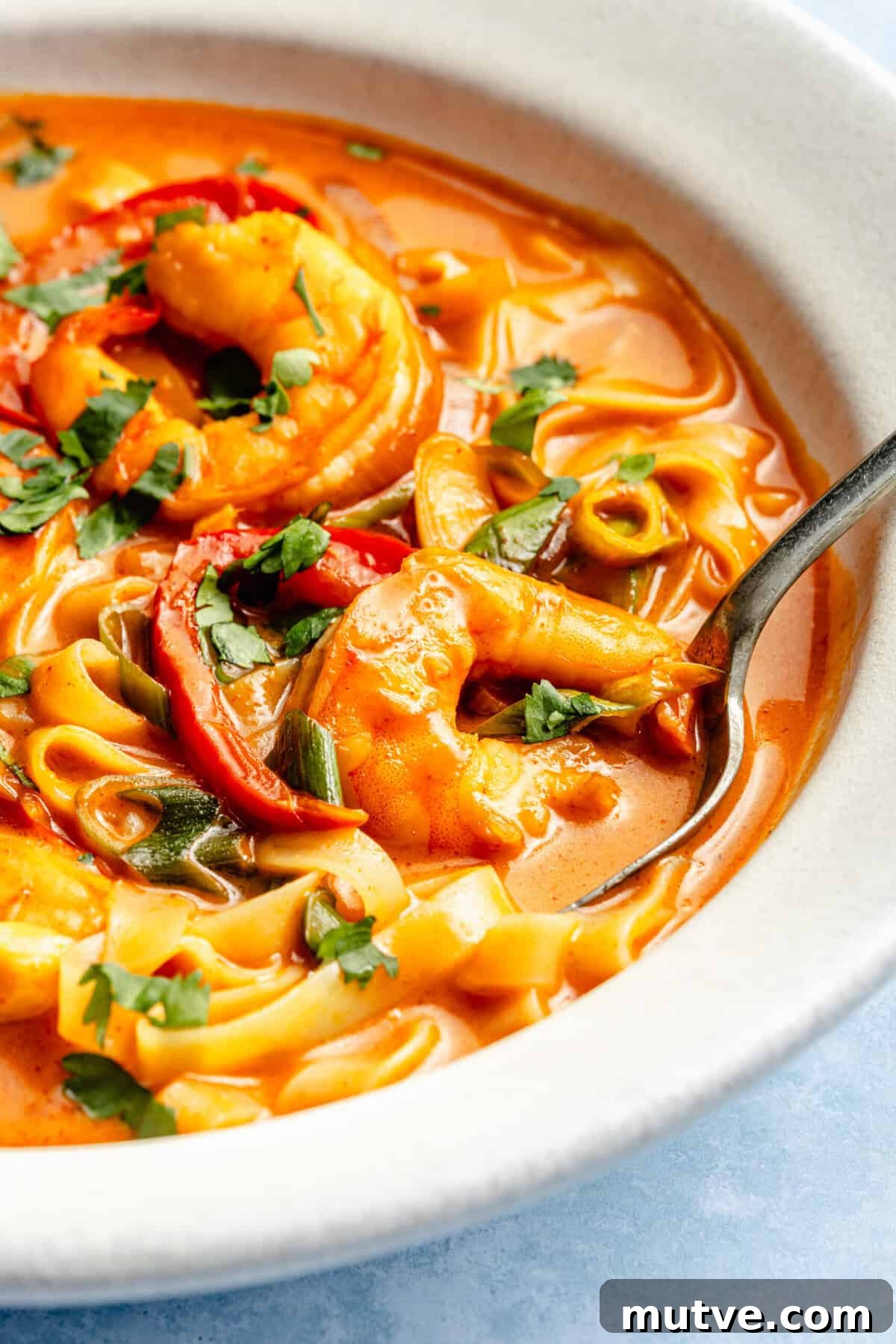
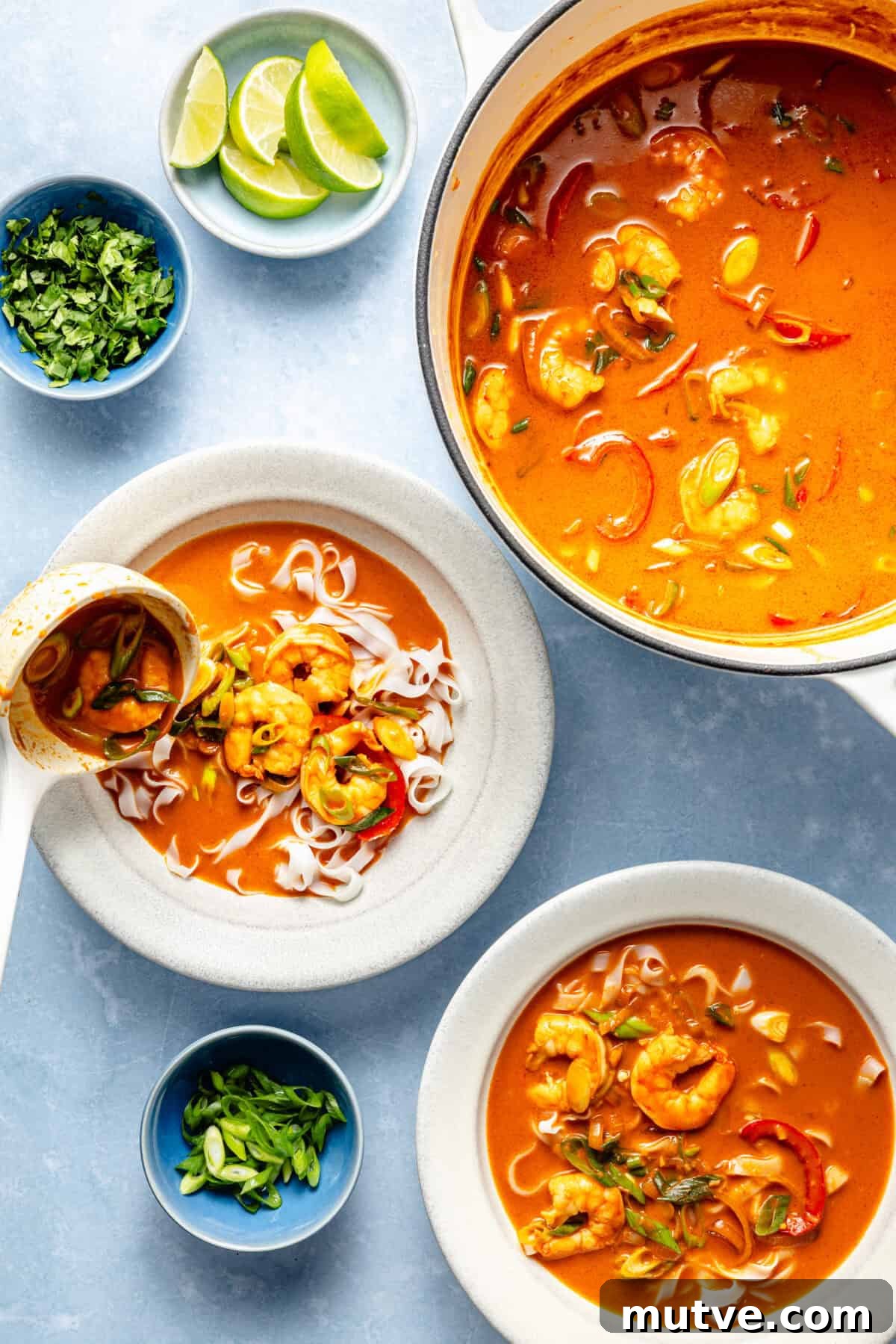
The balance of sweet, savory, and spicy in this Gochujang and Coconut Shrimp Noodle Soup is excellent. I like to serve it over rice noodles or alongside white rice for a comforting, complete weeknight dinner. The broth is aromatic and umami-rich, with fresh ginger and white miso layered into coconut milk and chicken broth, while gochujang gives the soup its distinctive red color and a pleasant spicy depth. Adjust the gochujang to suit your heat tolerance.
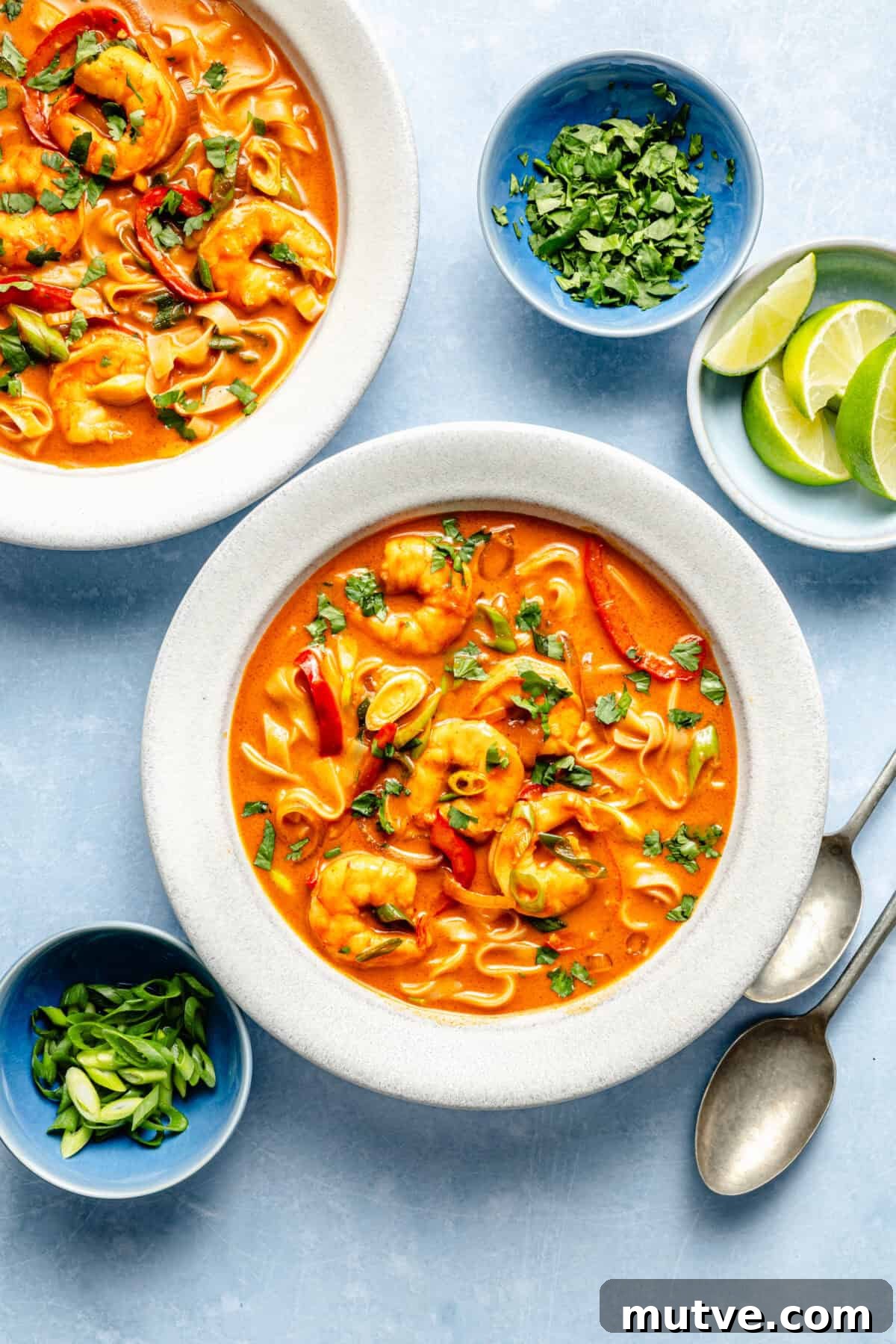
This recipe comes together quickly—about 20 minutes from start to finish—so it’s perfect for busy evenings. Medium shrimp cook fast, becoming tender in just a few minutes; watch them closely to avoid overcooking. The finished soup is bright, colorful, and nourishing, with a pleasing contrast between the creamy coconut broth and the warm, spicy notes from the gochujang.
Ingredients
- 2 tablespoons avocado oil
- 1/2 cup shallot, halved and thinly sliced (about 1 large shallot)
- 3/4 cup red bell pepper, very thinly sliced (about 1 small pepper)
- 3 garlic cloves, minced
- 1 teaspoon finely grated fresh ginger
- 2–3 tablespoons gochujang paste, plus more to taste
- 1 tablespoon white miso paste
- 2 cups low-sodium chicken broth
- 1 cup unsweetened coconut milk
- 1 teaspoon toasted sesame oil
- 2 tablespoons tamari (or low-sodium soy sauce)
- Zest of 1/2 lime
- 1 tablespoon coconut sugar
- Kosher salt, to taste
- 3 green onions, thinly sliced on the diagonal (white and green parts)
- 1/2 pound peeled, deveined shrimp (36/40 count)
- 1 tablespoon lime juice
- 1/4 cup finely chopped fresh cilantro
- Prepared rice noodles, miracle noodles, or white rice (for serving)
Step-by-step
Step one: sauté the aromatics
Heat the avocado oil in a large pot over medium heat. Add the sliced shallot, red bell pepper, minced garlic, and grated ginger. Sauté, stirring occasionally, until the vegetables are softened and fragrant, about 4–5 minutes.
Step two: build the broth
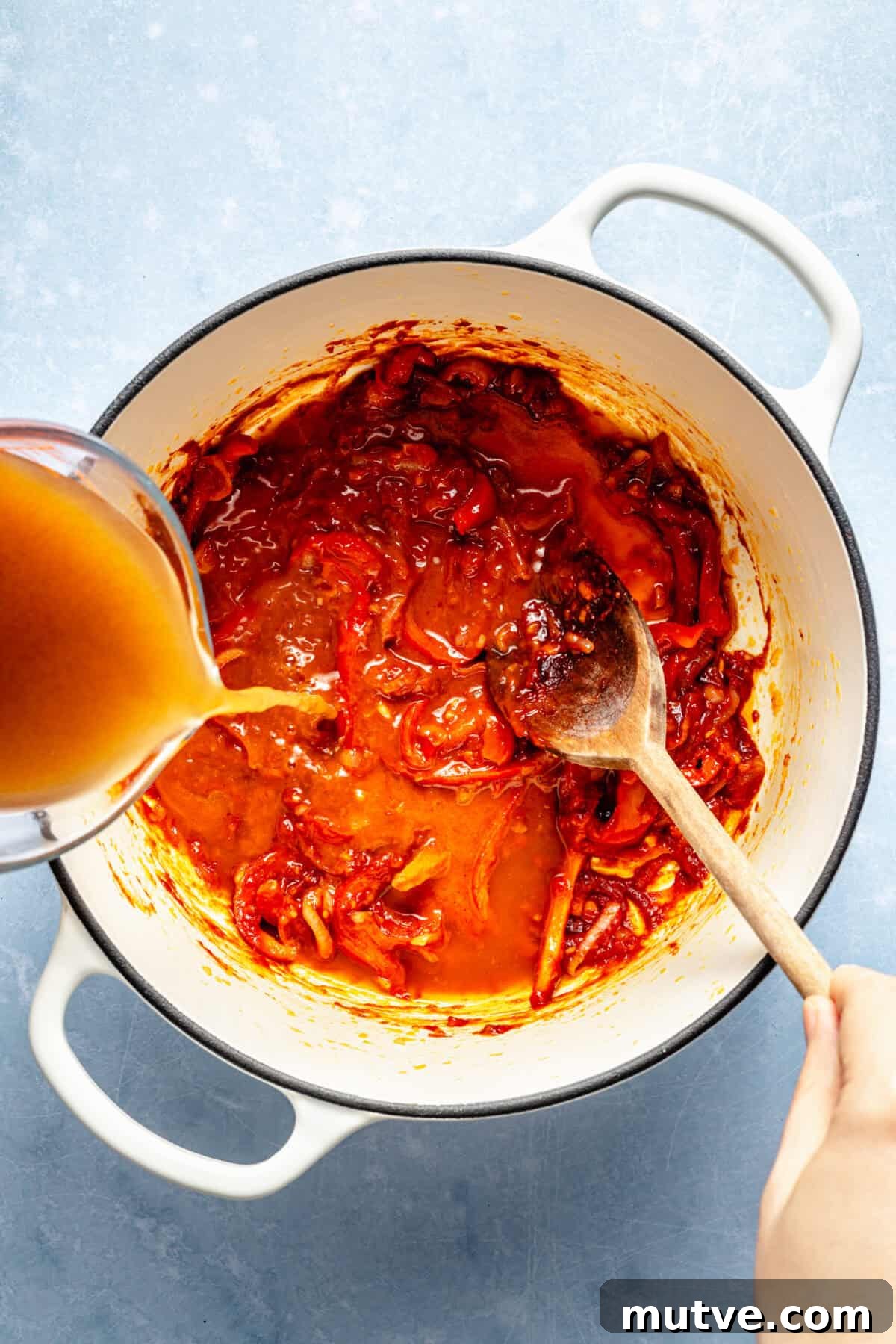
Add the gochujang and white miso paste to the pot and stir until they coat the vegetables and combine evenly. Pour in the chicken broth a little at a time, whisking so the paste disperses and the broth becomes smooth. Stir in the coconut milk, toasted sesame oil, tamari, lime zest, and coconut sugar. Bring the soup to a rapid simmer, then reduce the heat to maintain a gentle simmer.
Step three: season and taste
Taste the broth and adjust seasoning as needed. Keep in mind that tamari, miso, and gochujang all contribute saltiness, so add kosher salt sparingly. A small pinch is usually enough if you prefer a lighter sodium profile.
Step four: add shrimp and green onions
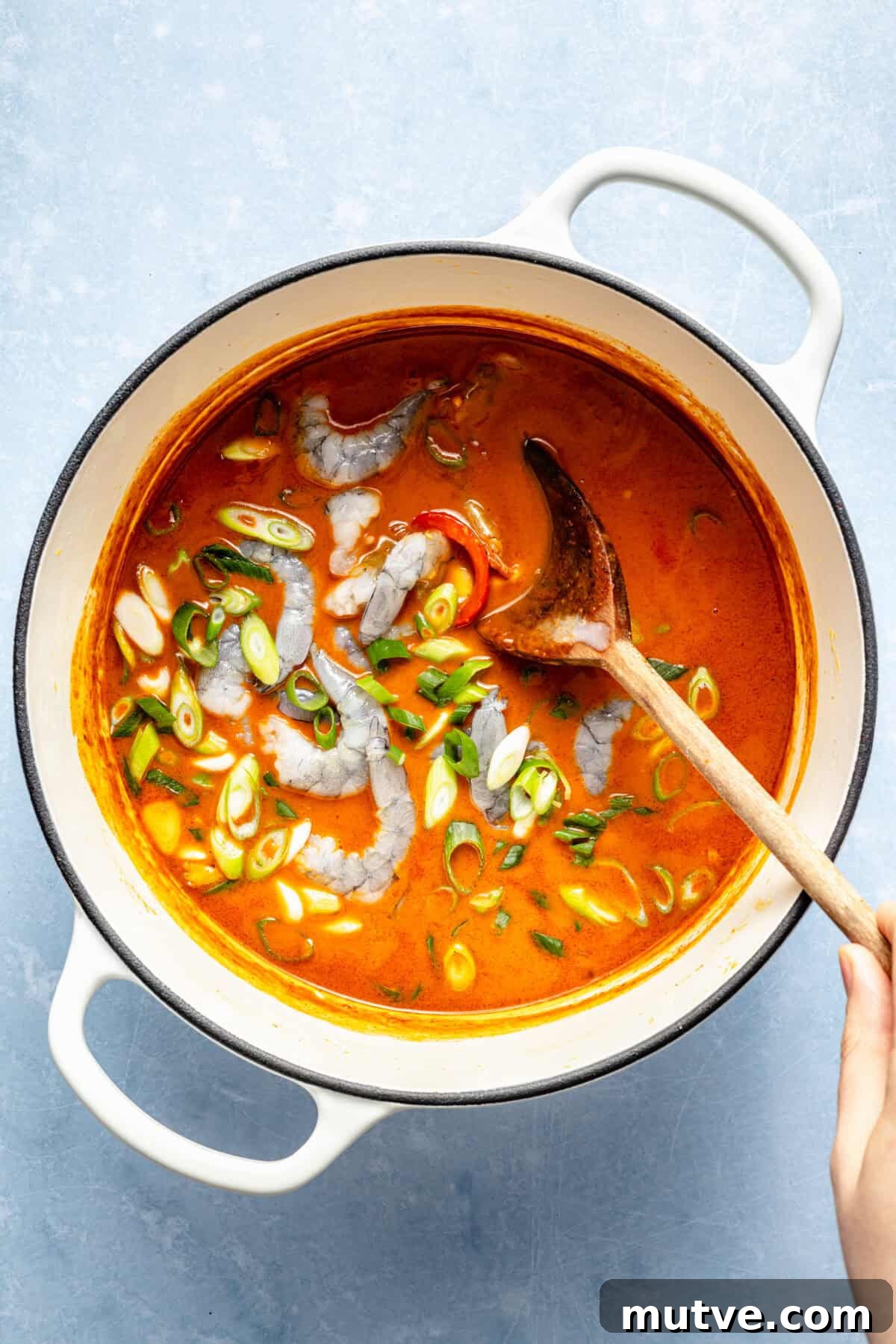
Stir the sliced green onions and shrimp into the simmering broth. Cover the pot and cook just until the shrimp turn opaque and are cooked through, about 4–6 minutes depending on size. Avoid overcooking to keep the shrimp tender and juicy.
Step five: finish and serve
Stir in the lime juice and chopped cilantro, then ladle the hot soup over prepared rice noodles or serve it with white rice on the side. Garnish with extra green onions, cilantro, and lime wedges if desired. Enjoy immediately while hot.
Recipe FAQs
I can’t find tamari — what can I use instead?
You can substitute low-sodium soy sauce or coconut aminos. Keep in mind soy sauce contains gluten unless labeled gluten-free.
What does “36/40” mean for the shrimp count?
That range refers to the approximate number of shrimp per pound. A 36/40 count is a medium-sized shrimp, meaning you’ll get about 36–40 shrimp in one pound.
Can I make this in advance?
Yes. Store the soup separately from any rice noodles or rice to prevent them from becoming soggy. Reheat gently over medium-low heat on the stovetop to avoid overcooking the shrimp.
Recipe details
- Total time: 20 minutes
- Servings: 2
Nutrition (per serving, approximate)
Calories: 612 kcal; Carbohydrates: 44 g; Protein: 14 g; Fat: 47 g; Sodium: 1603 mg. Nutrition information is automatically calculated and should be used as an approximation.
If you try this Gochujang and Coconut Shrimp Noodle Soup for #DDSoupWeek 2025, please leave a comment and let me know how you liked it. Small tweaks—like adding more gochujang for heat, swapping tamari for soy sauce, or using different noodles—make this a flexible and satisfying weeknight meal.
Photography and styling by Eat Love Eats.